
What Remains?
/What Remains?: The Vietnam War and Its Reckoning
Through November 21, 2026
Curator: Cheryl D. Edwards
Mason Exhibitions, 3601 North Fairfax Dr, Arlington, VA 22201 Arlington
The history of the Vietnam War (1954–1975) tells a story of a prolonged conflict between the communist government of North Vietnam and its allies in the South, and the government of South Vietnam supported by the United States. The scale of U.S. military involvement intensified significantly in the 1960s, culminating in the deployment of more than 500,000 American troops. The war’s human toll was devastating. Millions of Vietnamese civilians and soldiers perished, alongside 58,318 U.S. service members whose names now appear on the Vietnam Veterans Memorial in Washington, DC.
The war unfolded alongside profound social, political, and cultural upheavals within the United States. The 1960s witnessed transformative events, including the civil rights movement, the assassination of political leaders, and widespread protests, racial injustice, and war. These developments culminated in large-scale demonstrations such as the 1969 Moratorium to End the War in Vietnam, widely regarded as one of the largest anti-war protests in U.S. history.
Within this context, veteran artists were shaped not only by their military experiences but also by a rapidly shifting cultural landscape. The intersection of war, civil rights struggles, and countercultural movements created conditions in which questions of identity, justice, and belonging became inseparable from artistic production. The Vietnam veterans suffered not only from post-traumatic stress disorder (PTSD) but also endured moral injury.
This exhibition brings together works by veteran artists whose practices emerge from the enduring afterlives of military service. This exhibition examines memory, history, and the physical and psychological residues of war. In the context of the United States’ 250th anniversary, it reconsiders national narratives as contested and ongoing rather than resolved.
The exhibition explores moral injury, spatial coloniality, and resilience, and centers artists with Vietnam War service and those committed to the Veteran artists’ community, whose work adds context to the exhibit.
Exhibition Content Advisory
This exhibition includes depictions and accounts of war-related injury, trauma, disability, and grief. Some materials may be emotionally difficult or distressing.
Visitor discretion is advised. Please take the time and space you need; support resources are available from museum staff upon request or contact University Life Counseling and Psychological Services at 703-993-2380 or visit their website at - Counseling and Psychological Services.
Curatorial Statement
Rejecting singular narratives, this exhibition embraces multiplicity and tension. The artists challenge institutional frameworks and dominant representations of war, positioning the exhibition as a space for critical dialogue where ambiguity is essential to understanding.
Spanning works created since the Vietnam War, the exhibition highlights how time reshapes memory and material. It aligns with trauma studies, where experience is often fragmented and resistant to coherent narrative. Rejecting singular narratives, it embraces multiplicity, contradiction, and tension. These artists do not speak in unison--they disrupt institutional frameworks, challenge inherited histories, and unsettle dominant representations of war. The exhibition becomes a site of critical dialogue, where dissent and ambiguity are not only present but necessary conditions of understanding.
Moral injury is a crisis of conscience. It manifests from two primary sources: Acts of Commission or Omission and/or Betrayal. A soldier will psychologically experience that he/she did something that is against their core values and/or believe that he/she failed to act. Additionally, betrayal is another element of this injury which presents as a sense of betrayal by trusted leaders, institutions, or peers. Veteran artists often address this injury with their creative process.
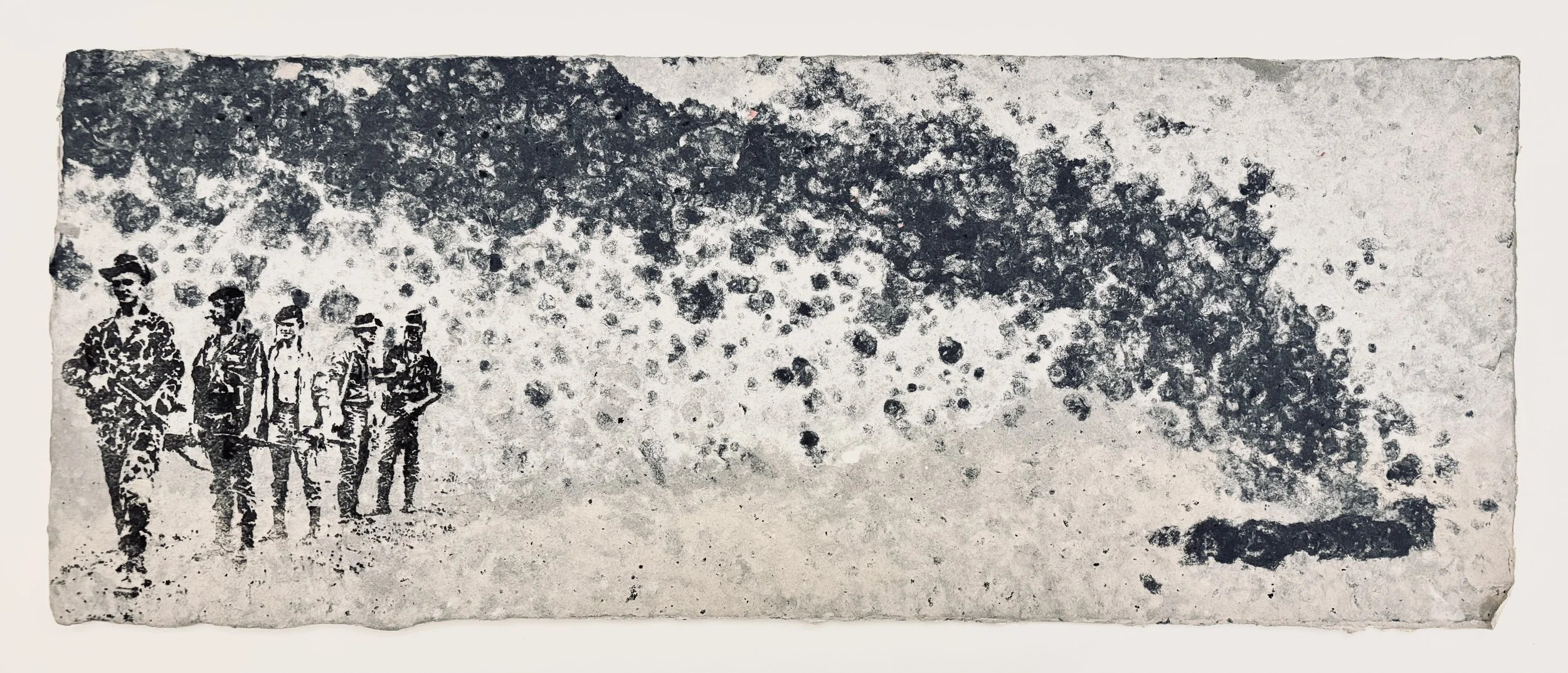
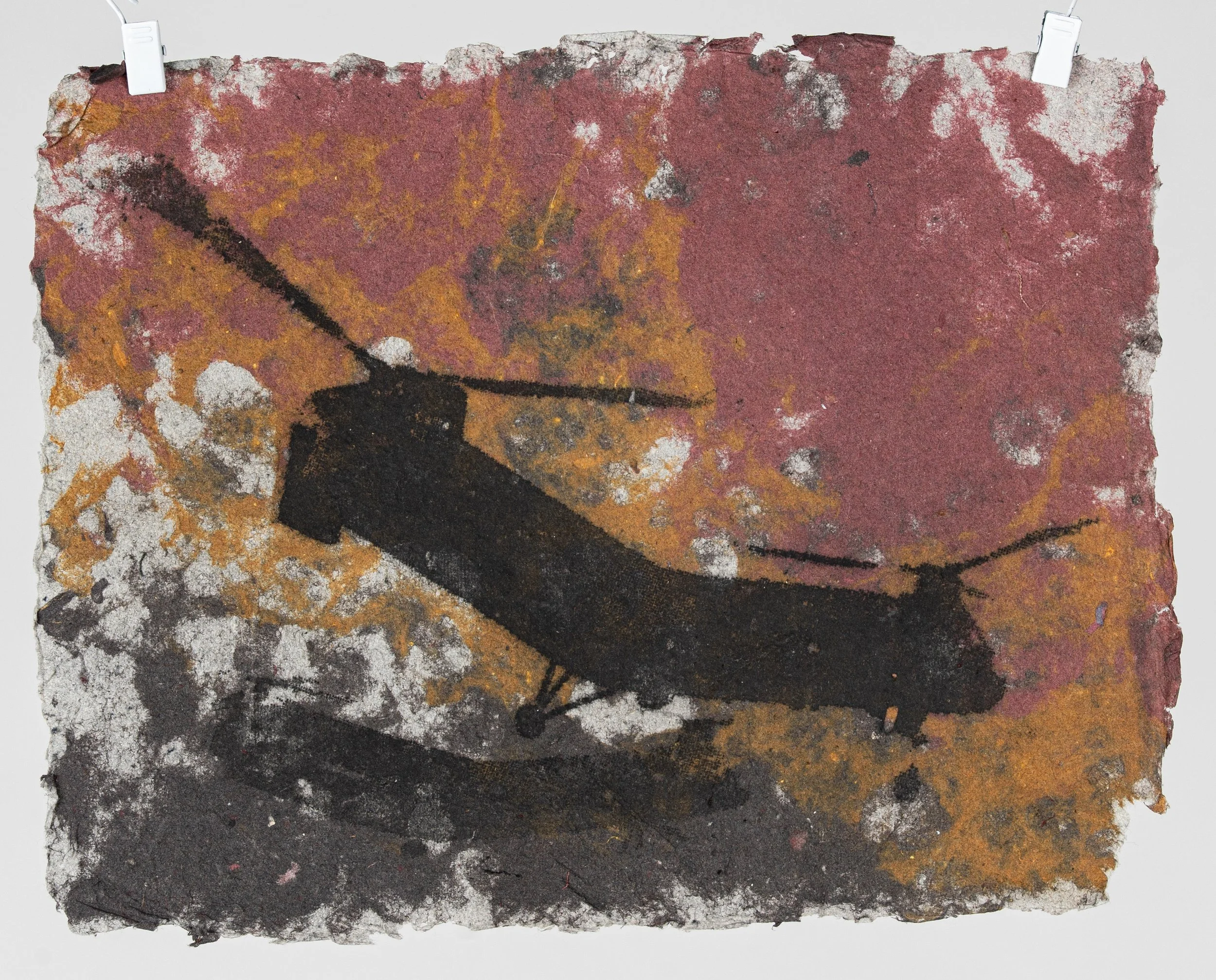
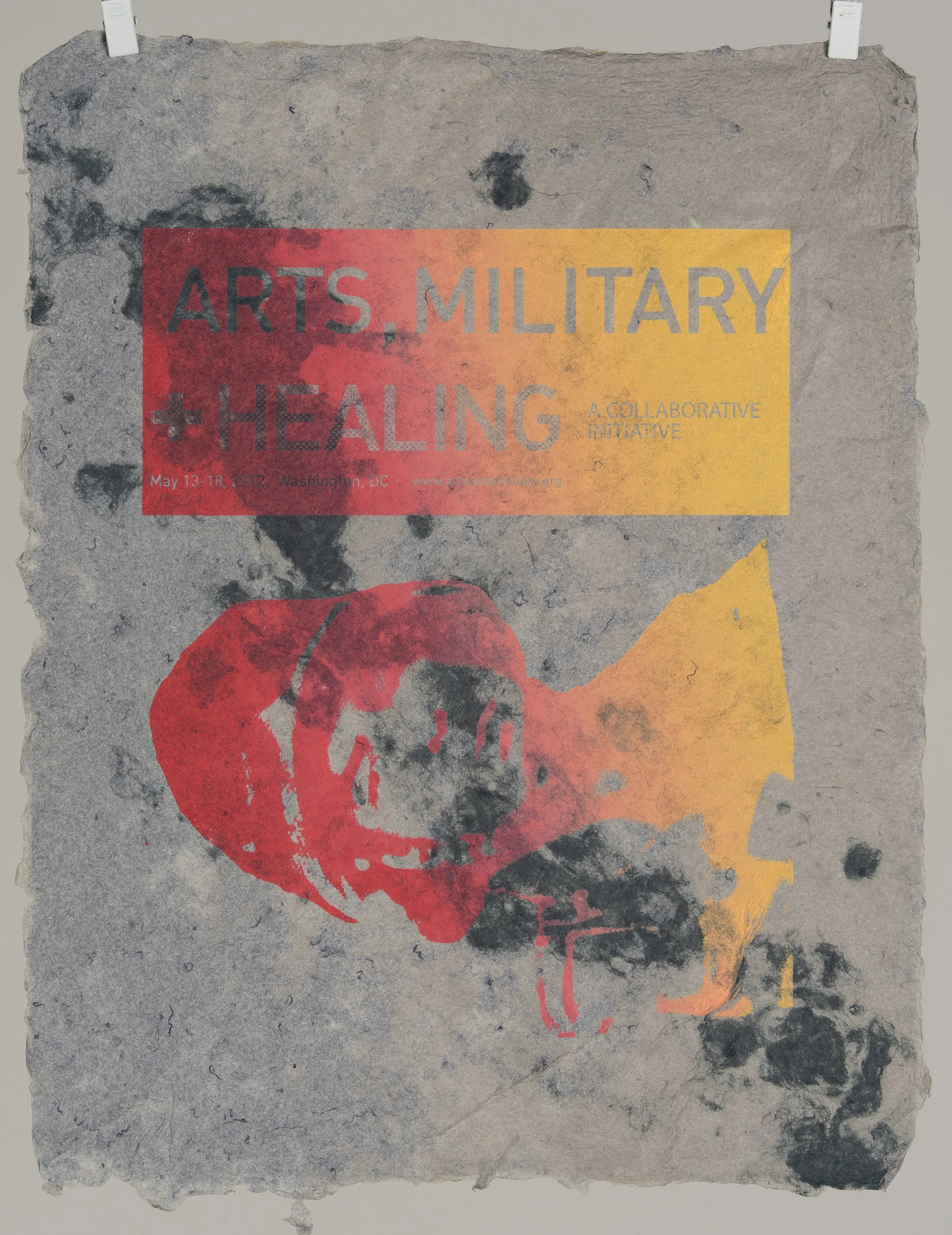
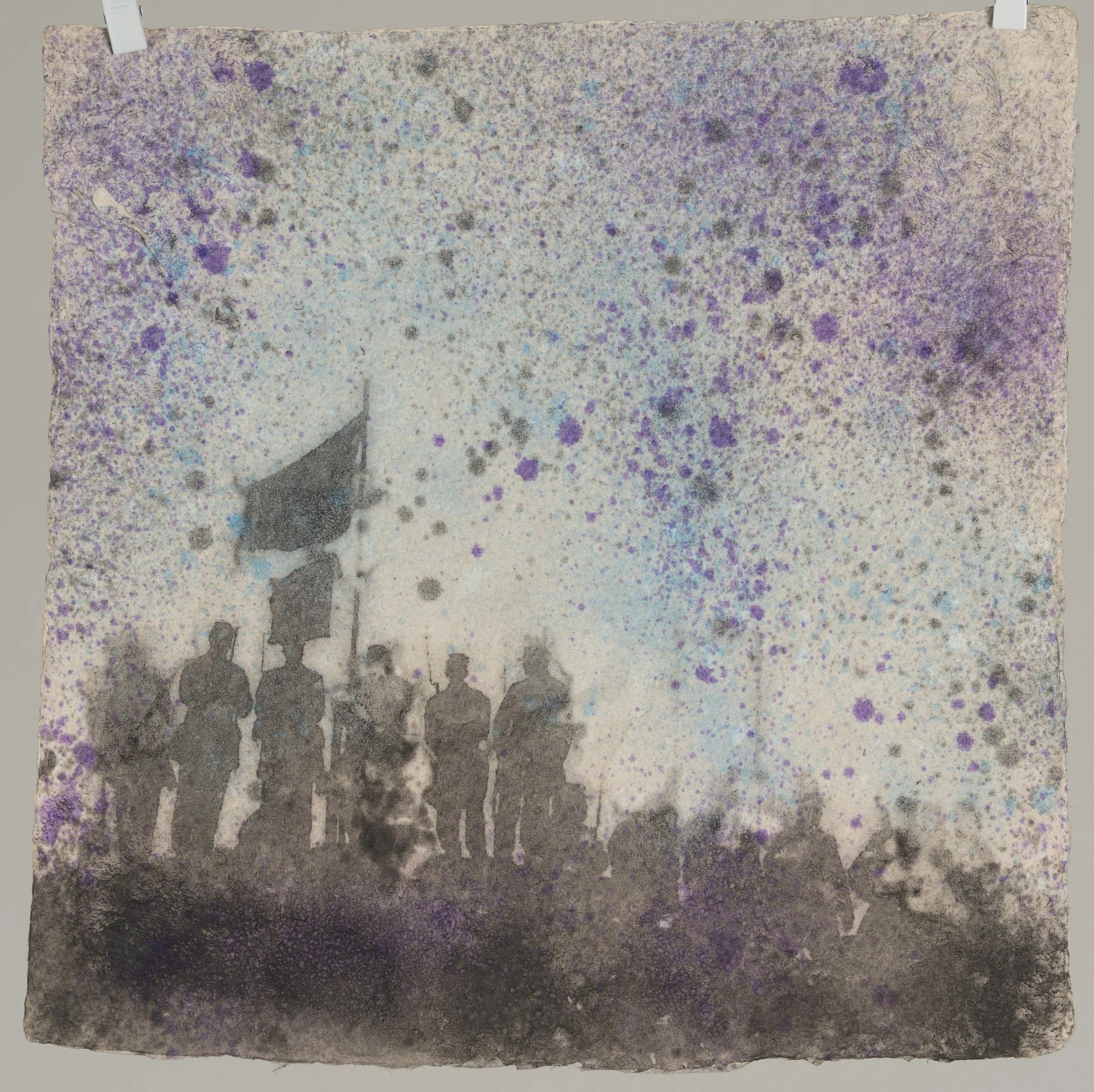
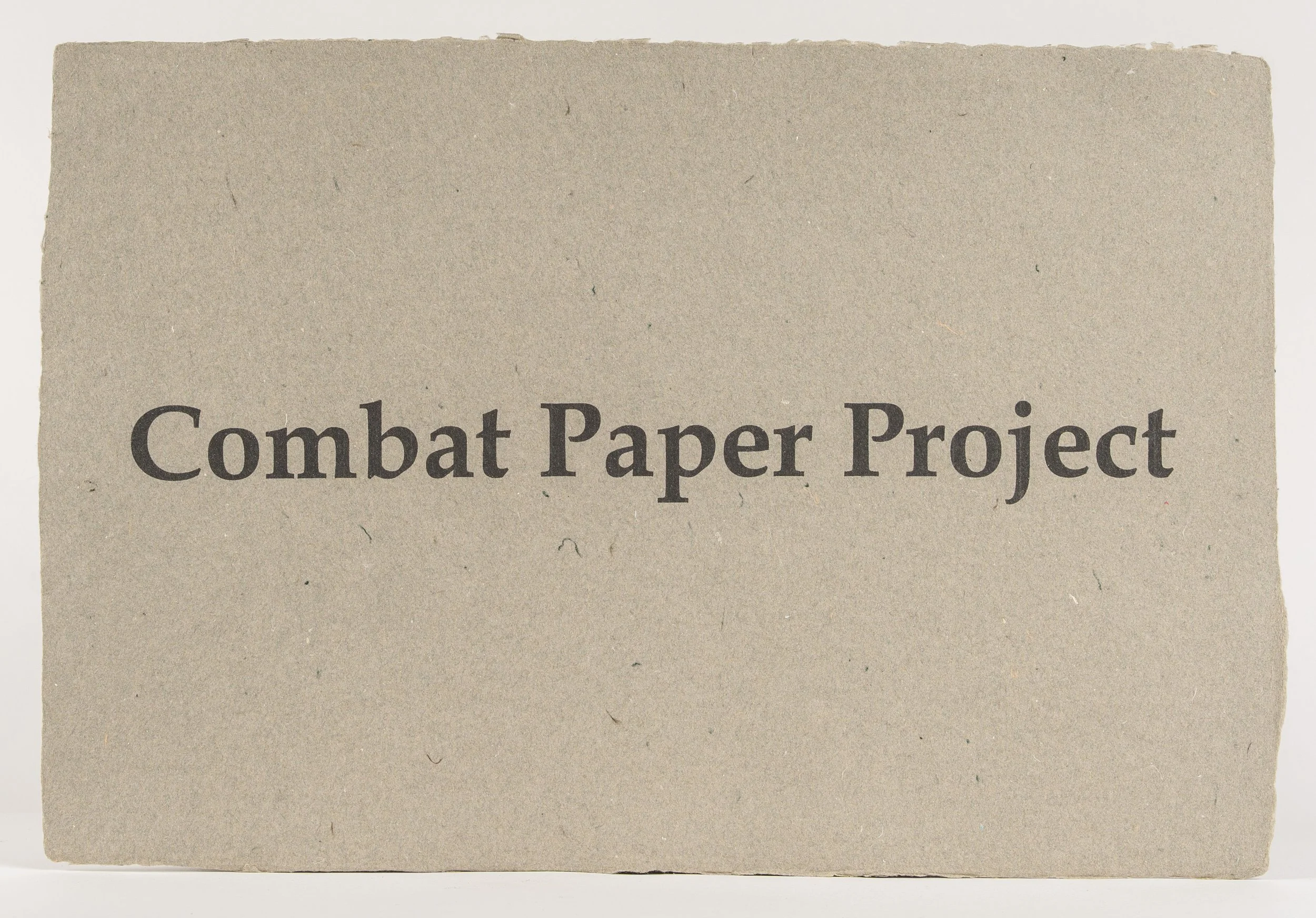
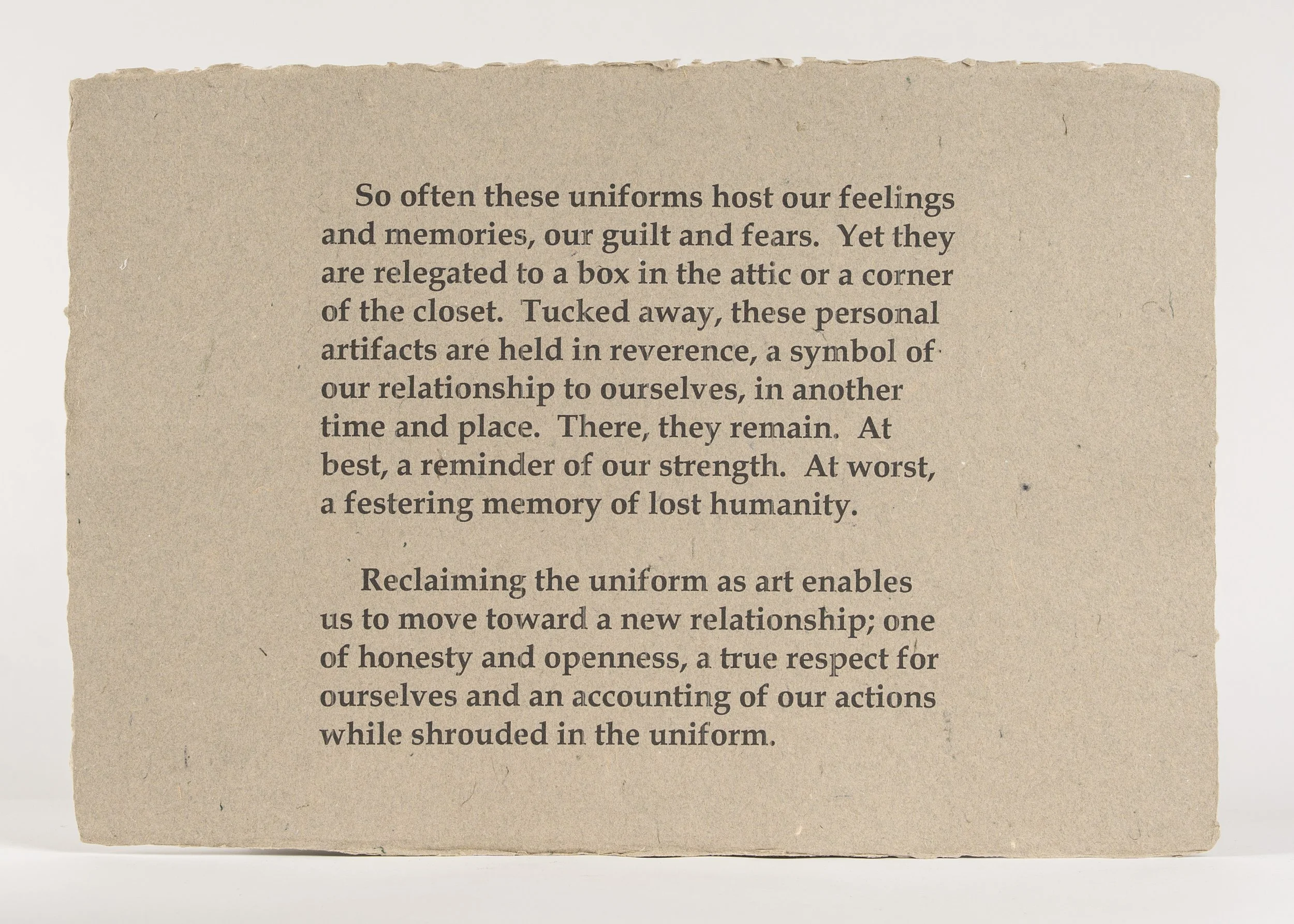
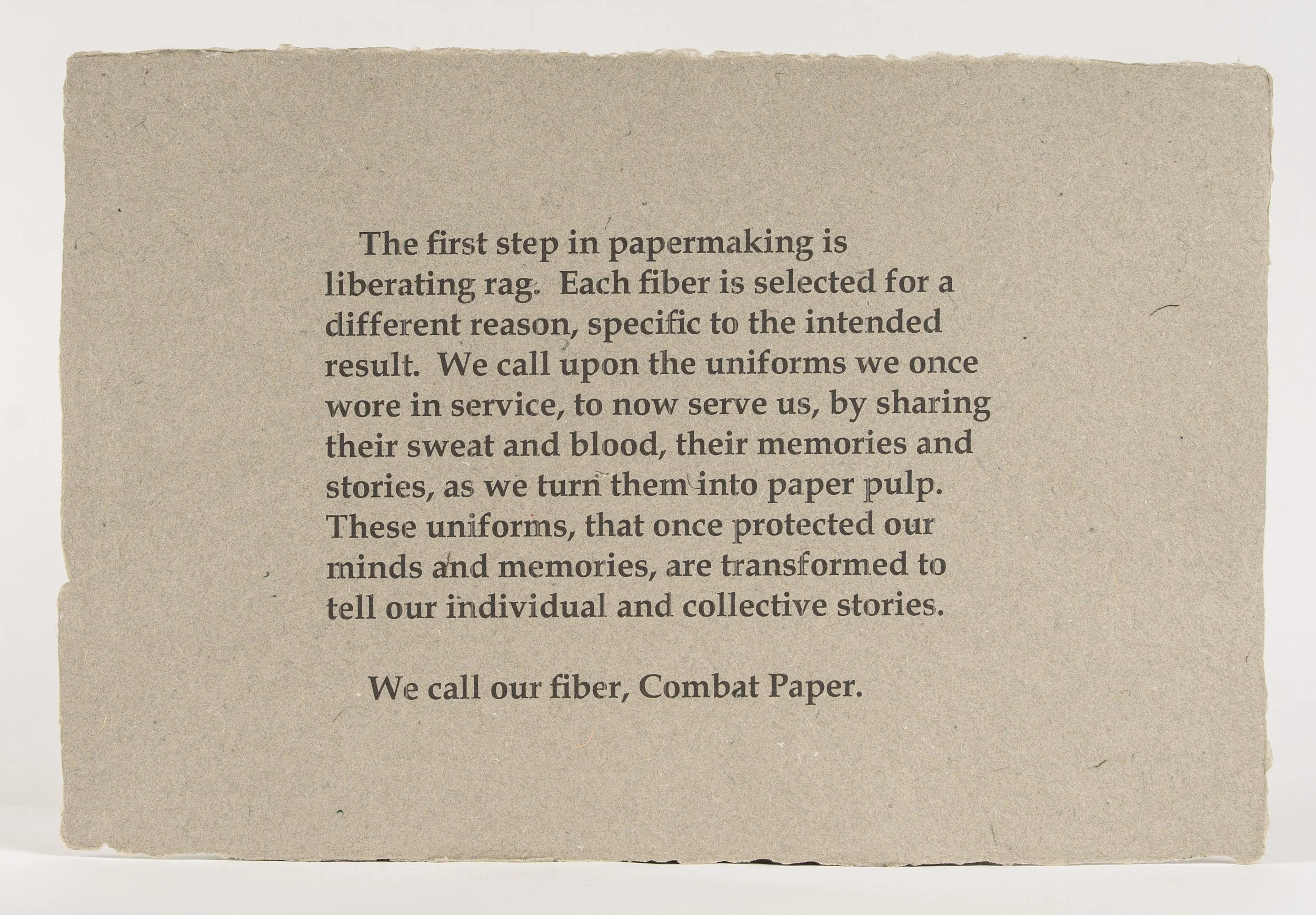
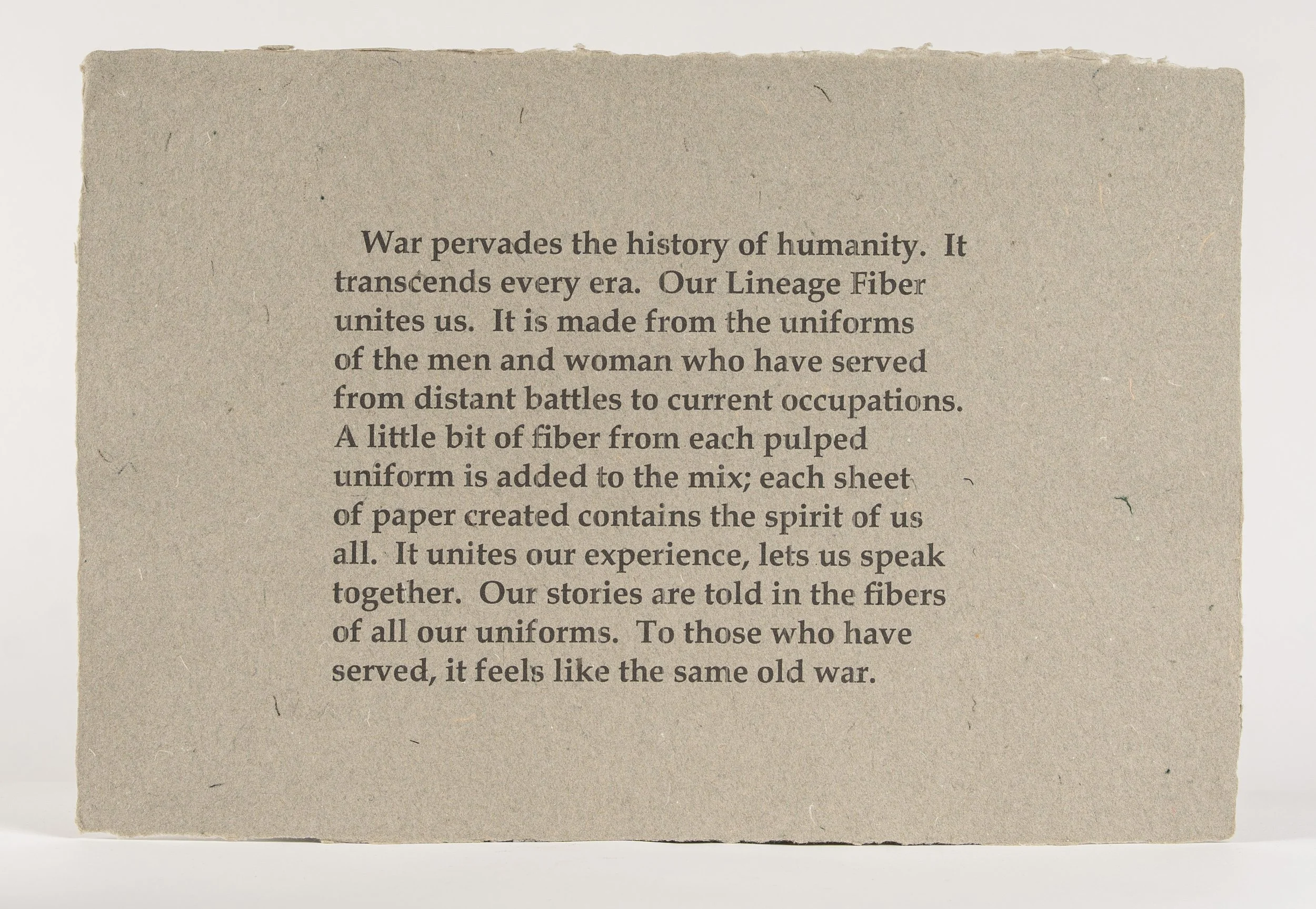
Artistic processes often emerge from collective and restorative practices. Initiatives such as the Combat Paper Project transform military uniforms into handmade paper, enacting a physical and symbolic reconstitution of lived experience. Through these methods, destruction is reworked into creation, and materials once associated with conflict are repurposed into sites of reflection and care.
Artists Tom Lascell, Drew Cameron, and Drew Matott created the artists’ book, The Combat Paper Story. In 13 individual sheets of handmade paper with printed text, the book unfolds a human recounting of the effects of war on the person and the after-war existence of the artists. The materials and techniques of the creative artwork are specific. Books on handmade paper explore the why--because of the sensory intimacy, structural integrity, and symbolic meaning is expressed in this form of creativity. These artists have experienced moral injury, a rupture of conscience characterized by intense guilt, shame, and alienation, rather than the fear-based symptoms typical of traditional PTSD.
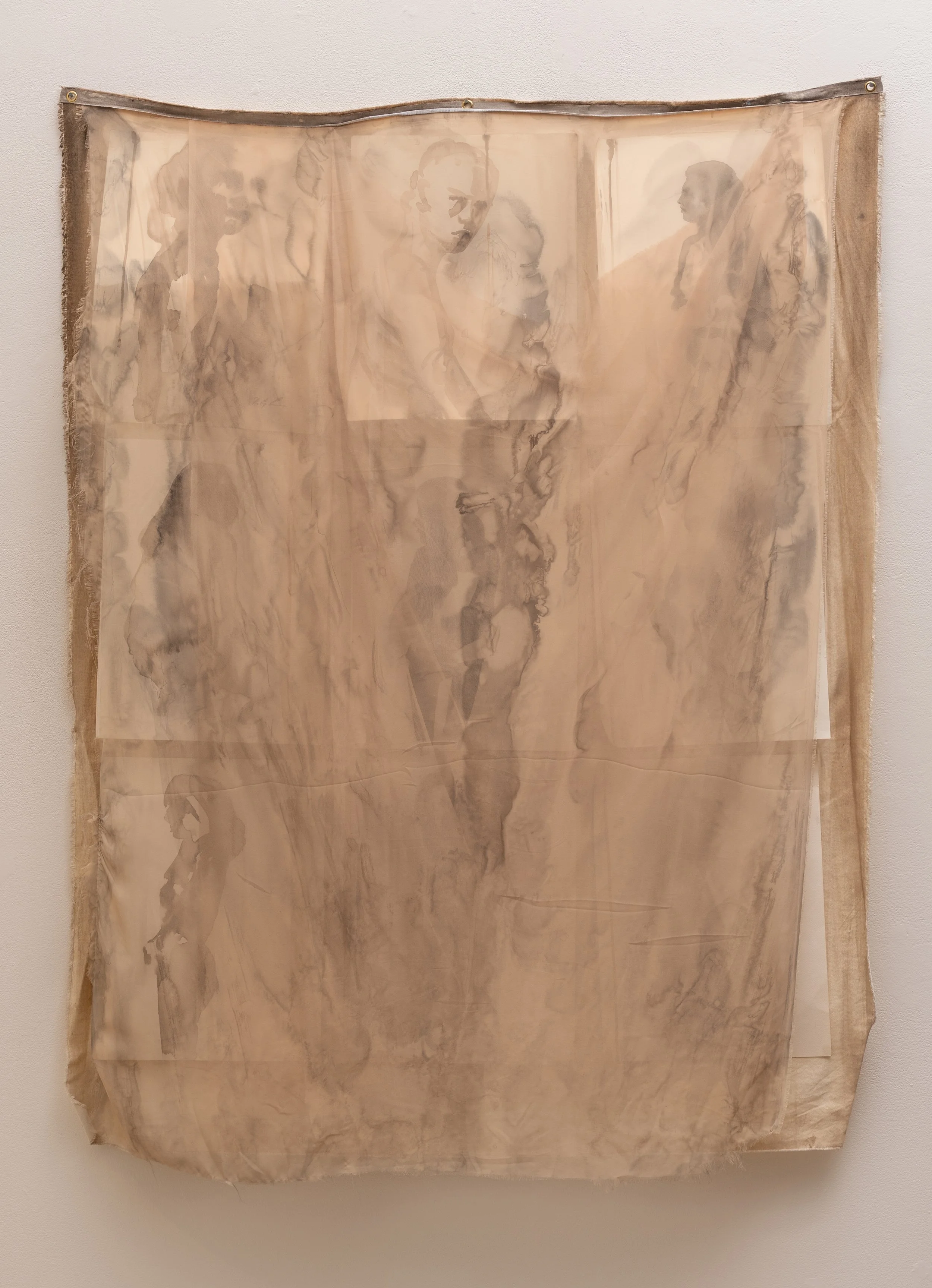
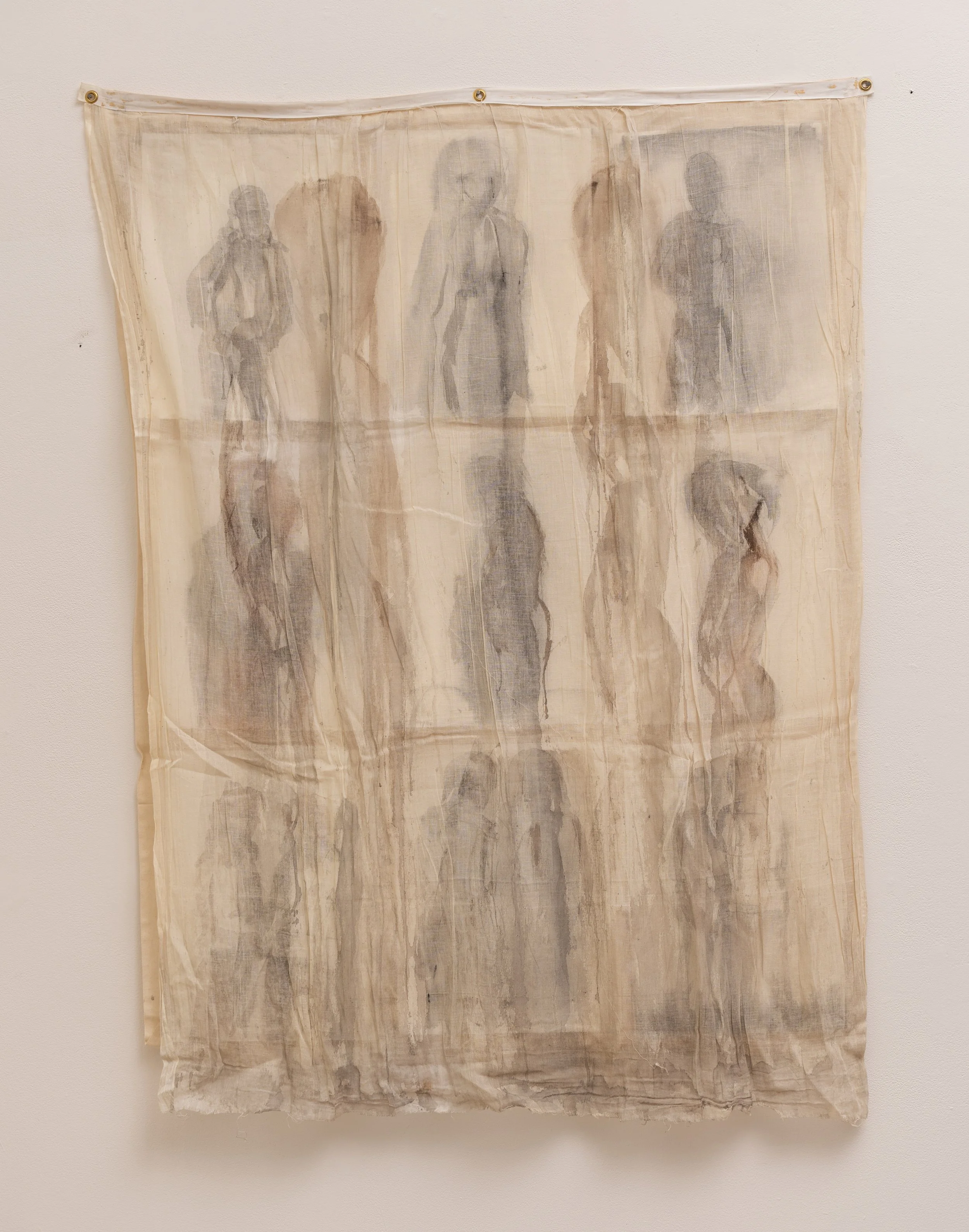
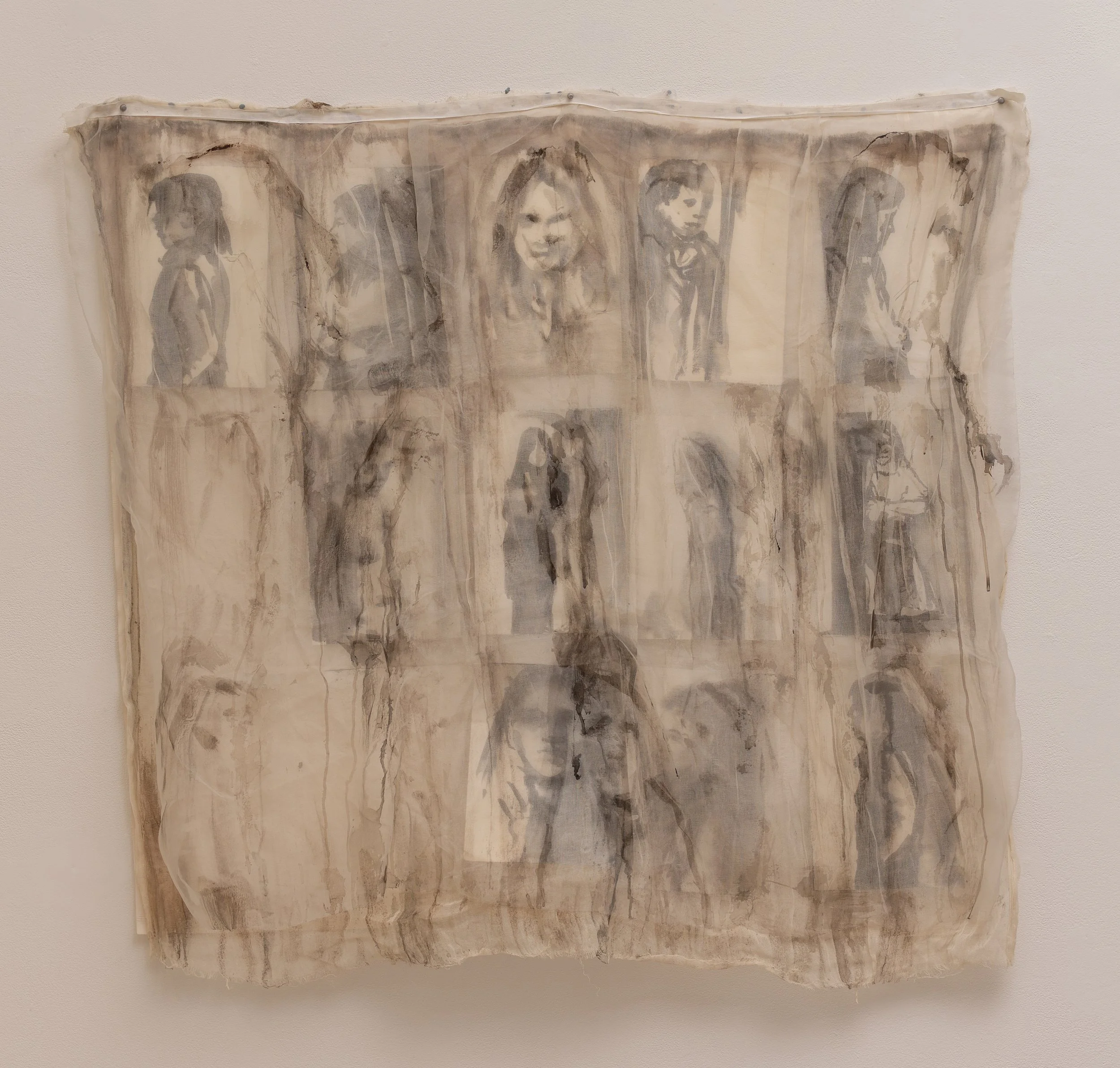
The disruption of moral injury is seen in the work of W. Leroy Larson. Here you see the use of the subjects (his art students and people who he encountered at the Vietnam Memorial) as a collaborative confrontation of this injury. The specific brushstrokes of ink wash portraits and figures overlaid by gauze were a study in engagement. It is ephemeral and deliberately breaks conventions to force a new way of seeing. Larson’s work represents disrupted realism, which was popularized by a contemporary art movement written about by art historian John Seed. The movement injects abstraction, distorted layers, and chaotic brushwork into traditional realist painting.
The exhibition also engages broader theoretical frameworks, situating the Vietnam War within longer histories of colonialism, spatial control, and geopolitical domination. Coloniality operates through the organization of space—through mapping, territorial division, and systems of governance that structure who may move, settle, or belong. This framework illuminates how war functions not only as military engagement, but as an extension of epistemological and spatial control embedded in modern global systems.
Imagine being an African American soldier representing a colonial entity such as the United States of America, whereas, as a citizen, you are marginalized, face racial discrimination and are treated unfairly. The task before you is to fight and kill others in a foreign territory to implement the same treatment of those foreigners within their own country.
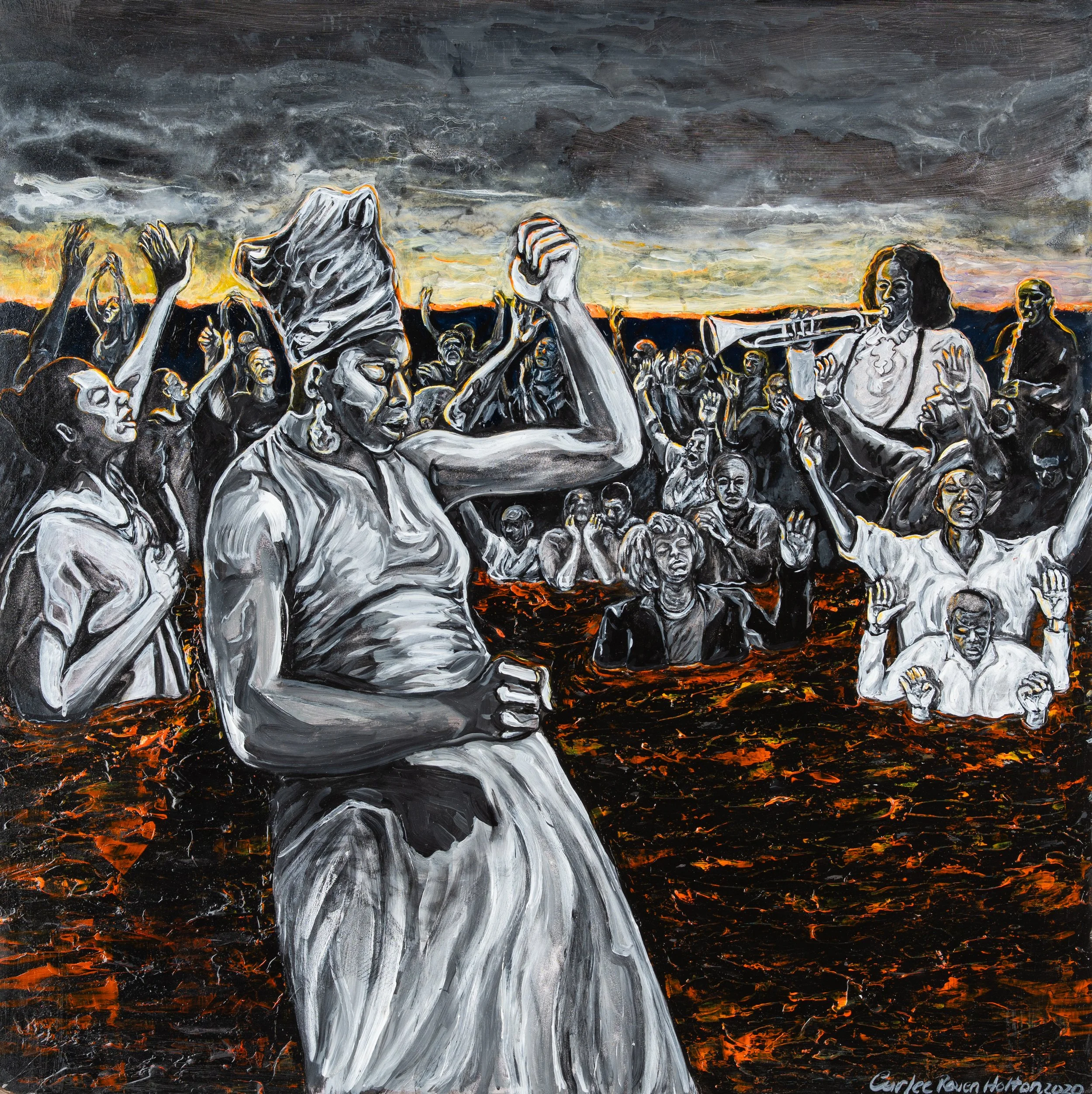
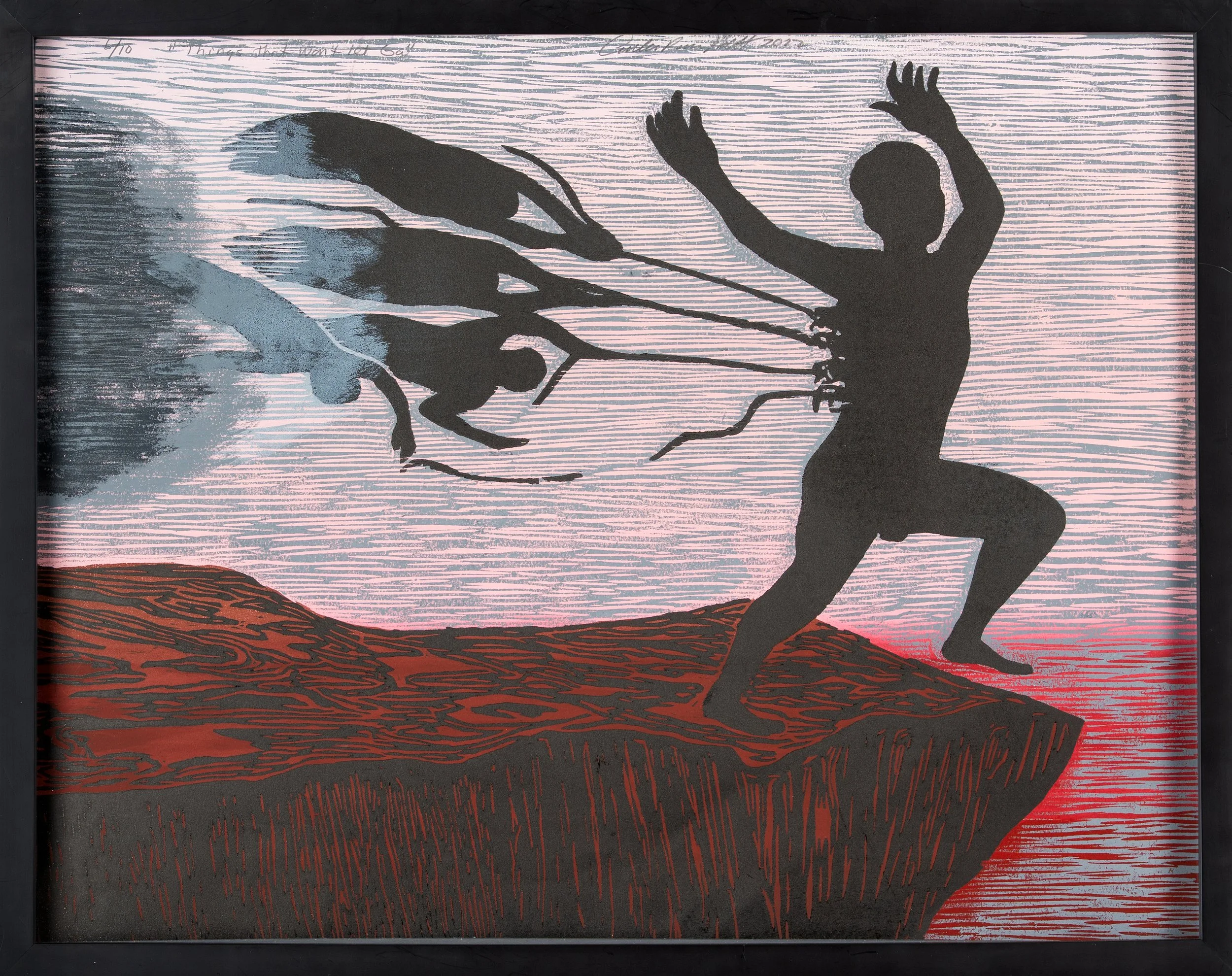
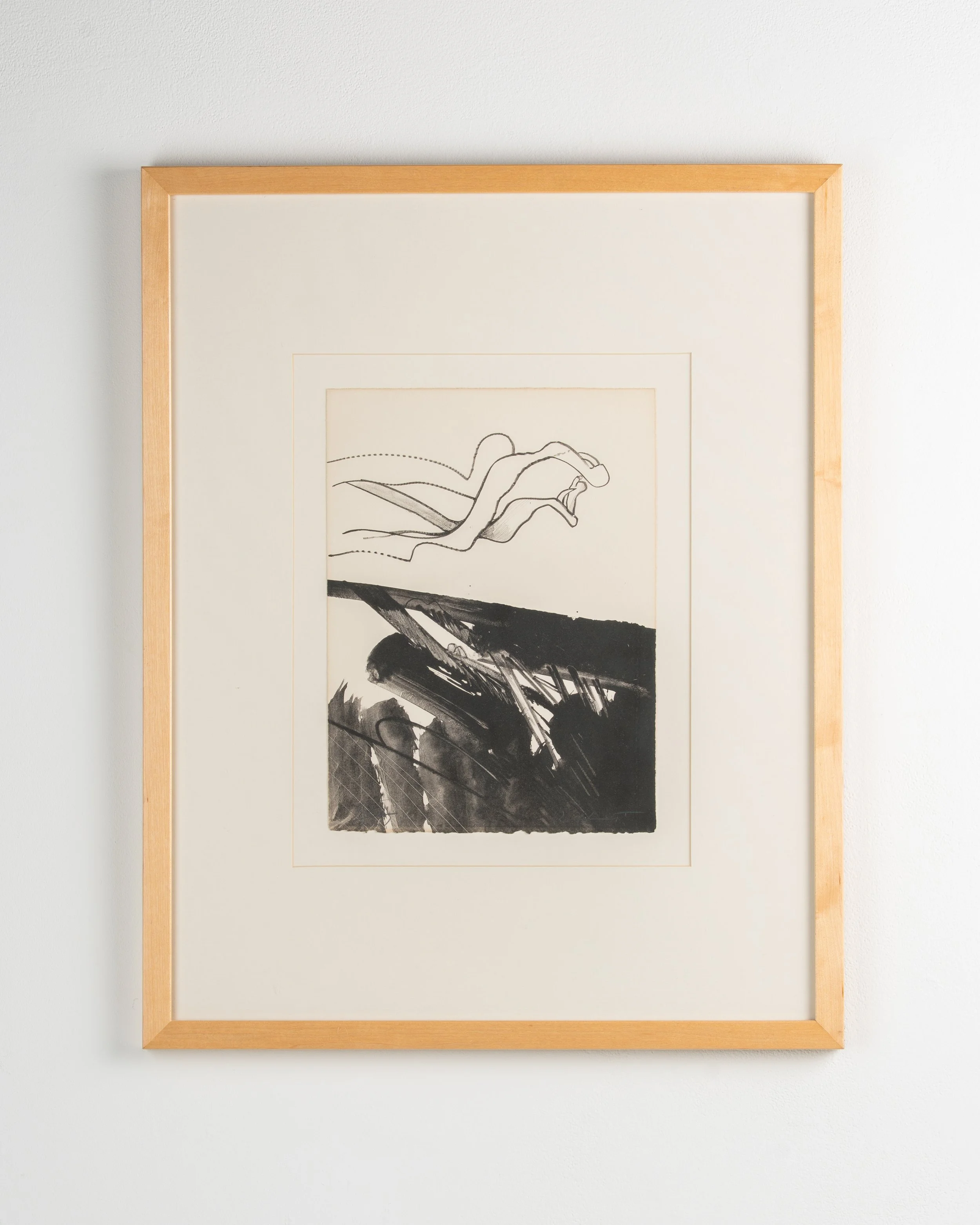
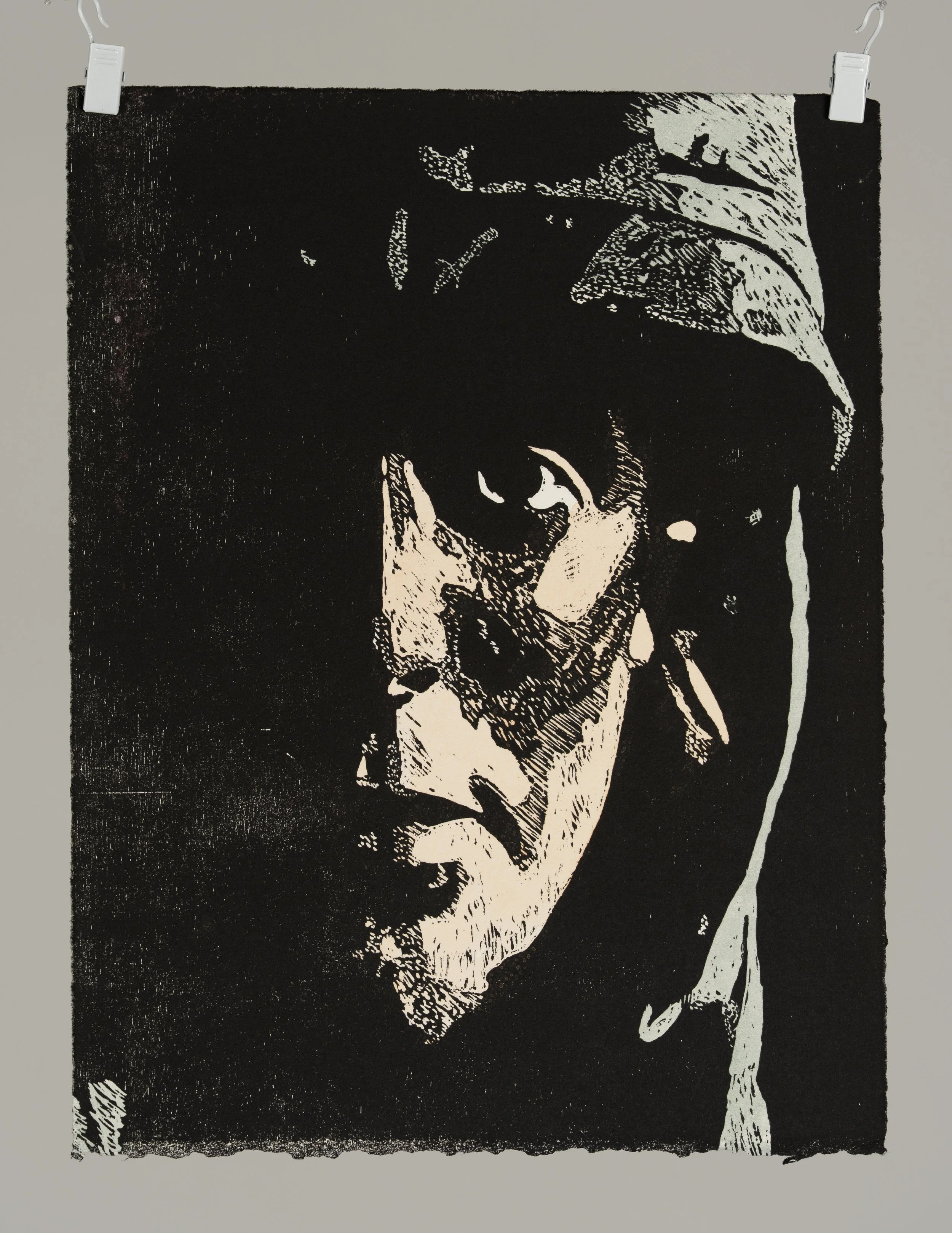
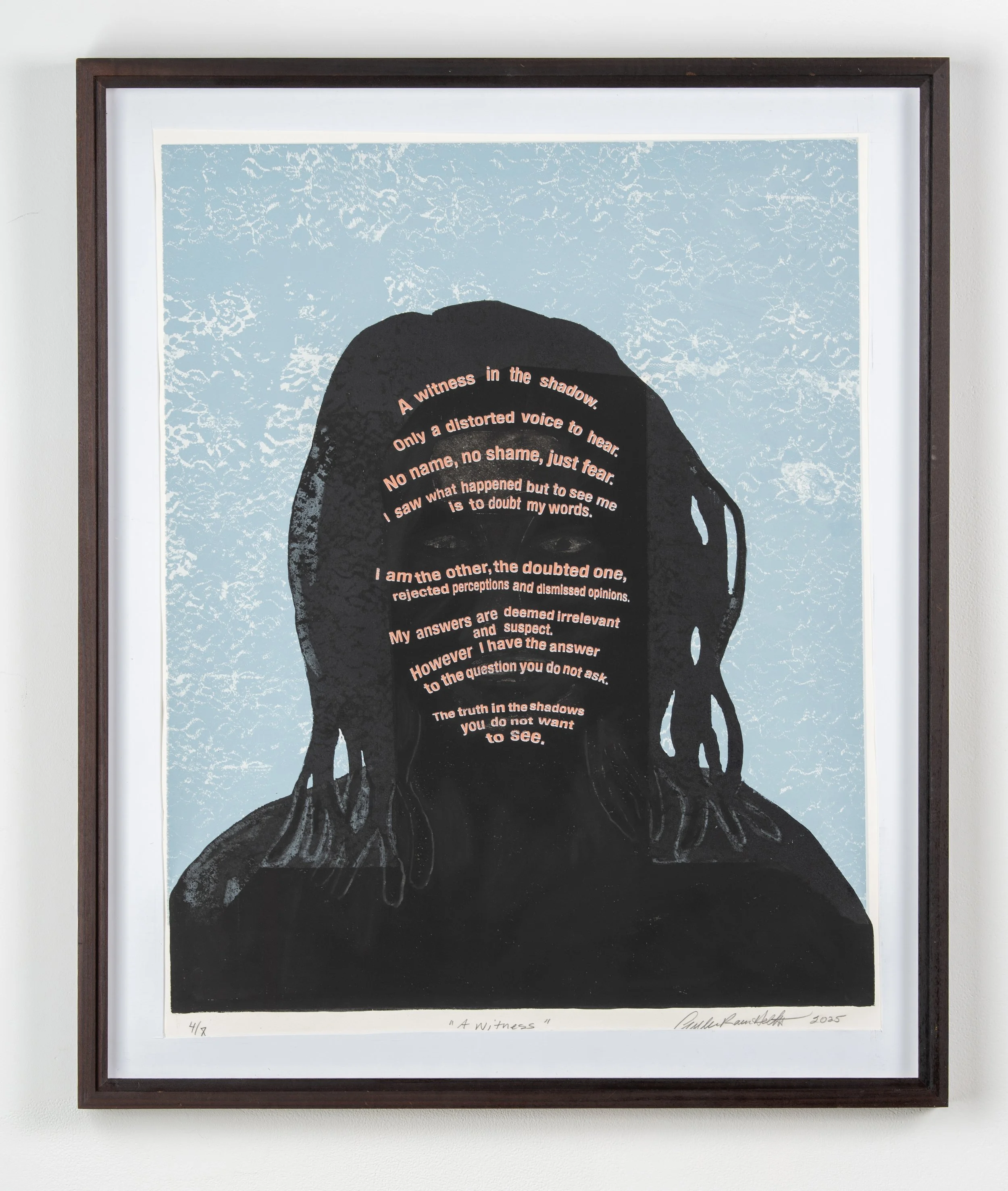
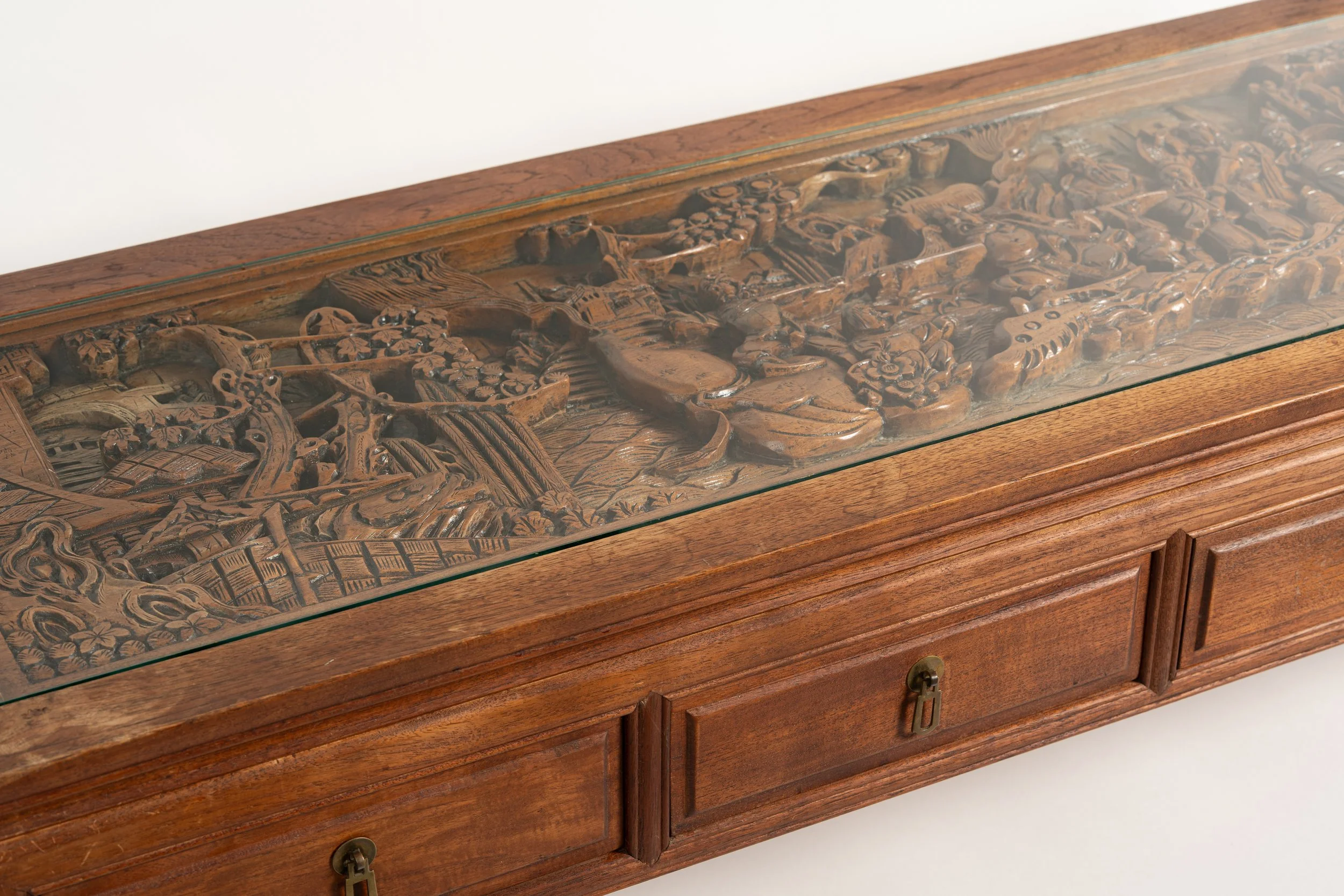
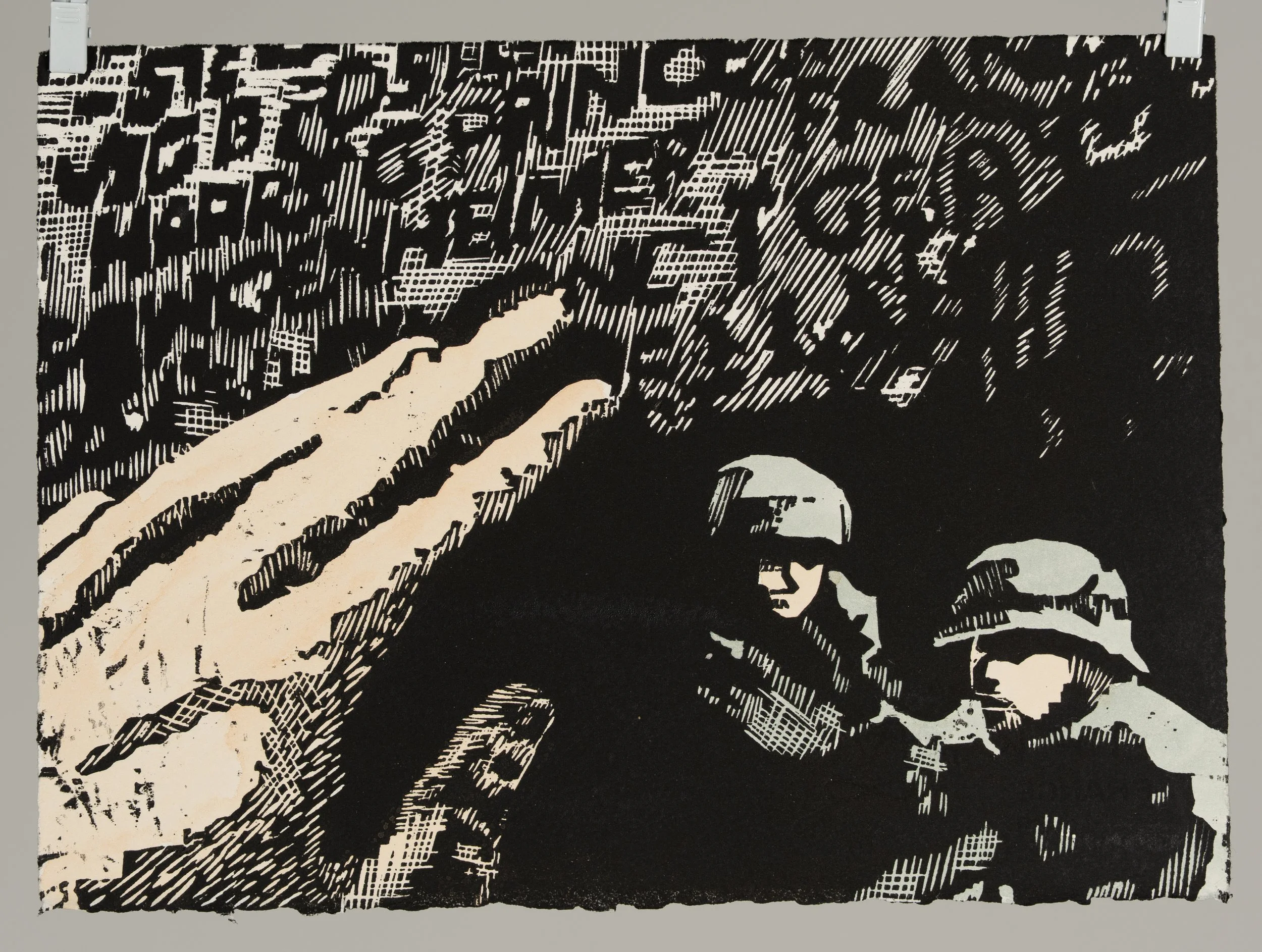
In the practice of a master printmaker, Curlee Raven Holton is a skilled practitioner working alongside artists to assist them in the realization of their visual creation. Holton’s work, Things That Won’t Let Go, visually depicts the battle of the subconscious and the physical (the war within oneself). Witness exams a lifetime of instances of not being heard or seen. These works exemplify the persistence of memories and the subconscious lingering of uncomfortable aspects of a life lived. Holton was one of the first three endowed African American professors in art in the United States, yet the persistence in his artistic practice requires the creation of endurance to create art, despite his recognition and merit rated validation.
The experiences of African American soldiers expose the contradictions of fighting for democratic ideals abroad while confronting systemic inequality at home—a tension powerfully analyzed by Wil Haygood in A War Within the War.
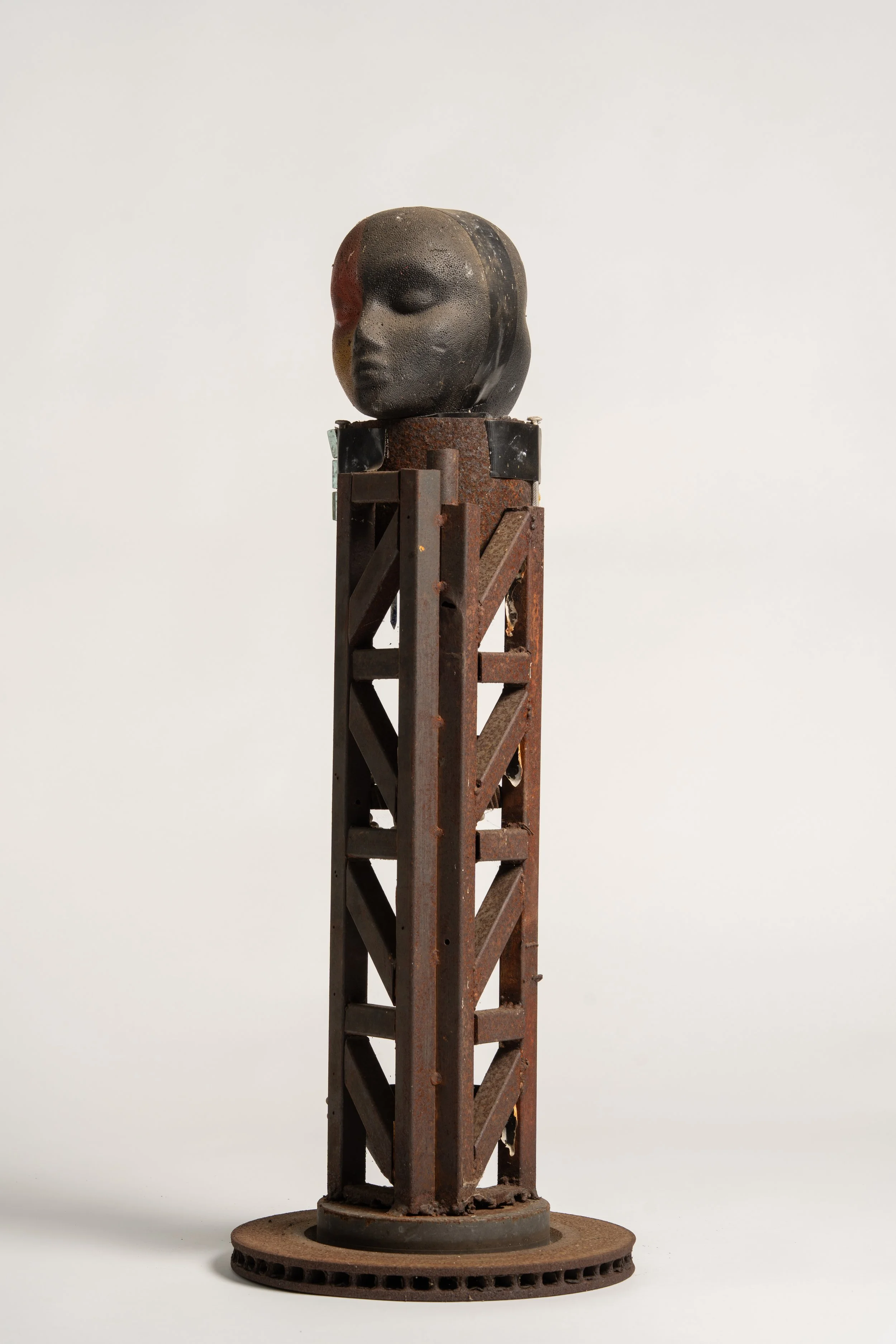
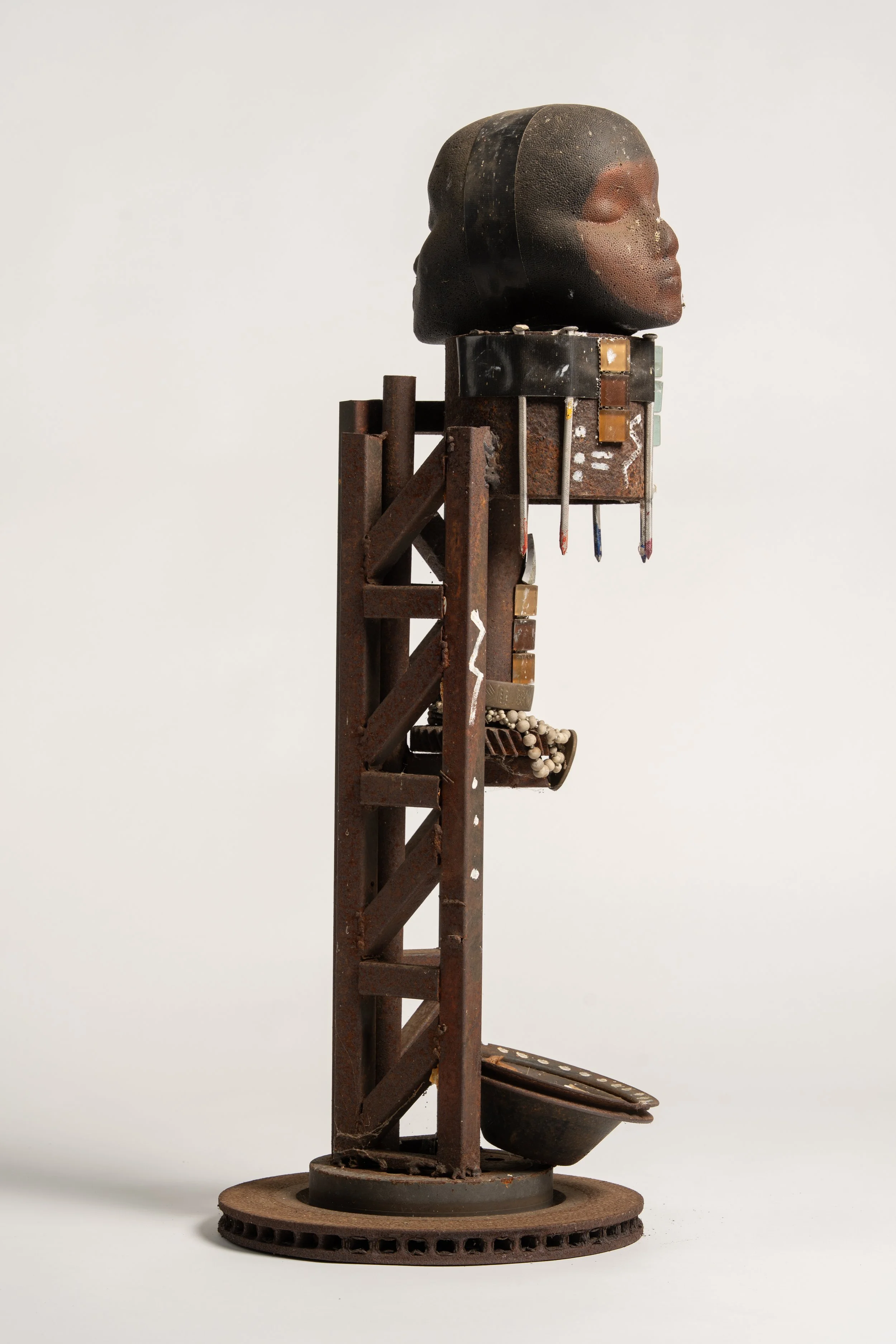
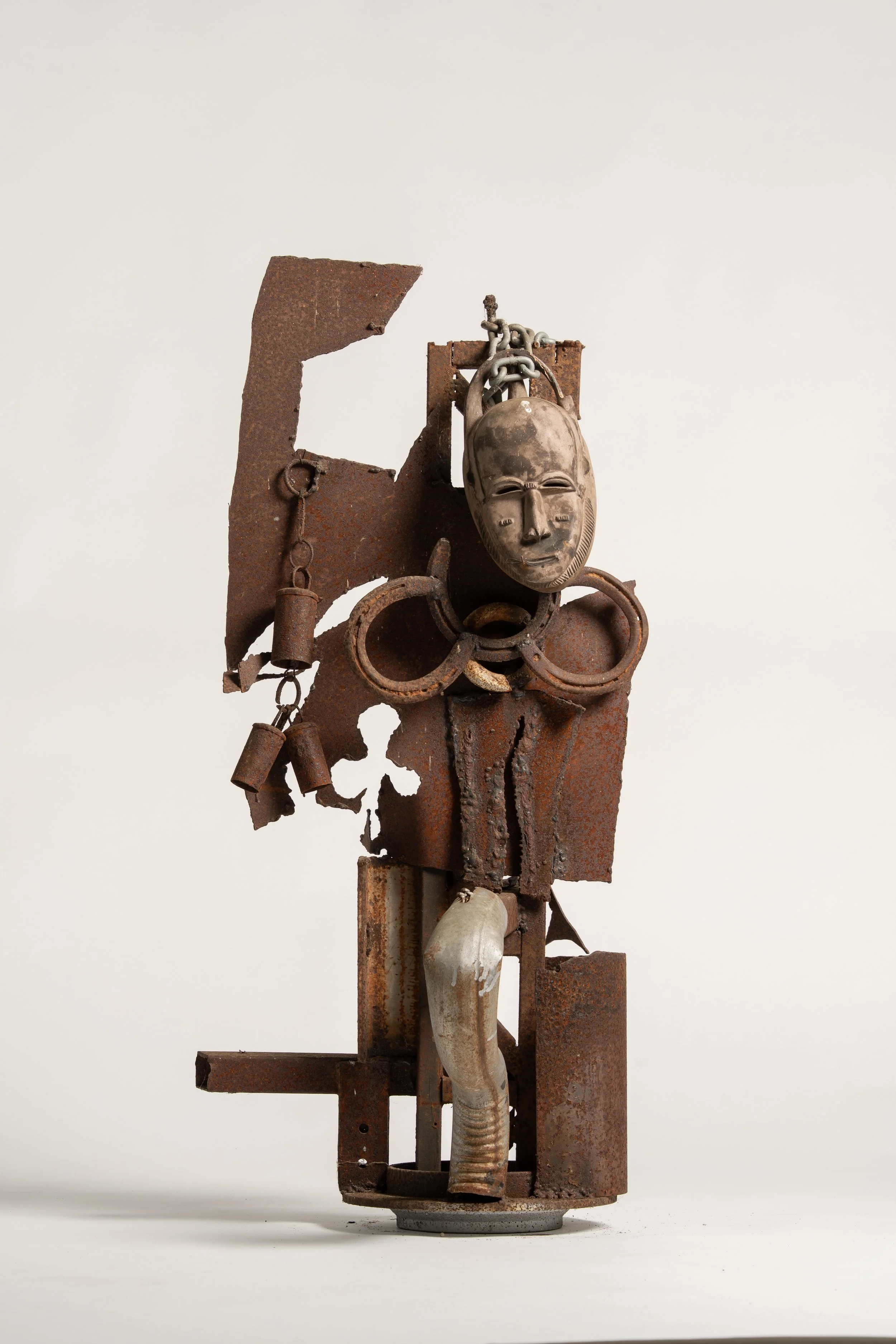
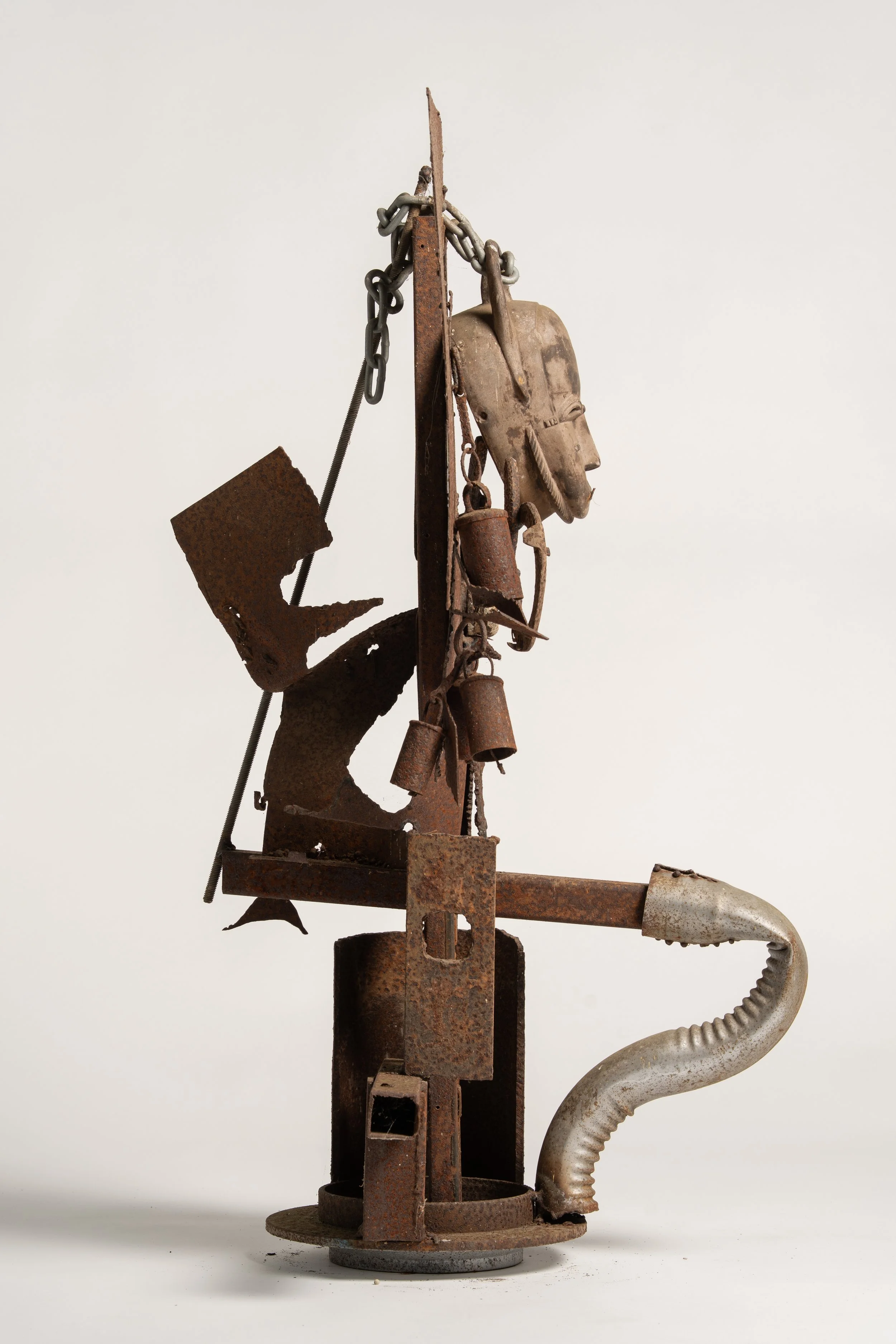
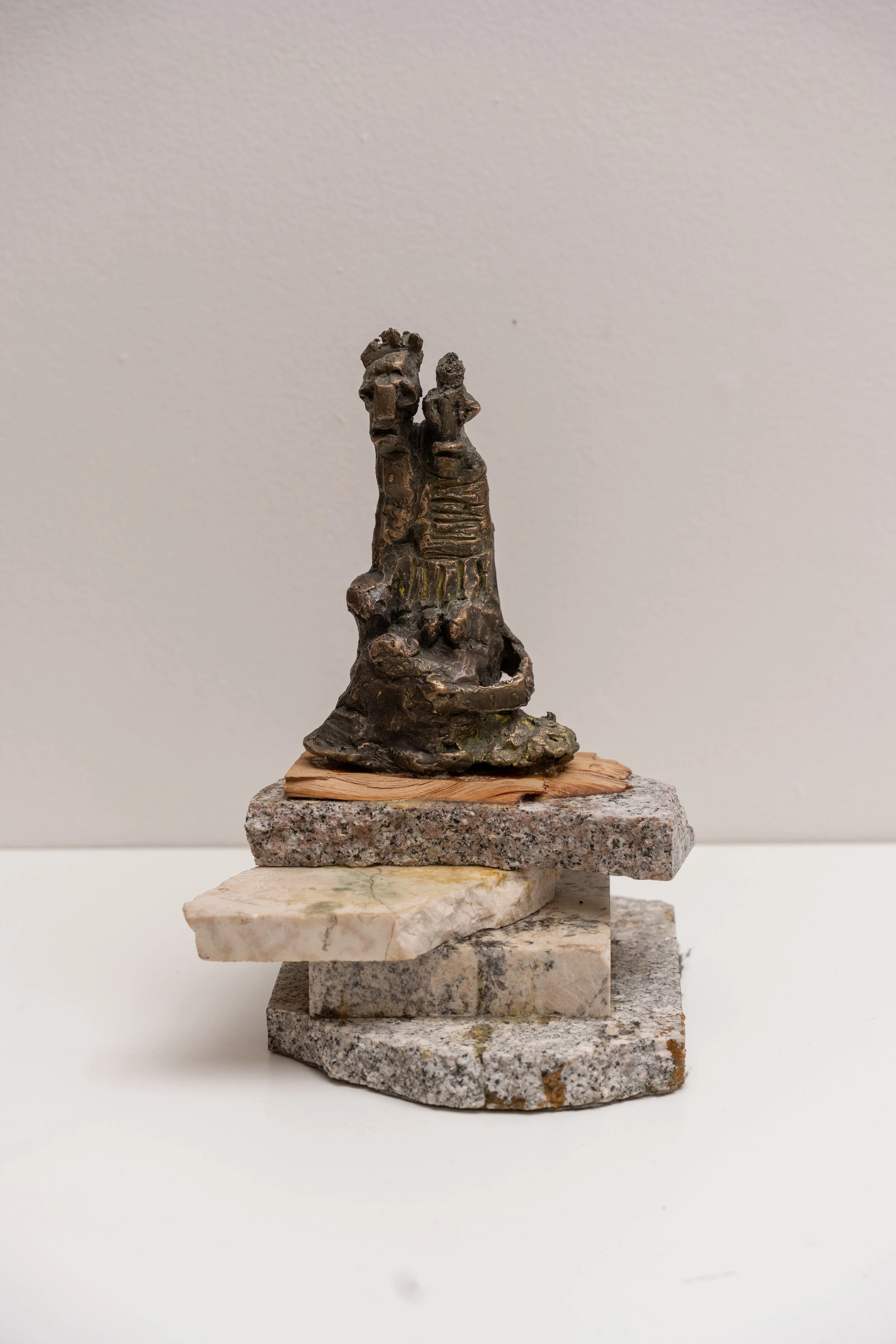
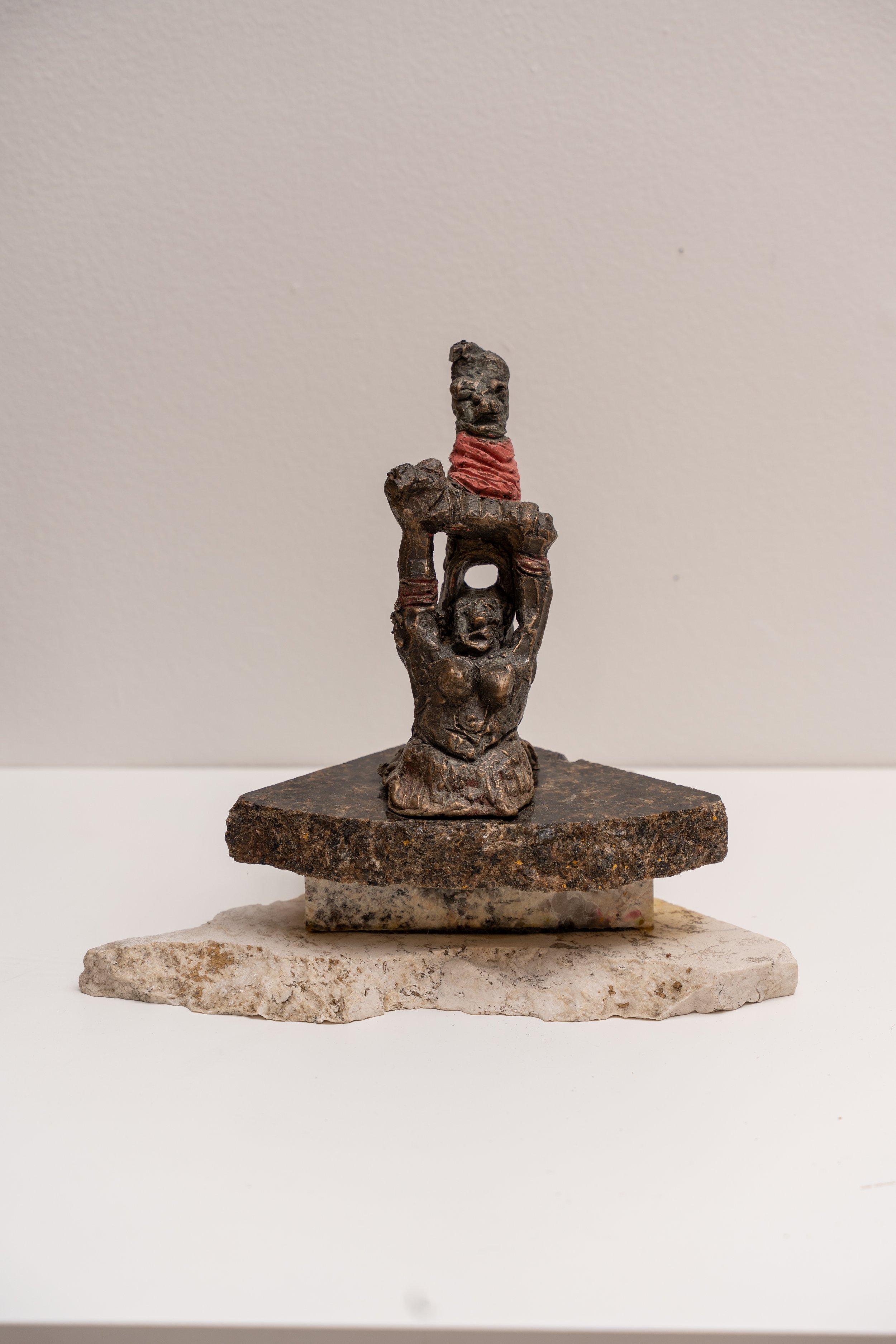
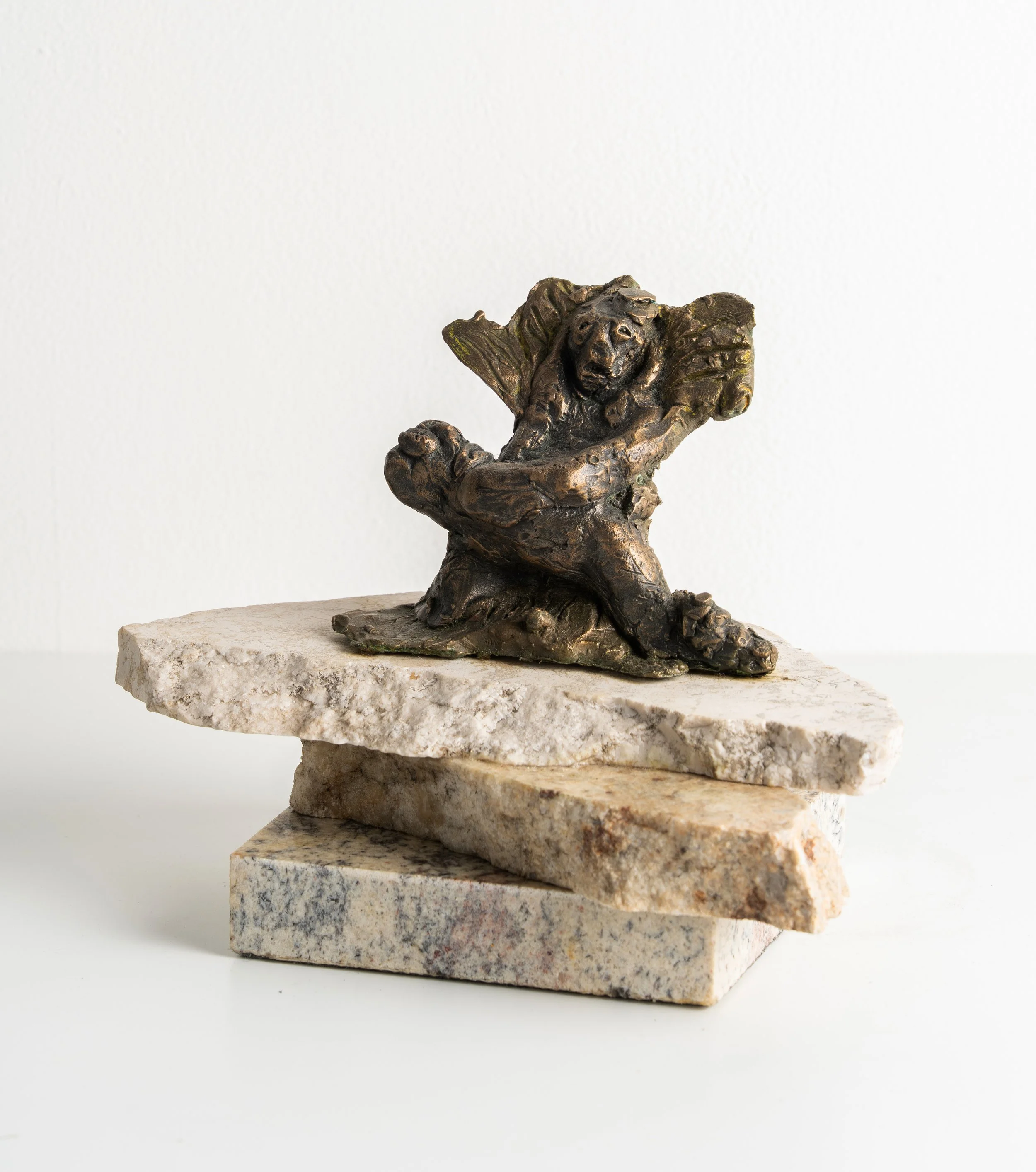
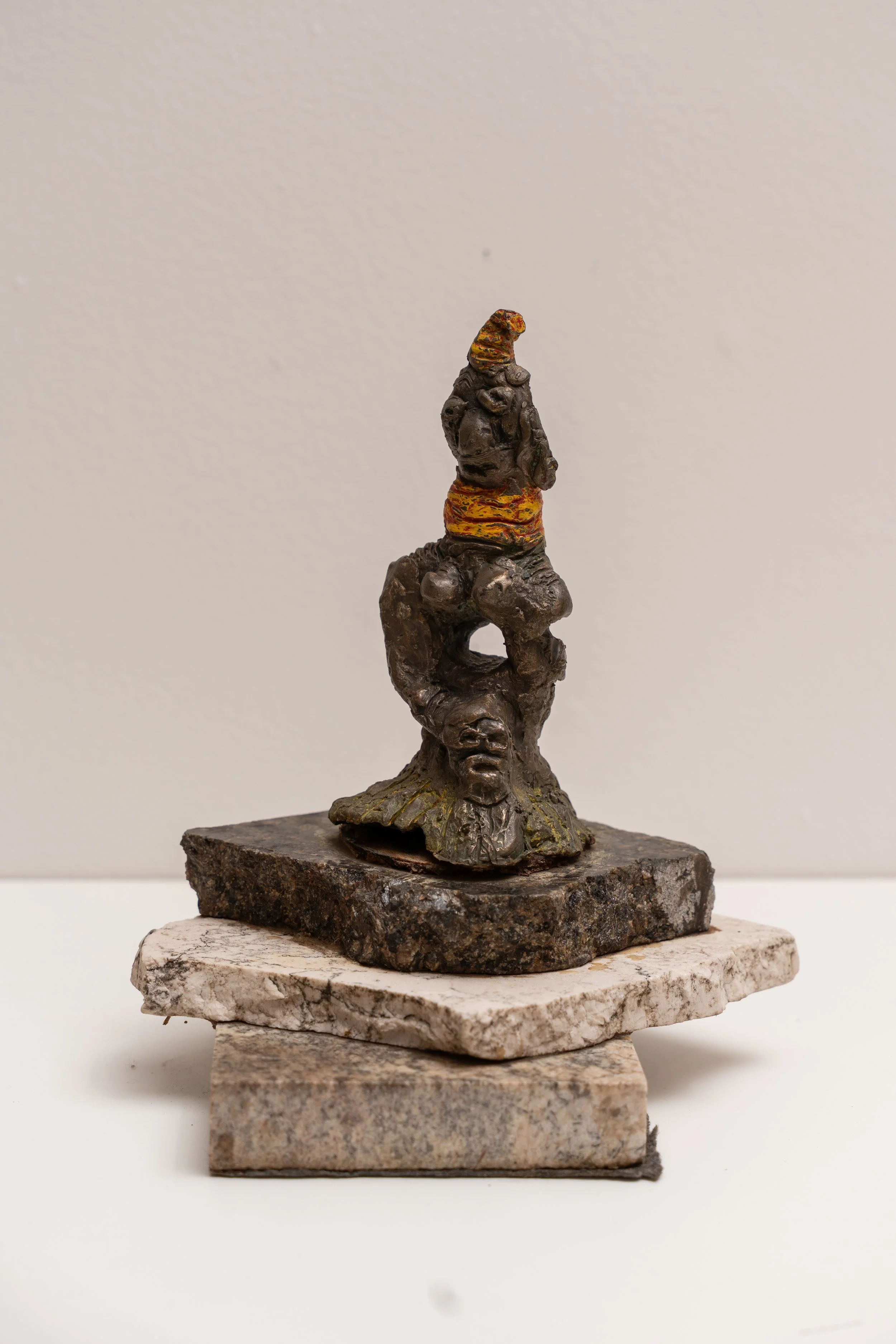
The work of artists such as Ulysses Marshall embodies the complexity of inequality. His sculpture The Journey Together draws upon diasporic symbolism, invoking ancestral presence and continuity. Marshall’s experience as a Vietnam veteran and as an African American navigating racial injustice informs an artistic practice that is simultaneously personal and political—where resilience is neither abstract nor symbolic, but materially and historically grounded. Marshall’s sculpture depicts the strength of the union of a woman and a man, reflecting their joint ancestral memories. His stylistic choice references African sculpture of Benin, emphasizing the strength of the message in the choice of materials, metal and shells.
The tension of racial pressure is seen in the work of Marshall, Holton, and Hunt. The art by these artists shows how art transforms lives and builds resilience in their respective practices.
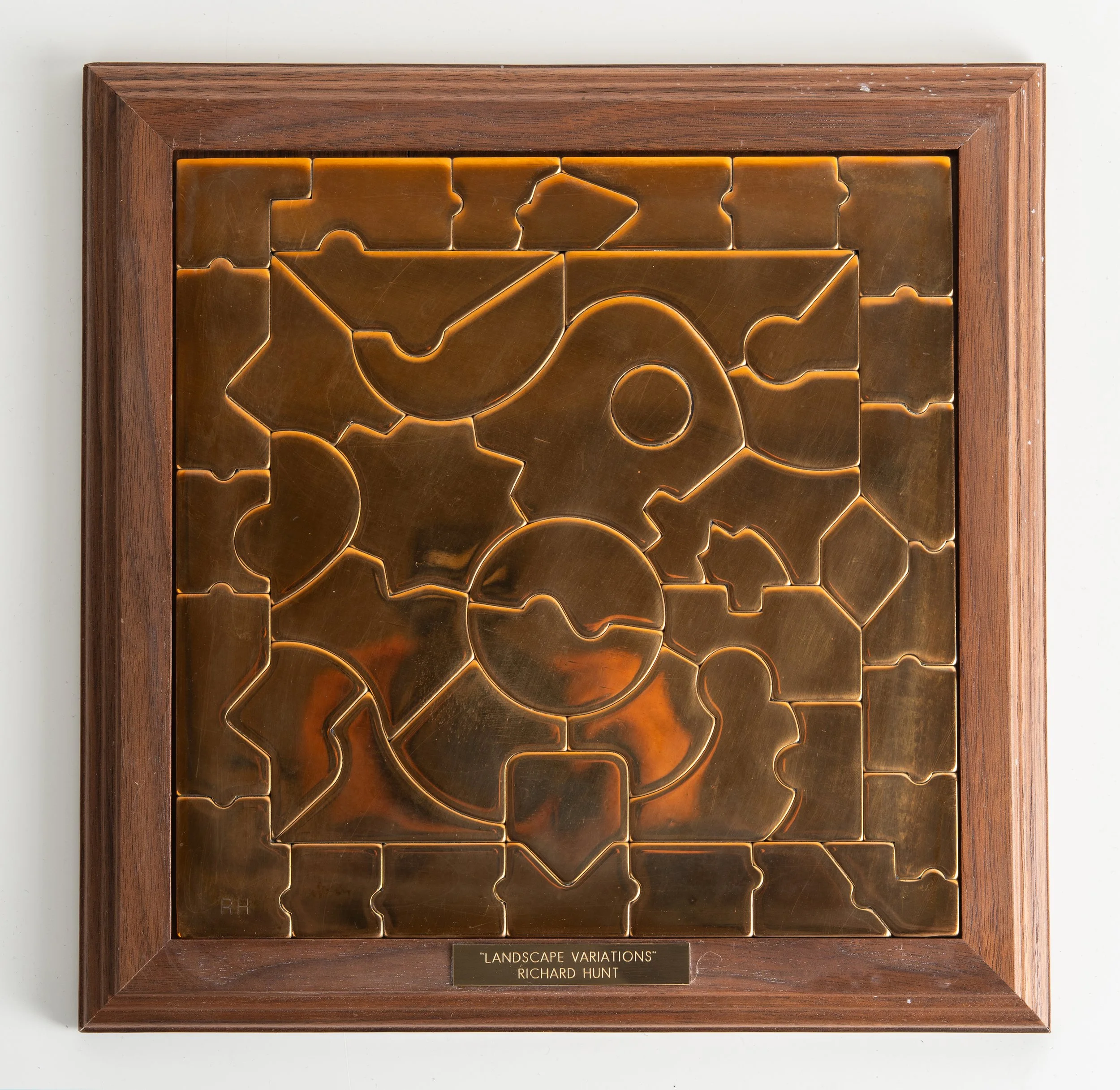
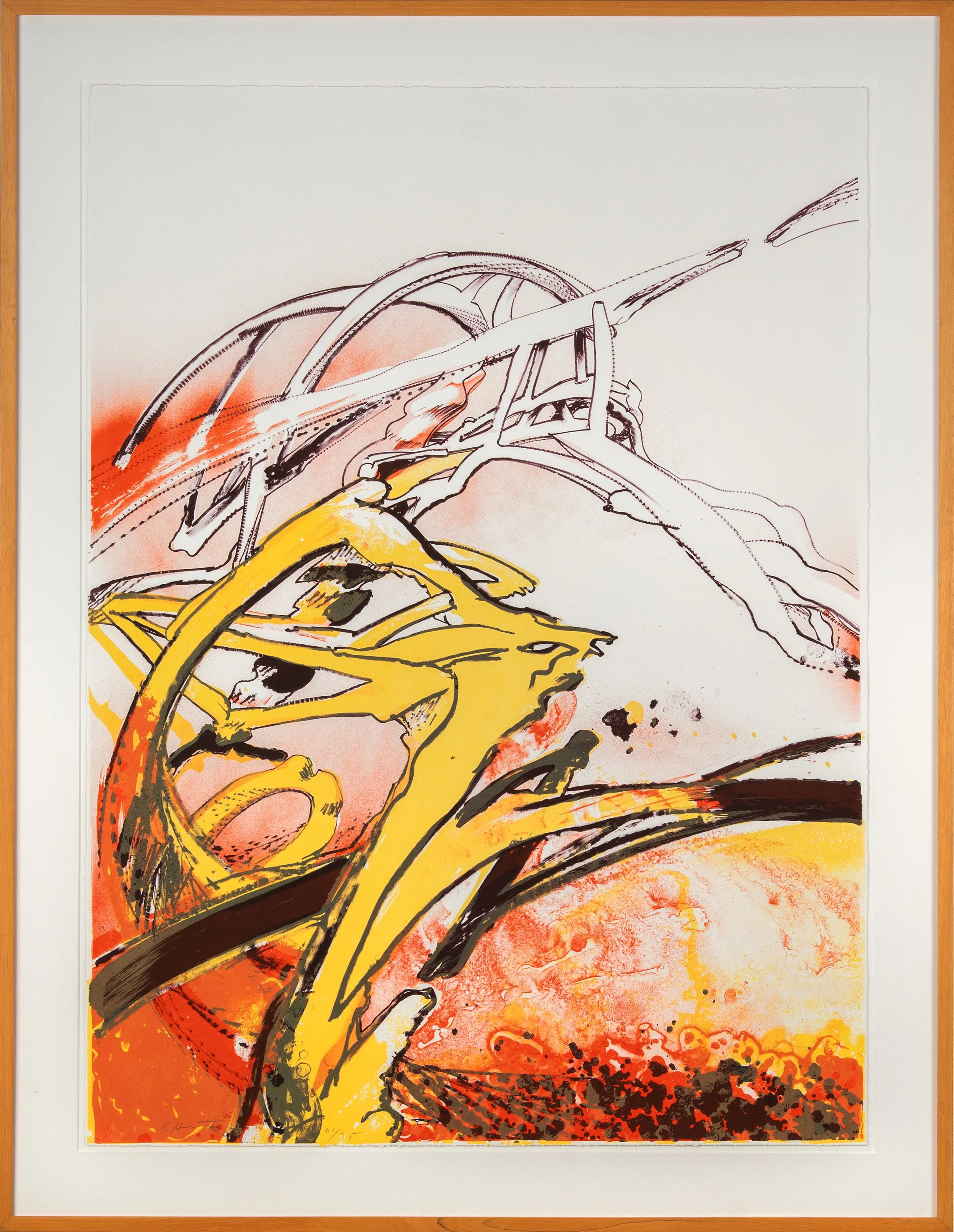
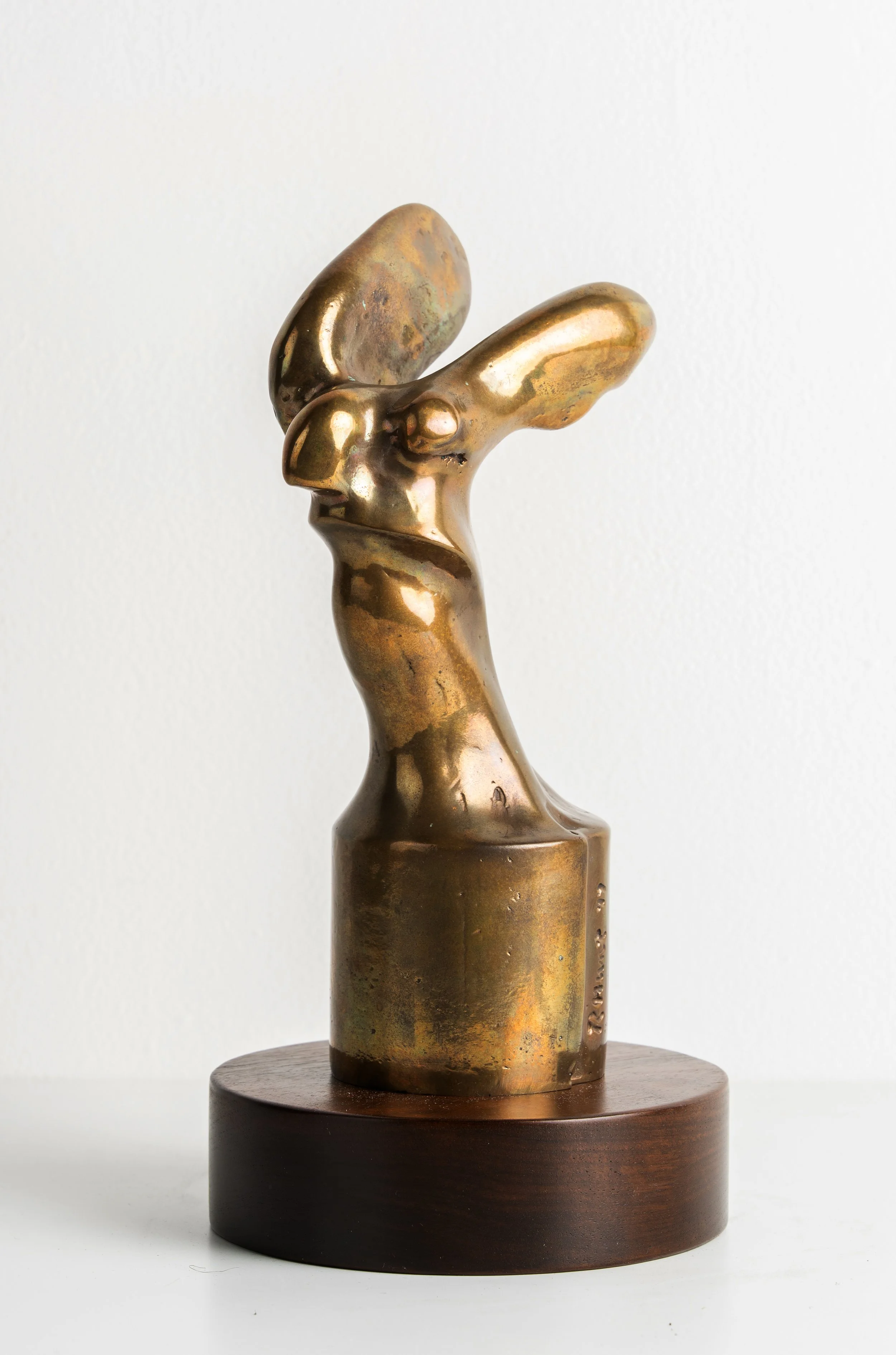
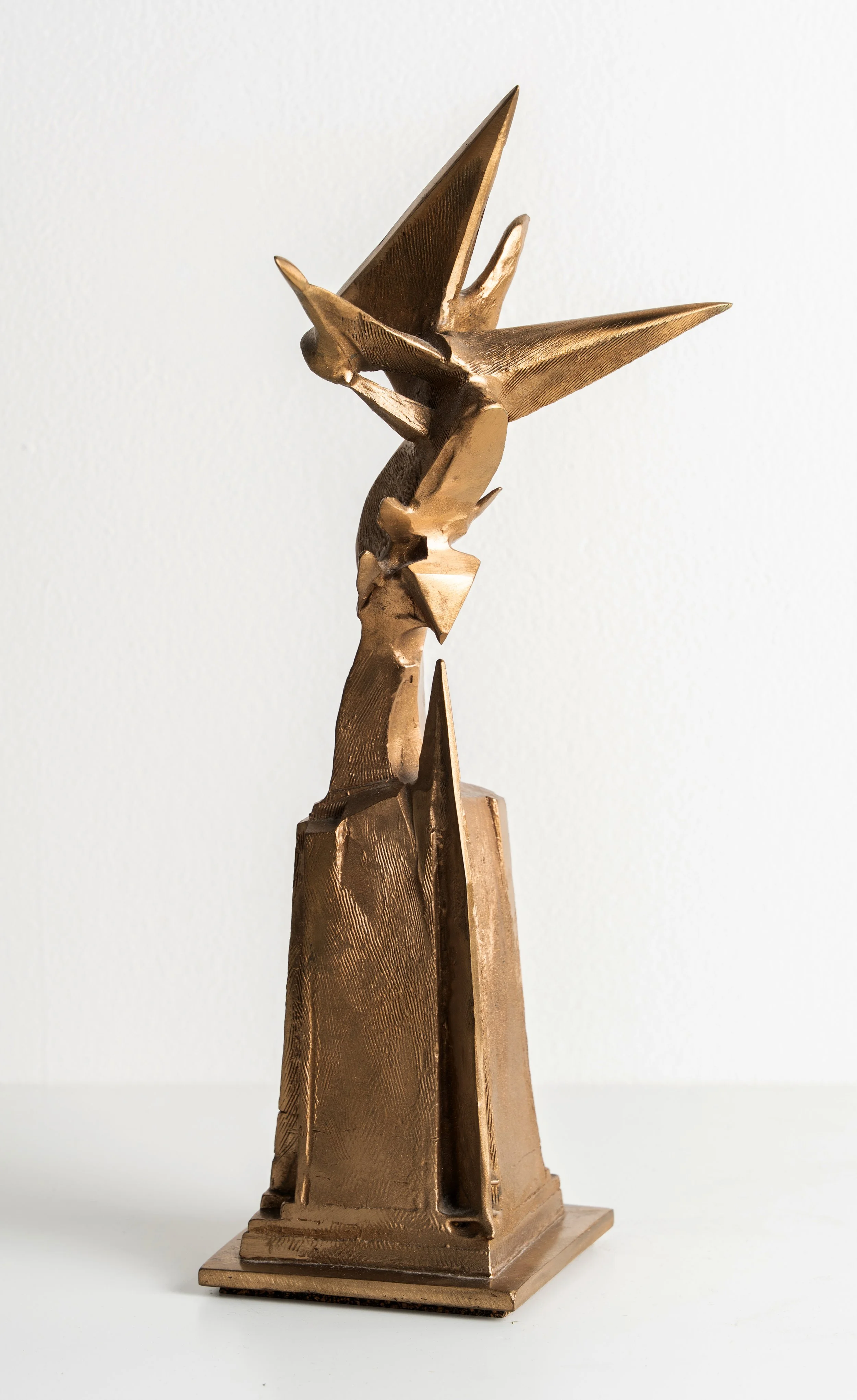
Resilience after military service requires rebuilding a sense of purpose, managing psychological and physical trauma, and reconnecting with community and self. Richard Hunt’s sculptural work contributes to the exhibition’s thematic exploration of resilience and transformation. Though not a Vietnam combat veteran, he served in the Army from 1958 through 1960. Hunt’s role in the selection of the Vietnam Veterans Memorial design situates him within the broader discourse of memory, representation, and public commemoration. His sculpture, Wings, evokes both vulnerability and transcendence, suggesting an embodied negotiation between weight and elevation. Hunt’s Over Wisdom Bridge is a translation of his signature welded-metal sculpture. The print evokes two abstract forms reaching toward one another, symbolizing the sharing of knowledge.
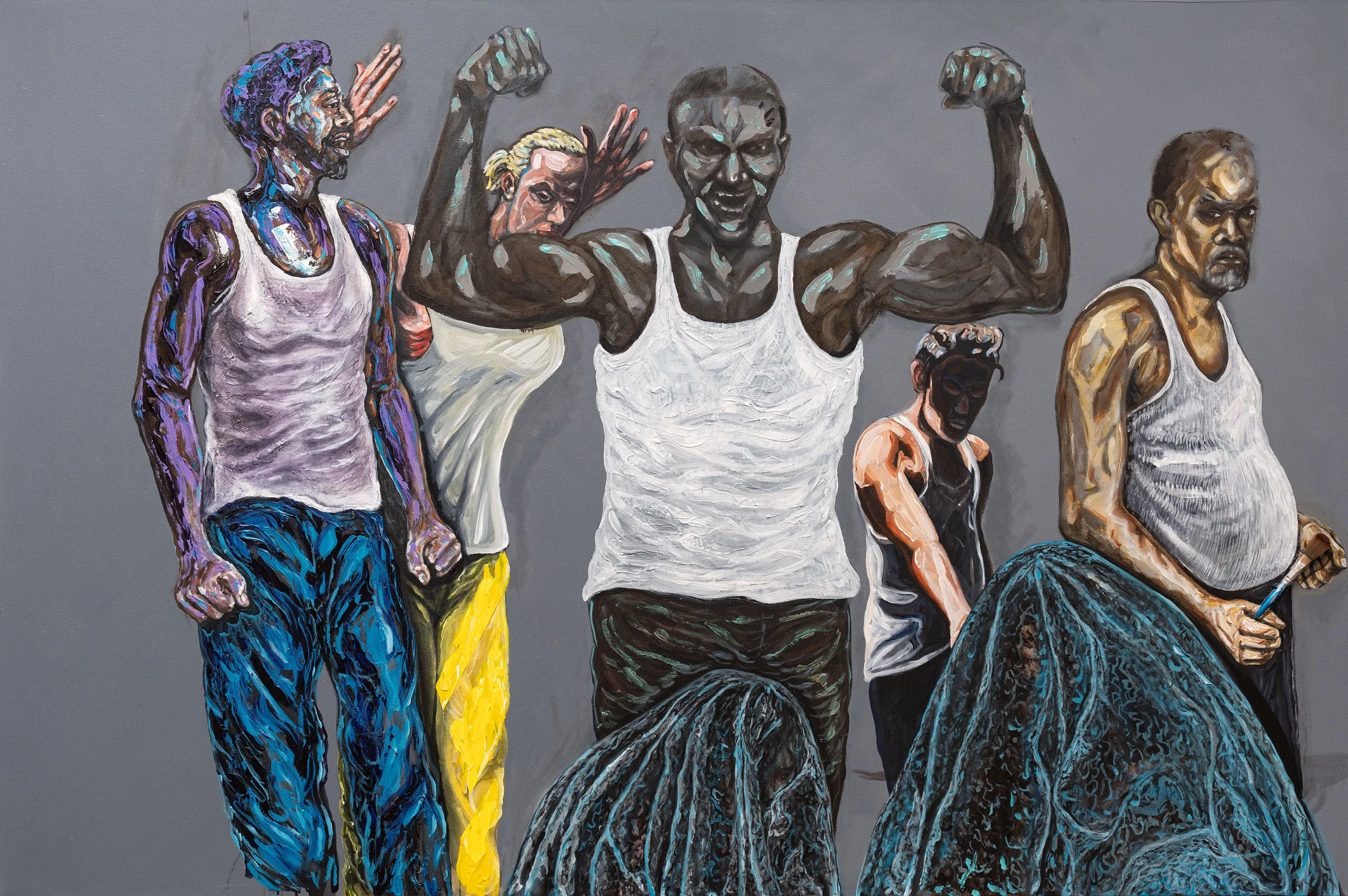
Resilience is visible in the painting of Curlee Raven Holton, Power. Here you see a group of men of color declaring power through gesture, strength, and creative expression.The conversation is continued in Marshall’s diptych, Hero and Legacy. Marshall creates the energy of individual perseverance despite life’s unpredictability. In Hero a man and his family preserve their life to create a legacy. Legacy exemplifies ancestral intelligence.
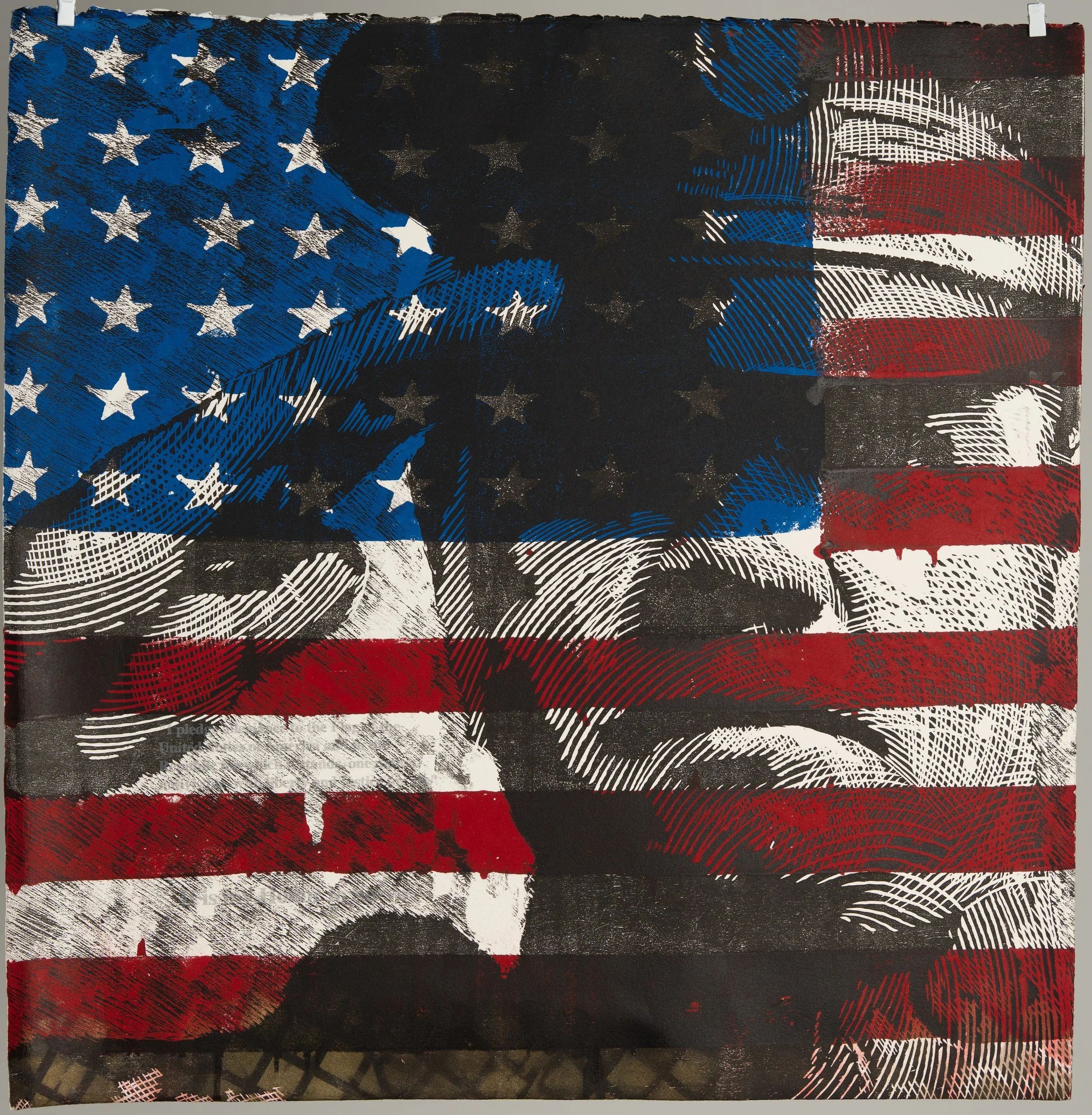
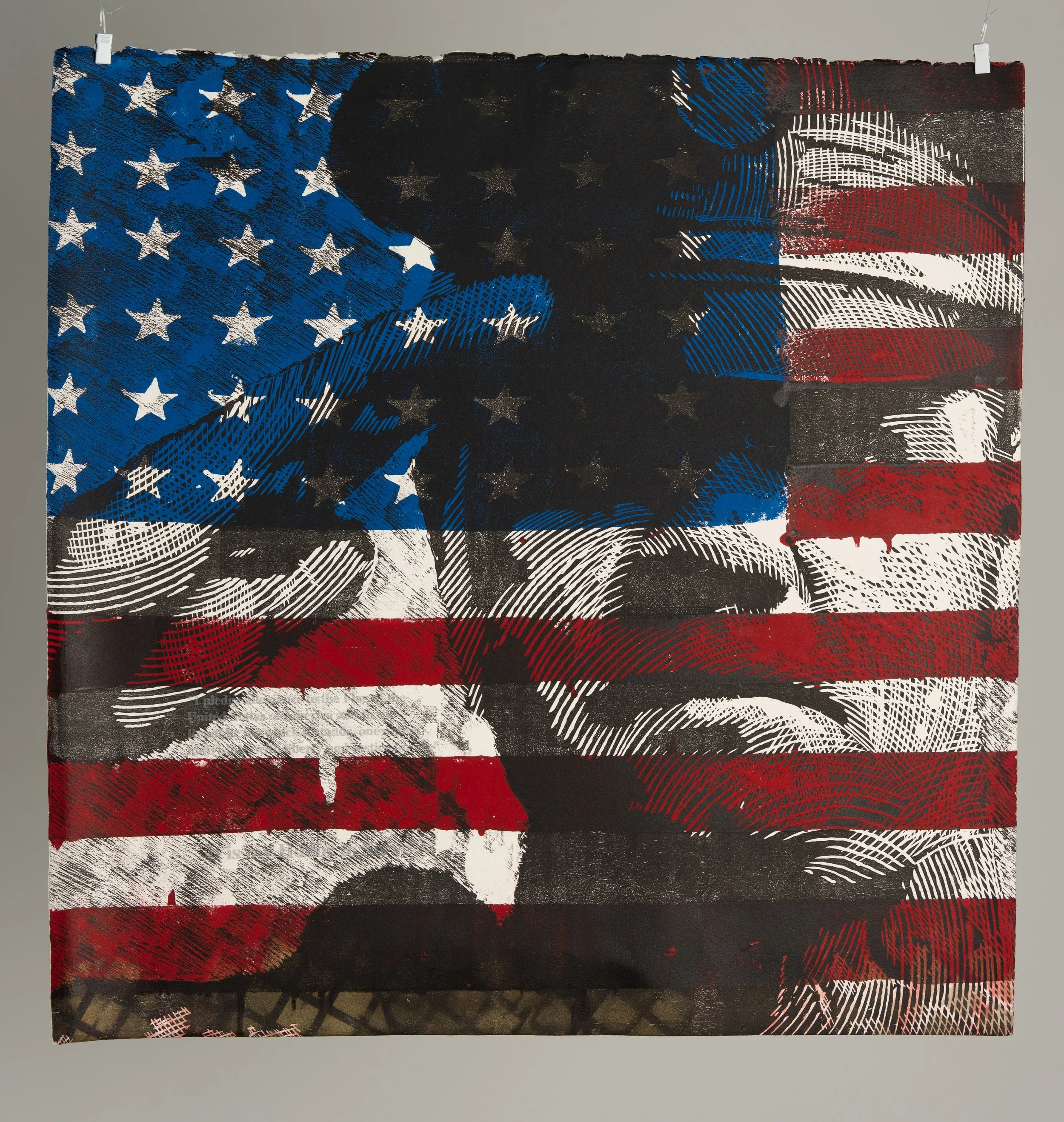
Patrick Sargent is an example of a decolonized collaboration using democratic techniques in printmaking and papermaking. Sargent and collaborator Erwin Thamm launched a collaboration in 2012 to continue artistic engagement with local and national communities and veteran support programs. Sargent American Hero (Babe Ruth) depicts the legendary baseball athlete as a hero and depicts an abstract image of him in uniform overlaid across the American Flag. The intersectionality of this image presents the duality that is universal in the lives of men and women who have served in the United States military.
The exhibition opens a space of encounter—one that invites viewers to engage with unresolved questions and enduring tensions. What we see are artists who became soldiers and returned to ART.
Veterans’ Statistics
U.S. veterans 17.3 million
Post-9/11 veterans 4.4 million
Women veterans 700,000
Combat-injured veterans treated in post-9/11 wars approx. 20,000
Combat-related amputees post-9/11 approx. 3,000
Traumatic Brain Injury (TBI) over 556,000
Post-Traumatic Stress Disorder (PTSD) 440-800,000
Veterans experiencing Military Sexual Trauma (MST) 300,000 to 400,000
Veteran suicides 30,177
Veterans without stable housing 35,574
Veterans incarcerated 49,000
Veterans attending George Mason University 5,600
Military-Affiliated and Veteran Support Services:
Military-Affiliated and Veteran Students - Counseling and Psychological Services