
Voices Held in Earth: Mary Bowron’s Silent Witnesses
/Voices Held in Earth: Mary Bowron’s Silent Witnesses
March 5th, 2026 – April 24th, 2026
School of Art & Design 1st Floor Lobby
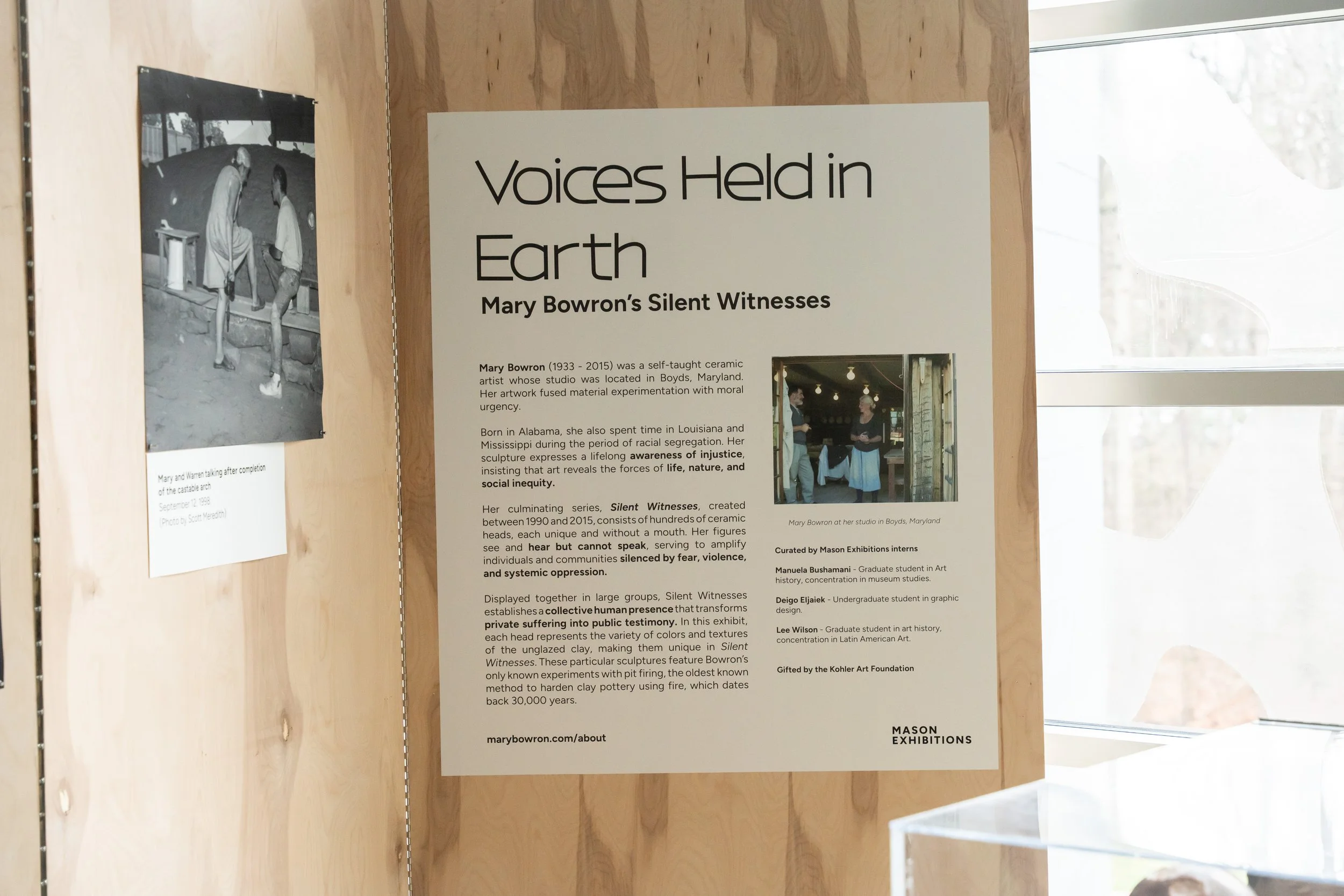
This exhibition was curated by Mason Exhibitions interns at George Mason University: Manuela Bushamani is an Art History graduate student with a concentration in museum studies. Diego Eljaiek is an undergraduate studying graphic design. Lee Wilson is an Art History graduate student with a focus on Latin American art.
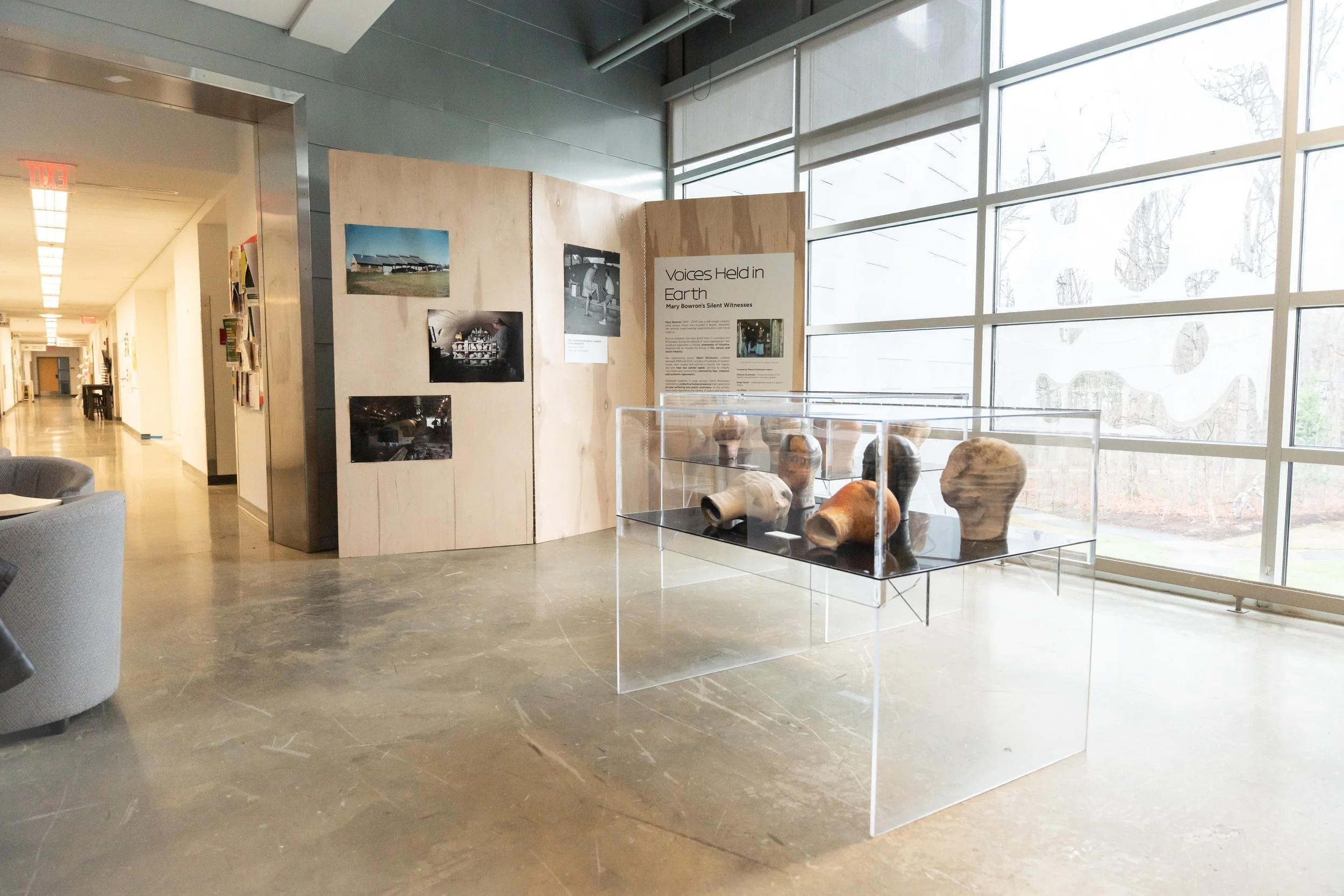
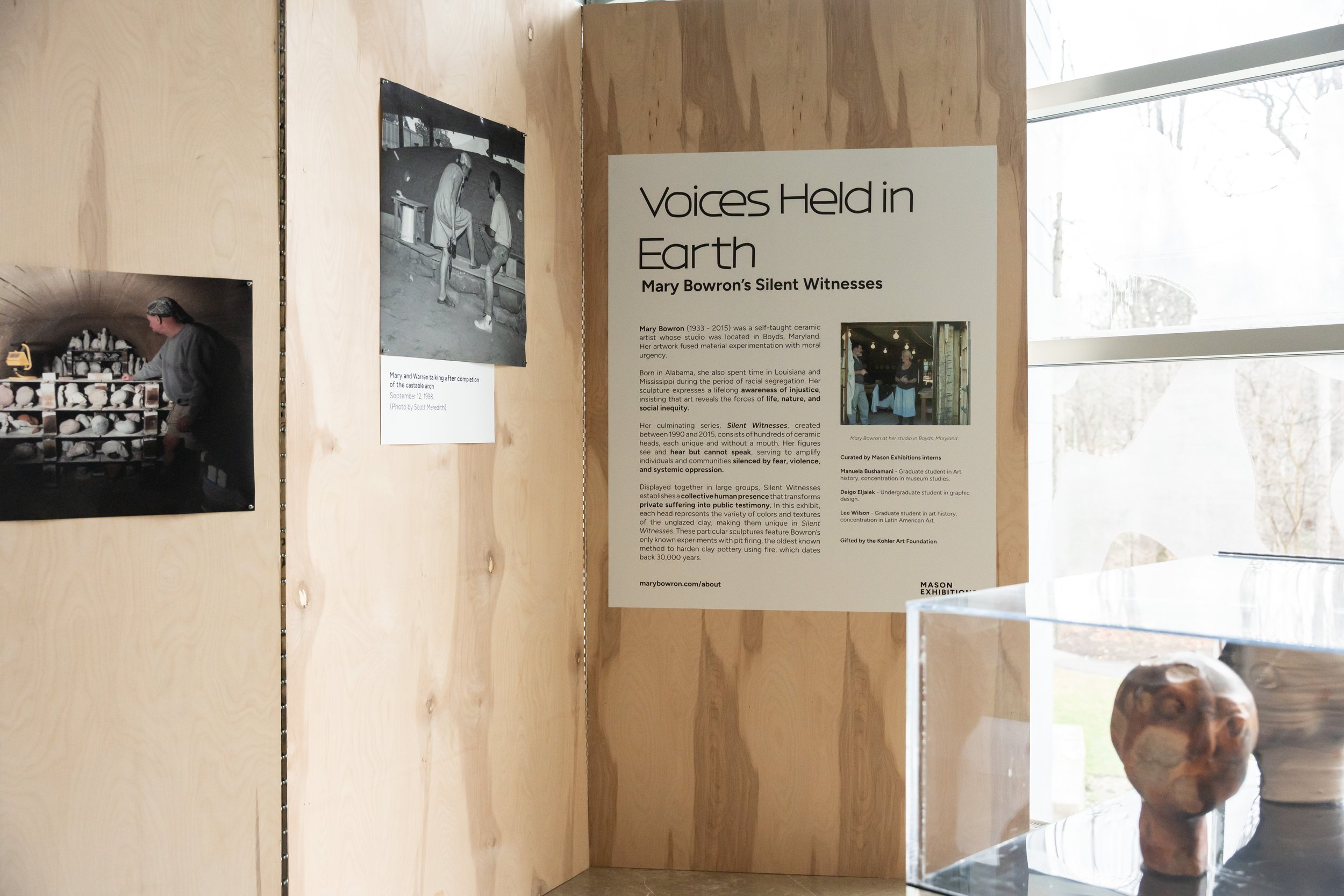
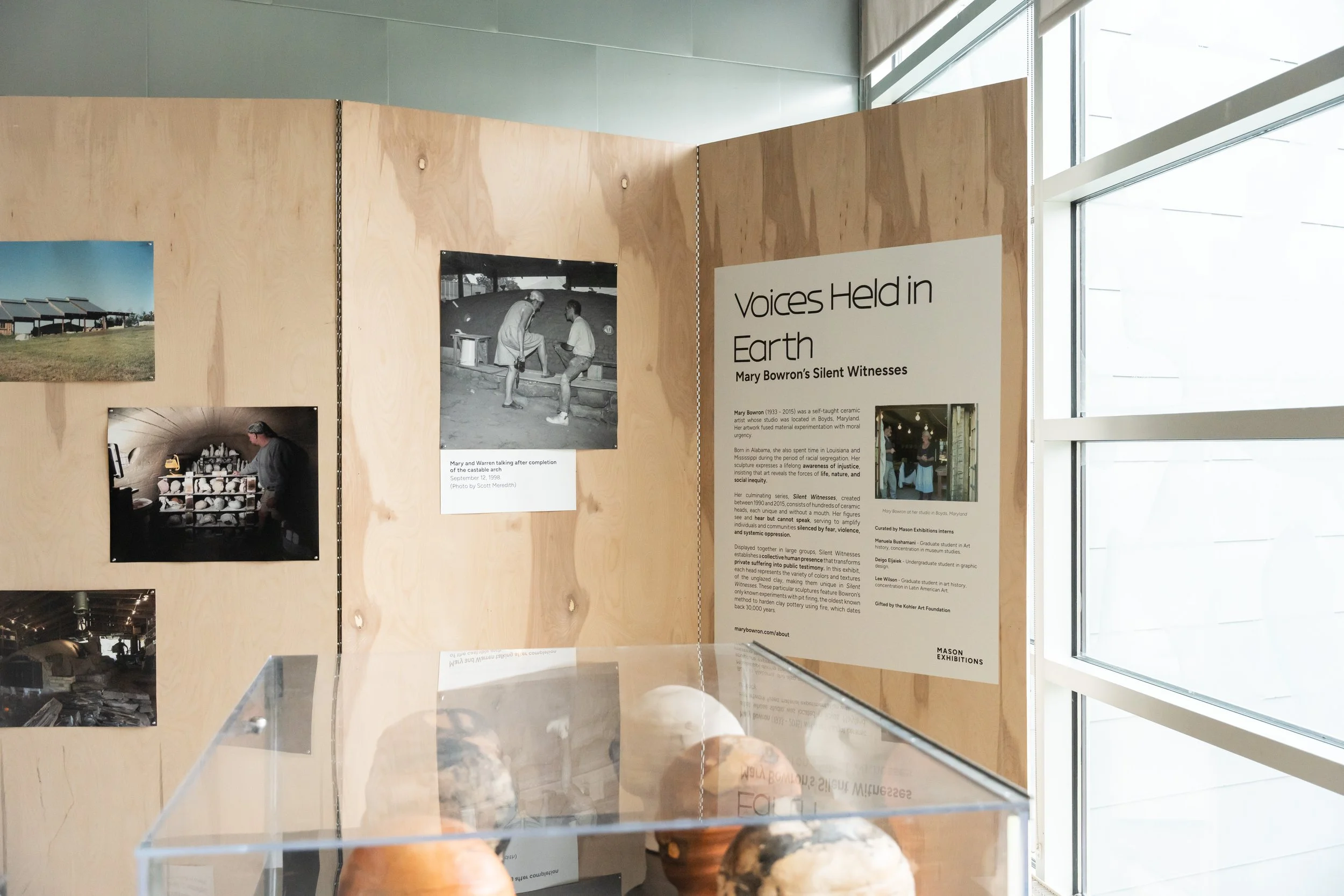
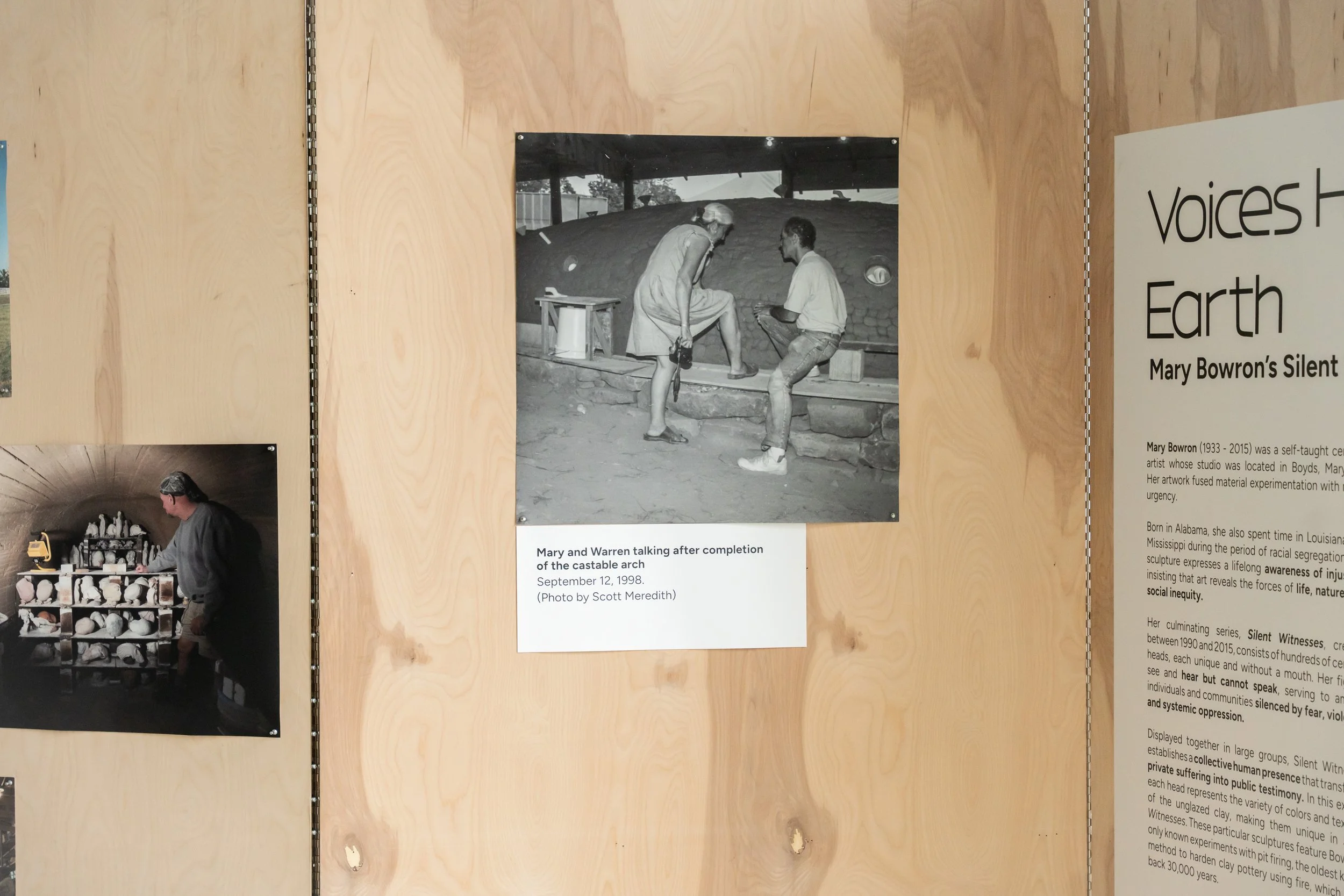
Mary Bowron was a self-taught ceramic artist whose work fused material experimentation with moral urgency. Raised in the American South during segregation, she carried a lifelong awareness of injustice that shaped her artistic purpose. Influenced by Asian ceramic traditions, Bowron rejected purely decorative aims and insisted that art confront the forces of life, nature, and inequity.
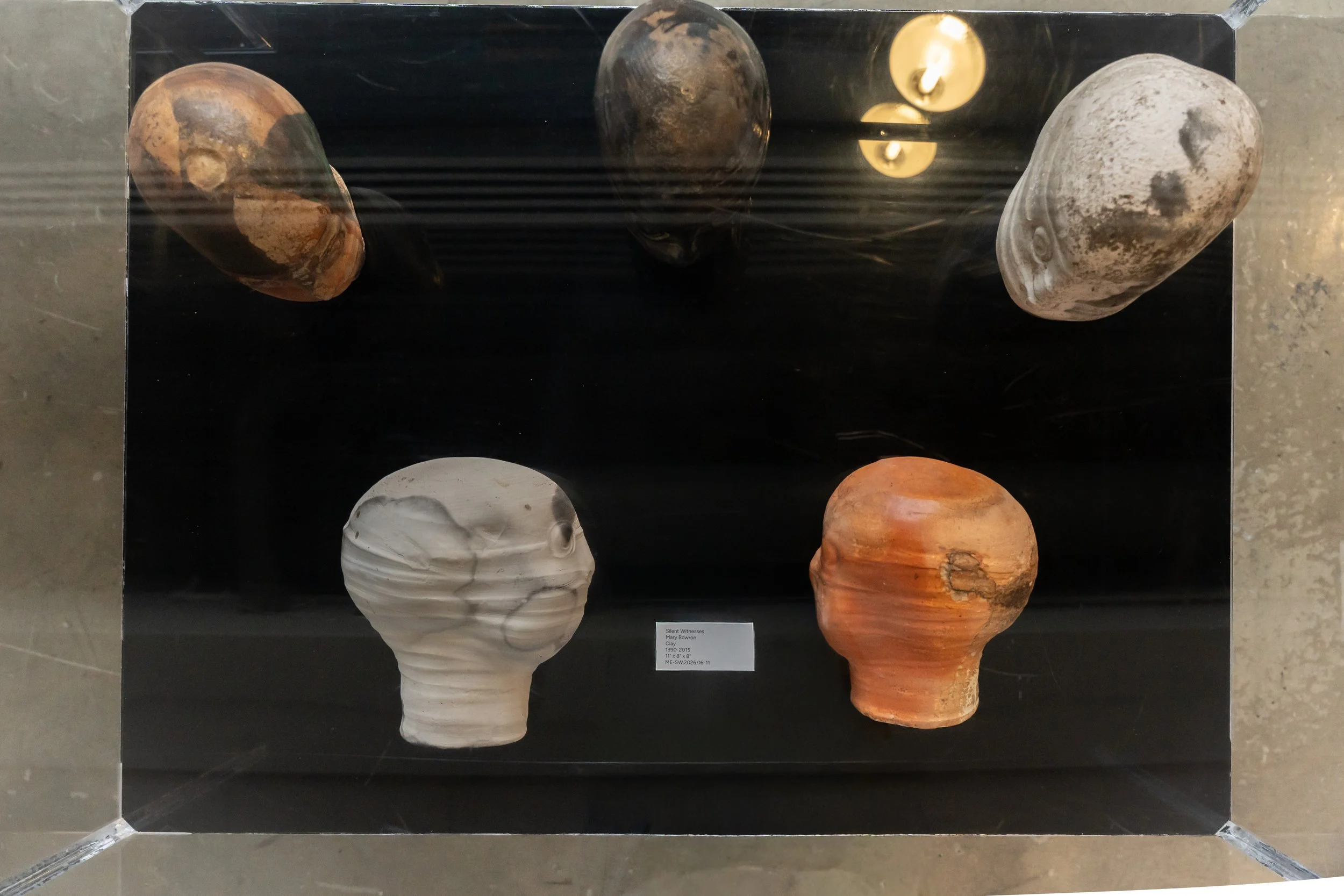
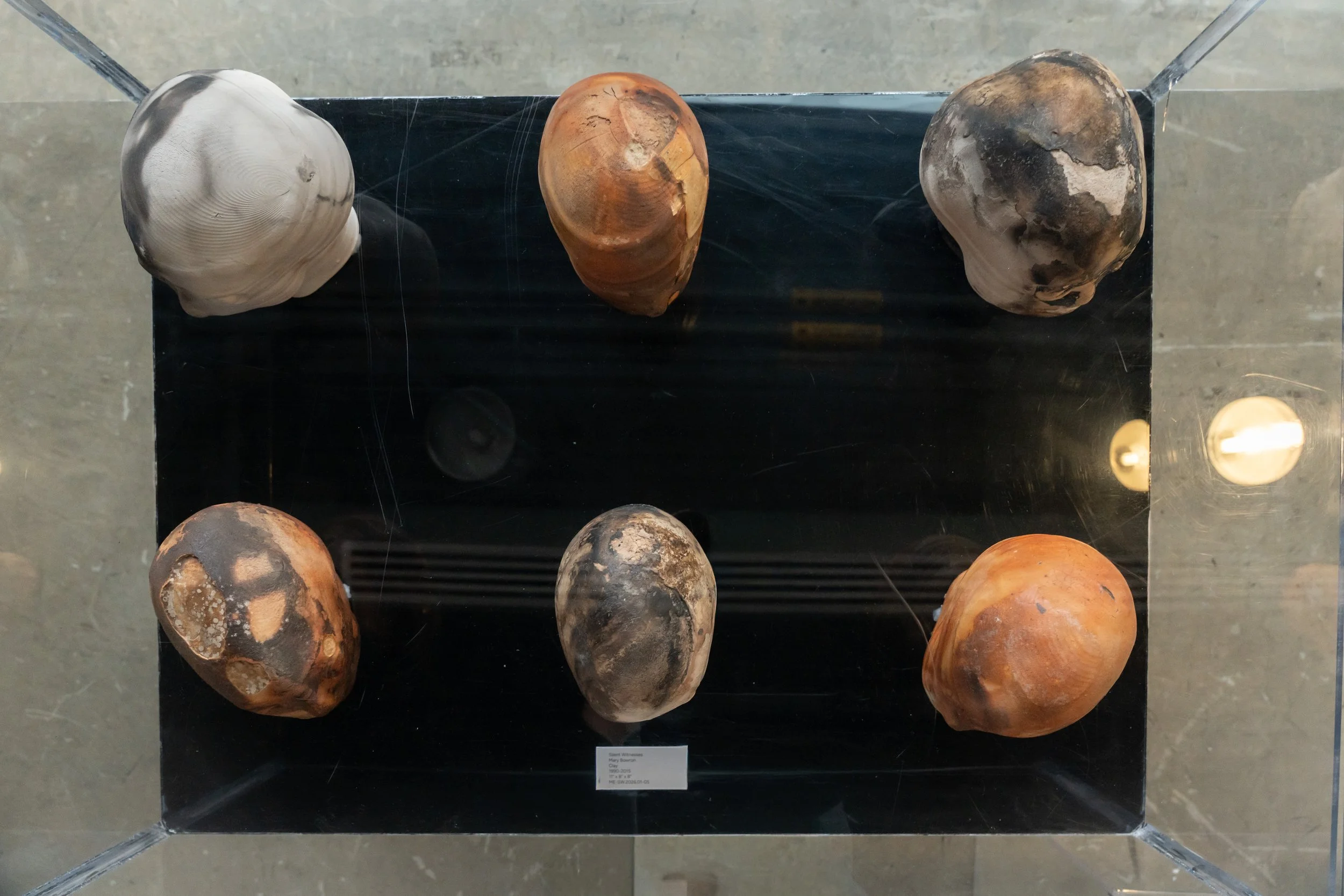
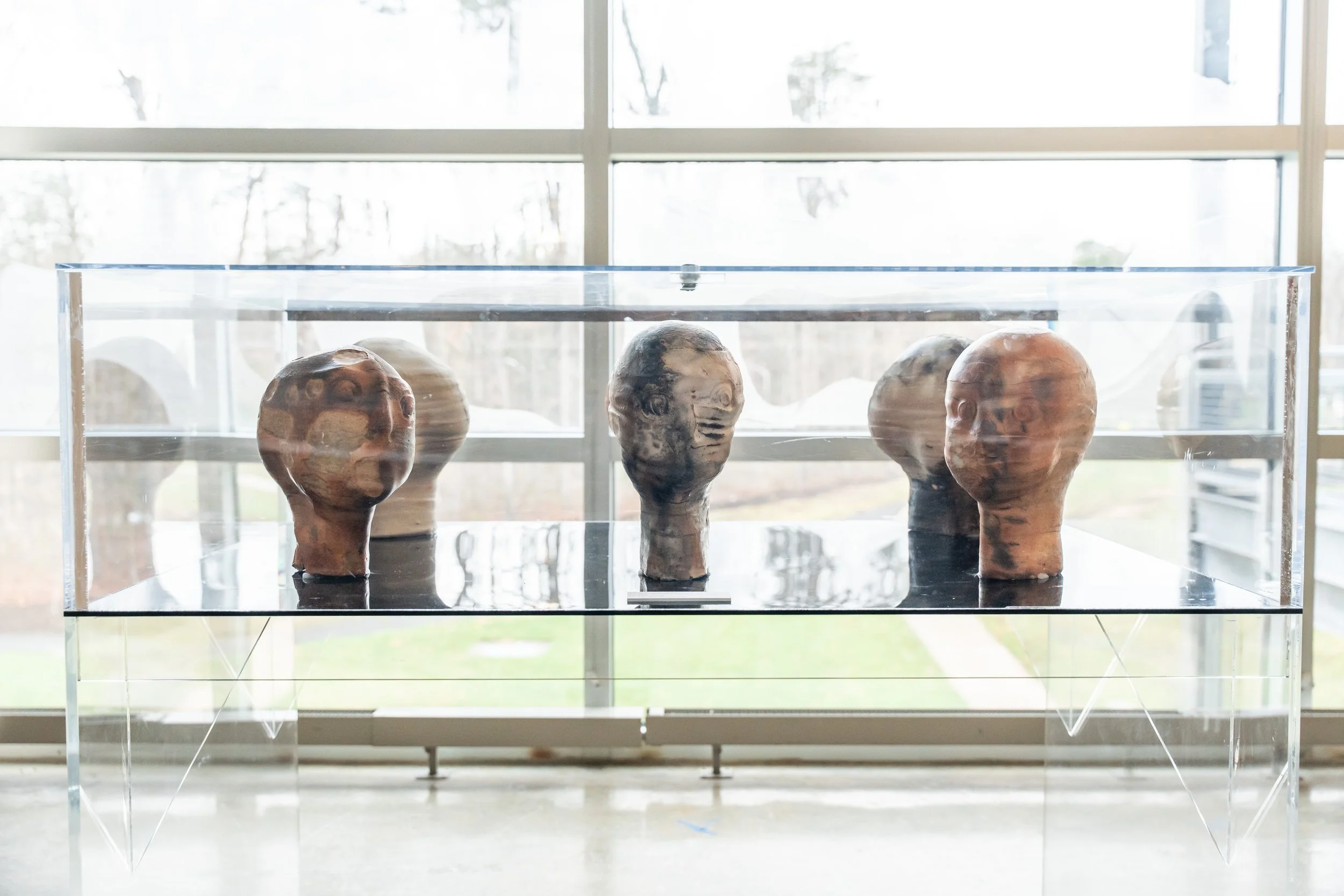
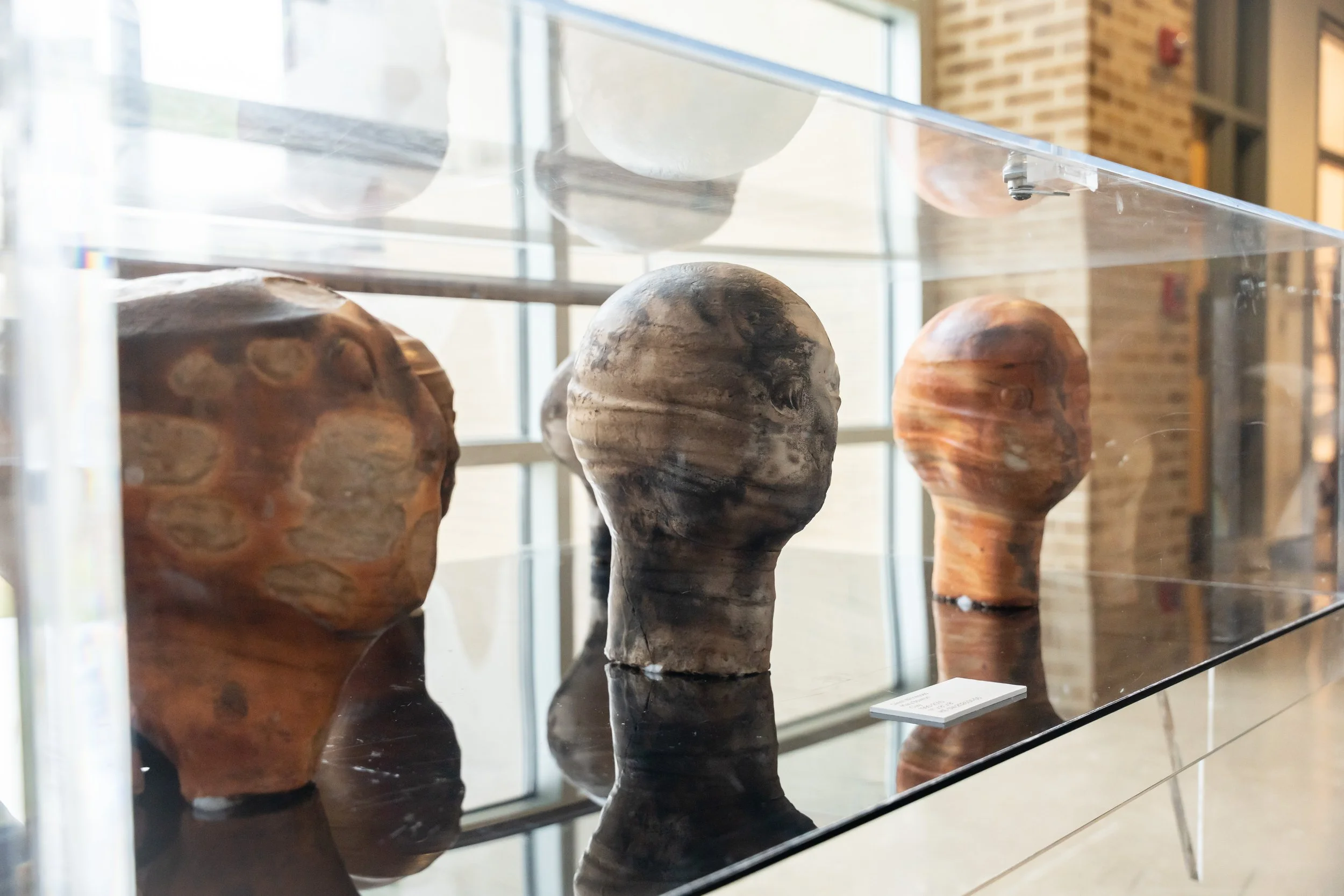
Her culminating series, Silent Witnesses, created between 1990 and 2015, consists of hundreds of ceramic heads, each unique and without a mouth. This absence is central. The figures see and hear but cannot speak, embodying individuals and communities silenced by fear, violence, and systematic oppression. Displayed together in large groups, the heads form a collective presence that transforms private suffering into public testimony.
About the Artist
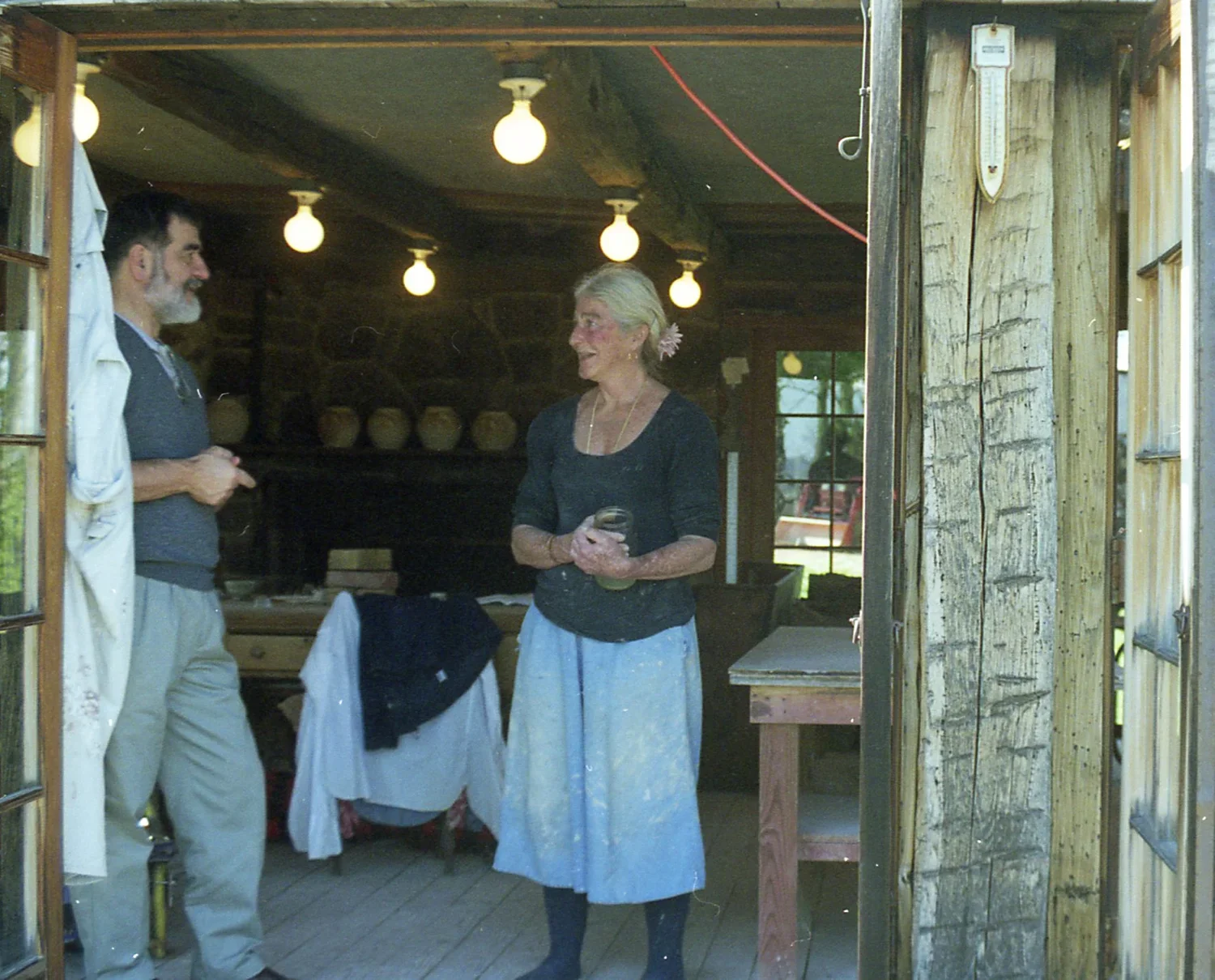
Mary Bowron was a ceramic artist from Boyds, Maryland, whose life's work was rooted in a deep passion for human expression. Born in 1933, Bowron traces her earliest connection to her craft back to childhood, when she was first drawn to play in the native clay of the American South. The tactile and visual qualities of the soil of Alabama, Mississippi, and Louisiana left a lasting impression on her, one that would quietly shape her artistic sensibility for decades to come.
Though her formal arts education was limited, Bowron's creativity was unmistakable from an early age. She was particularly moved by Asian ceramics, which she found more beautiful in form than any other tradition, and this aesthetic influence can be seen throughout her work. It wasn't until the early 1960s, living in Southern California as a young mother, that she began working seriously with clay by setting up her wheel in her dining room and firing her pieces at the Pot Shop in Venice Beach. From those humble beginnings, a remarkable artistic journey unfolded.
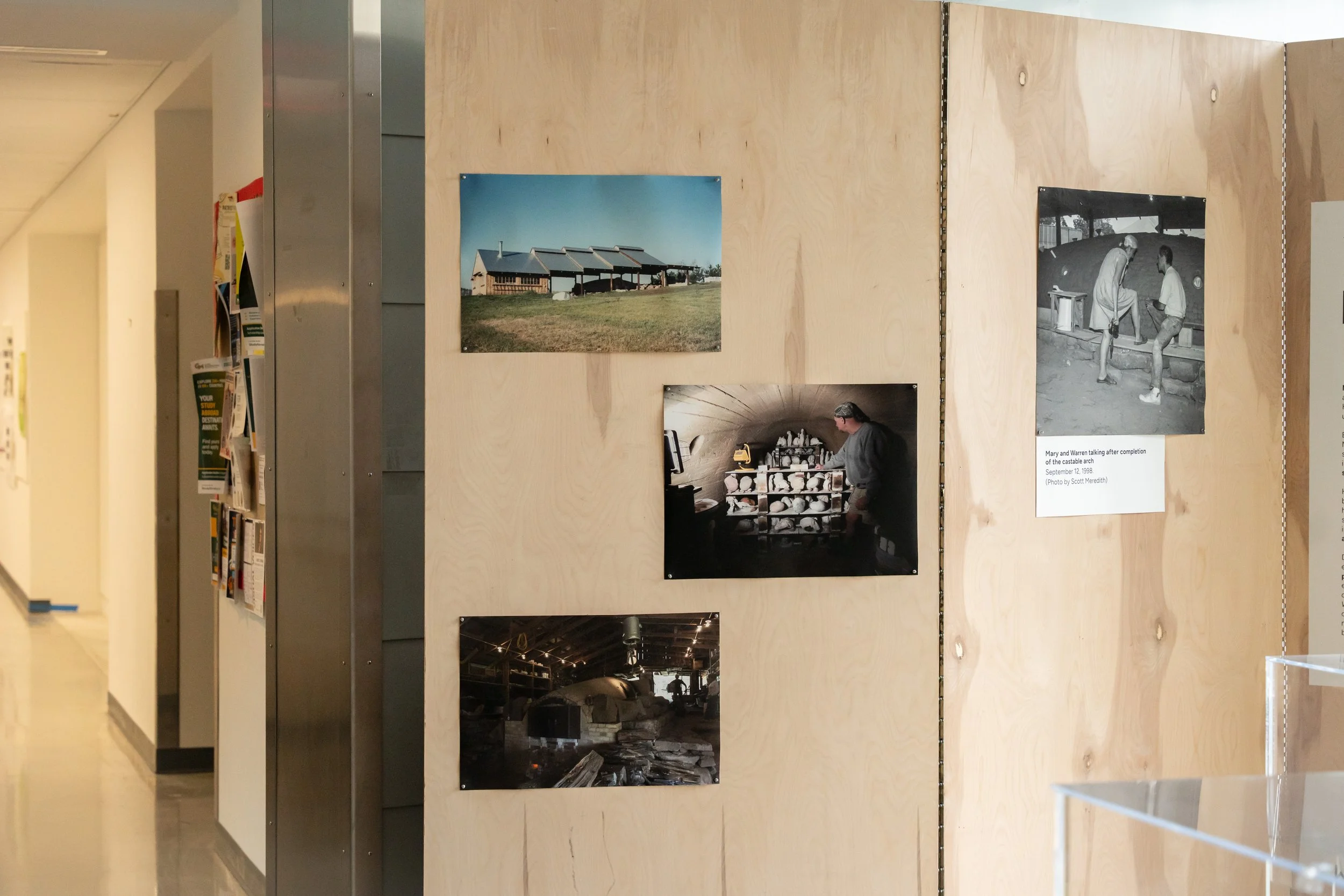
Over the following decades, Bowron explored an extraordinary range of forms and techniques, working across both California and Maryland. Her practice encompassed wheel-thrown tableware, slab-formed vessels, tile-making, and sculpture depicting birds, horses, and clustered human figures. She embraced gas-fired, wood-fired anagama, and pit-fired kilns. On her farm in Boyds, Maryland, she mixed and prepared her own clay bodies, amassing an extensive collection of wood ashes from various sources to formulate her own unique glazes. She was, by all accounts, a compulsive experimenter: a voracious reader, an eager student of other artists, and someone who never feared failure. As those who knew her work have said, she aimed to capture the forces of life, nature, and its inequities, and she believed firmly that art should not always be "pretty."
The culmination of Bowron's life's work was her Silent Witnesses series, a collection of ceramic heads she created between 1990 and 2015, when an accident brought her working life to a close. Long troubled by the suffering of those who bear witness to unspeakable tragedy and inhumanity yet remain unable to speak out; Bowron gave form to that silence through these figures. Each head stands approximately ten inches tall, crafted from a variety of clays and glazes, and shares one defining characteristic: the absence of a mouth. Inspired by her experiences in the South and a lifelong empathy for marginalized and silenced communities, these works carry a quiet but powerful political weight. By the time of her passing in 2017, she had created several hundred of these heads, each one entirely distinct.
INSTALLATION PHOTOS
Contributors
Gifted by the Kohler Art Foundation and now housed at institutions including George Mason University near Washington, D.C., the work reinforces its enduring call for human rights and civic accountability.