
The Bridges Back Home
/The Bridges Back Home
The Mark Center
October 14, 2025 - October 2026
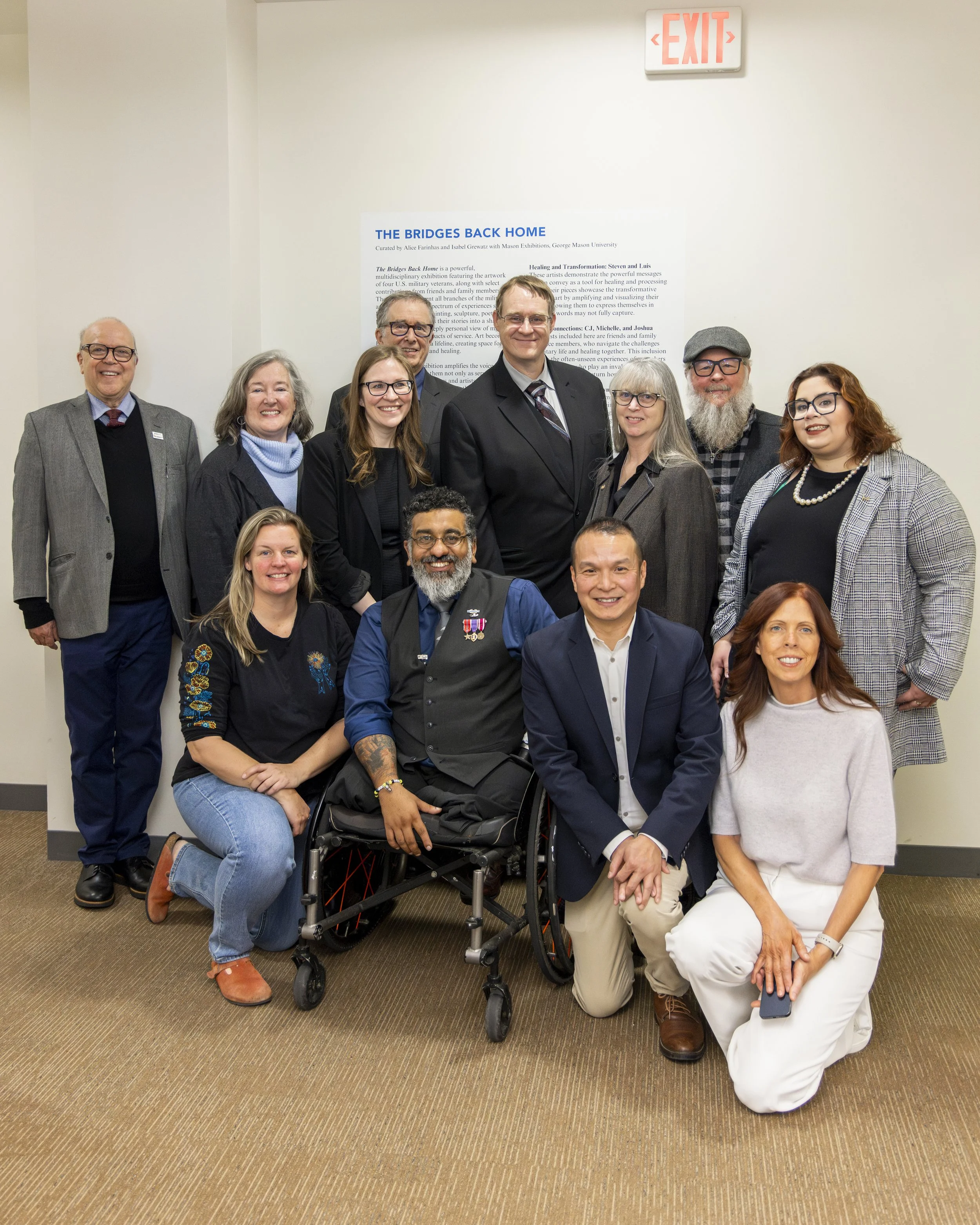
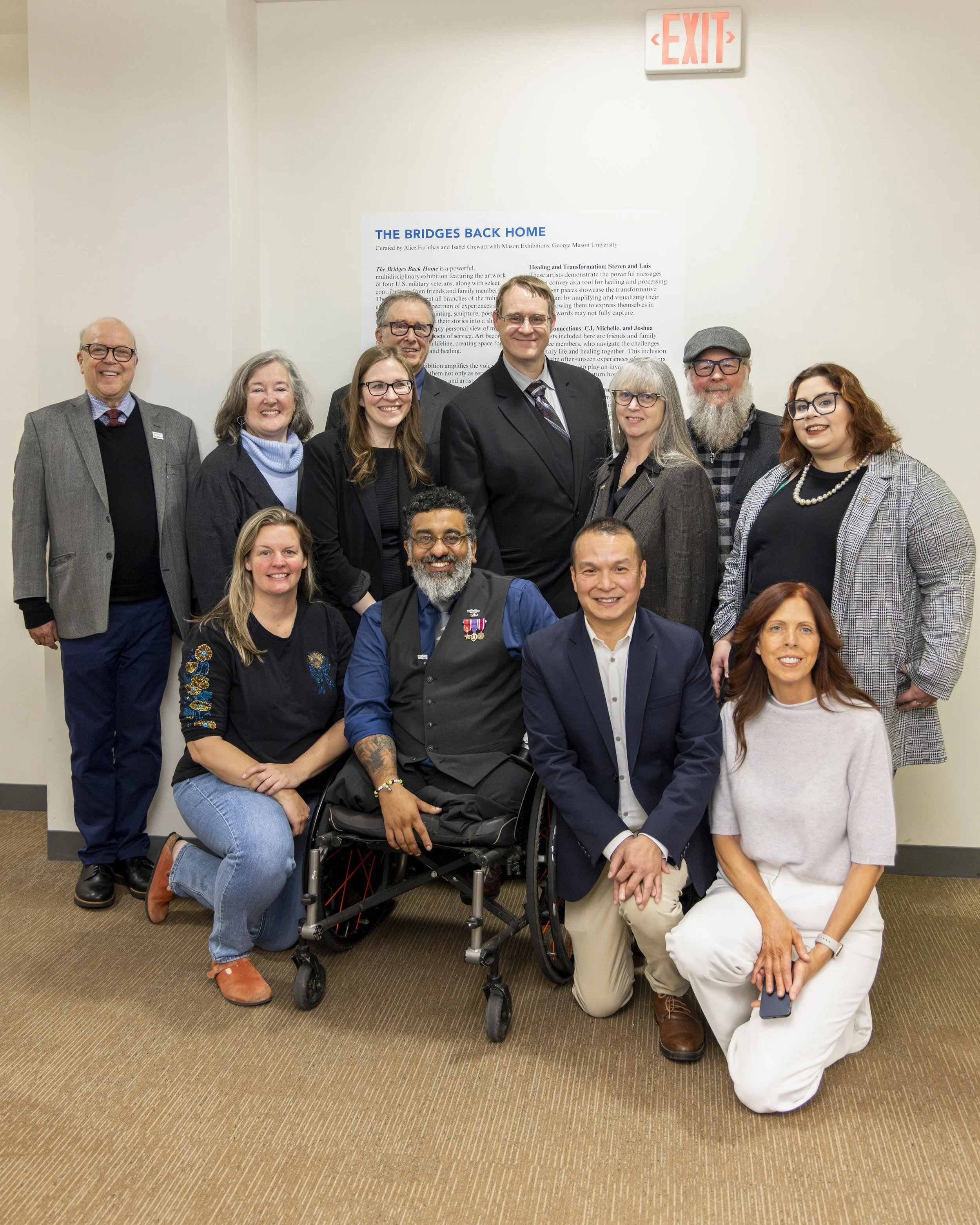
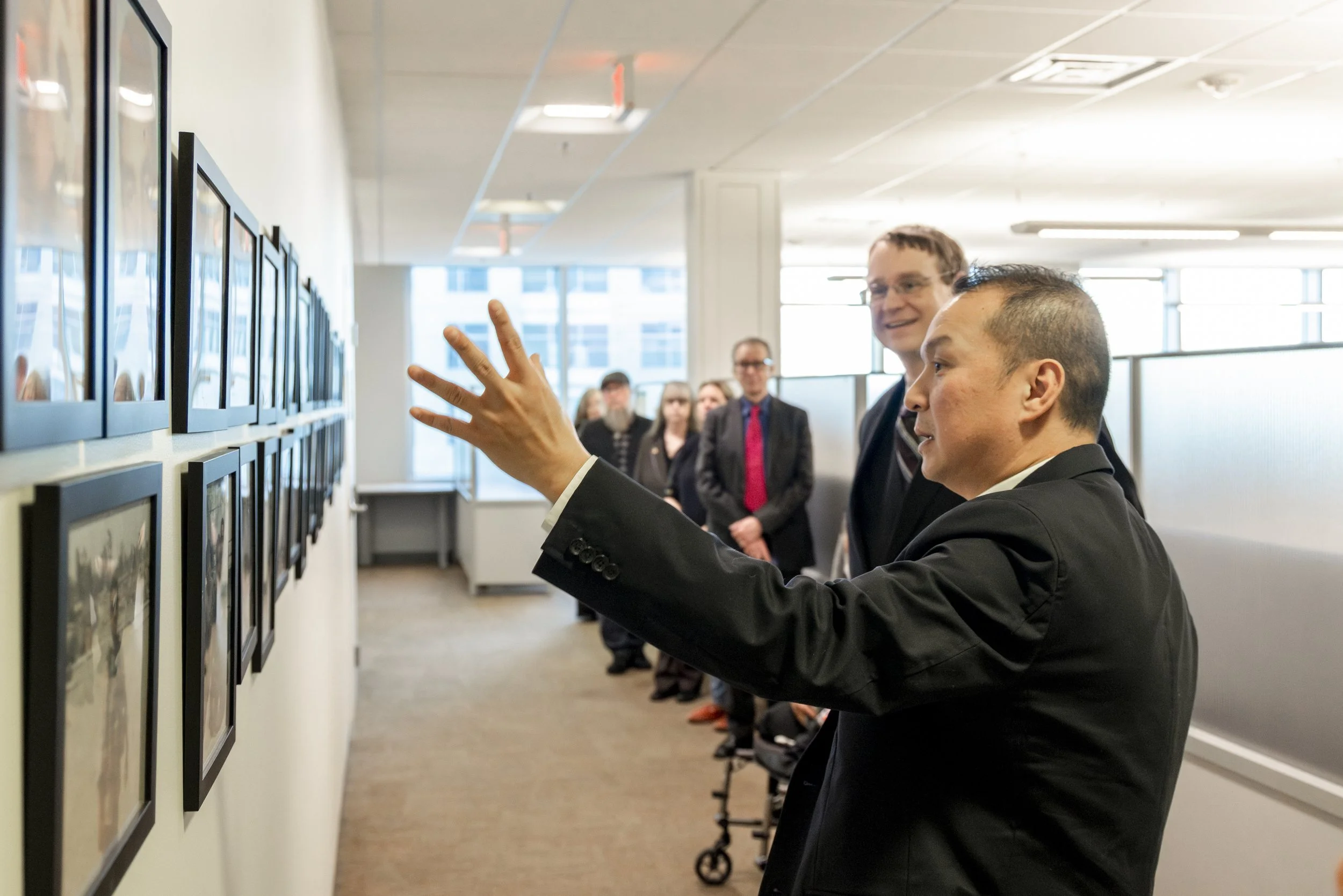
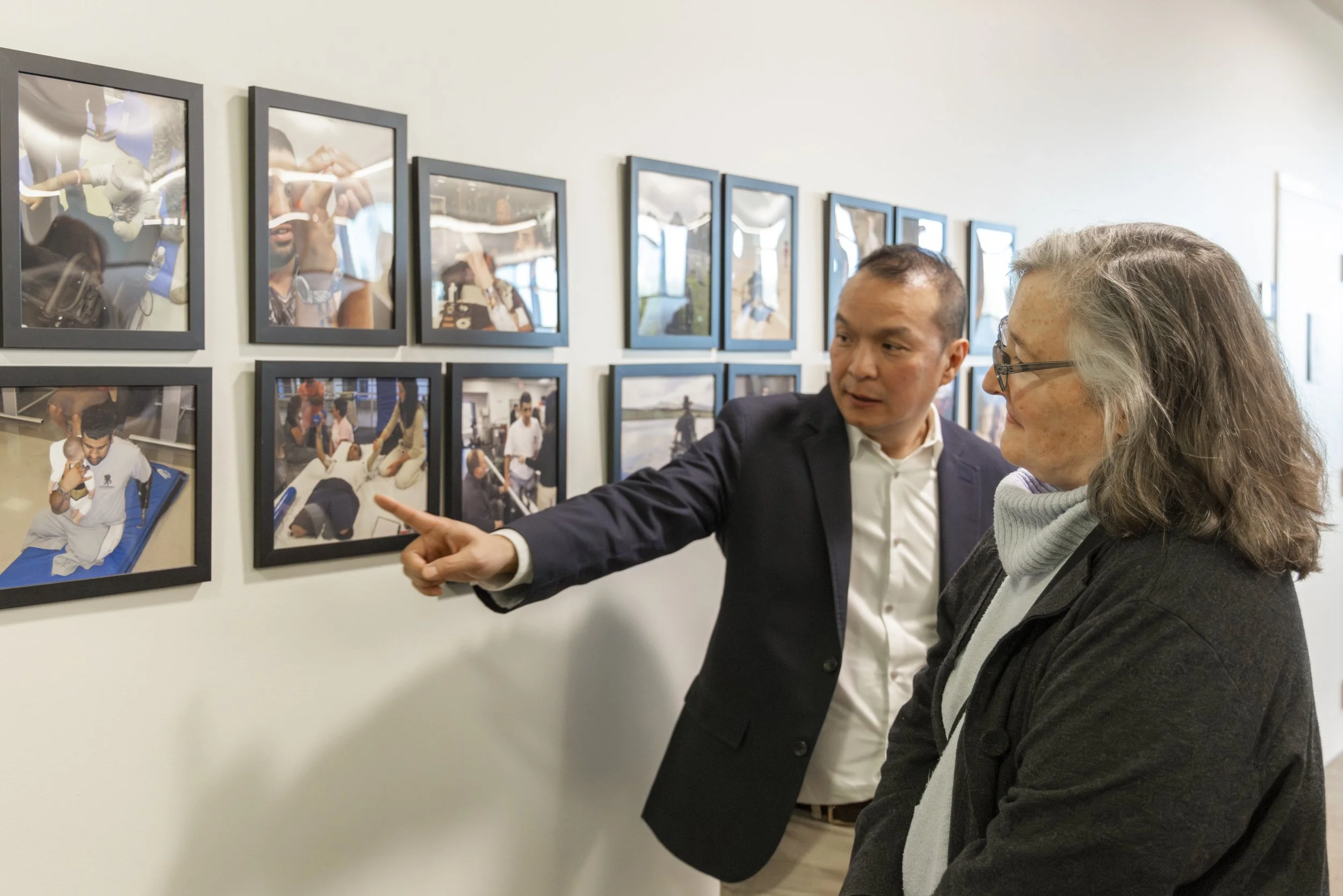
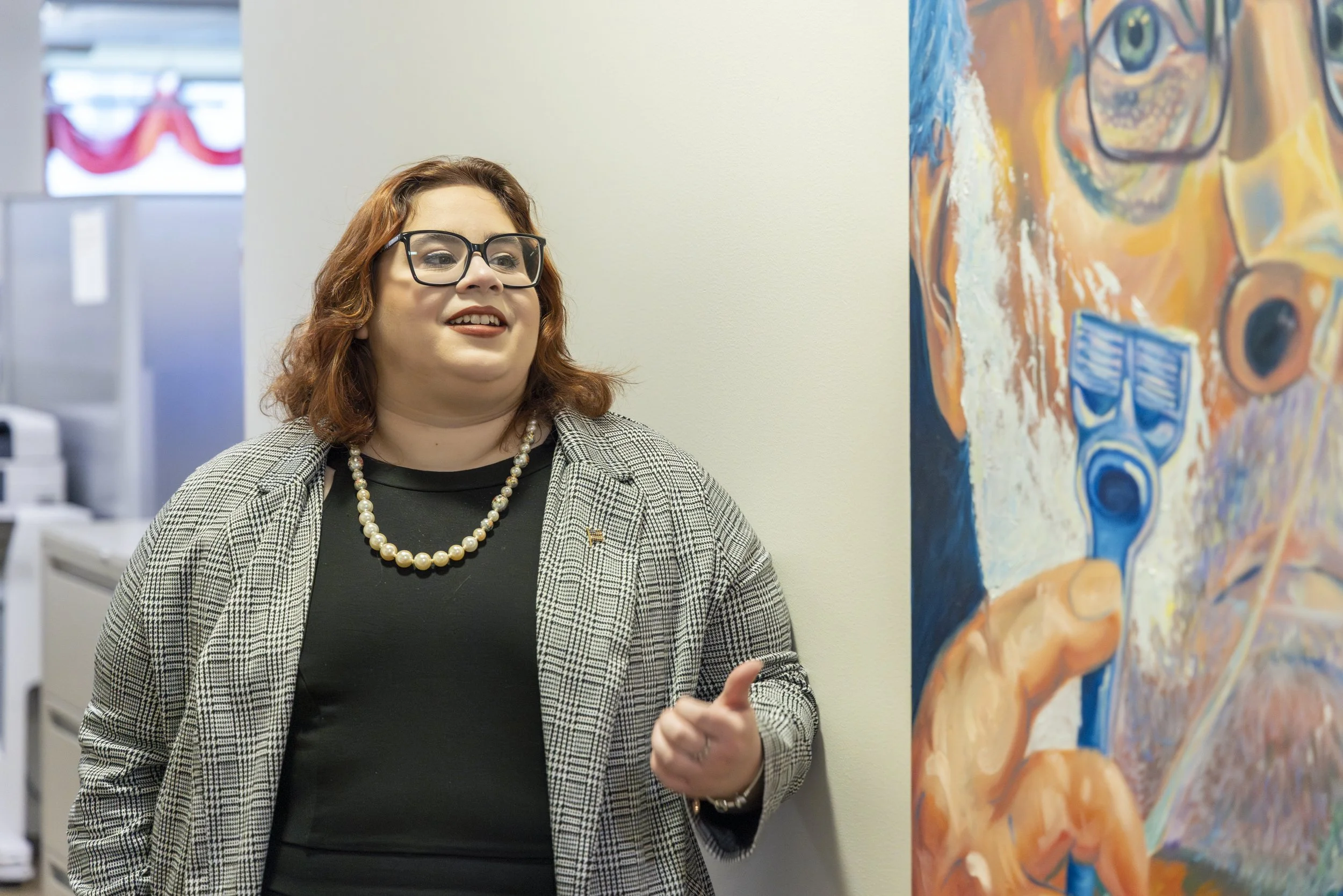
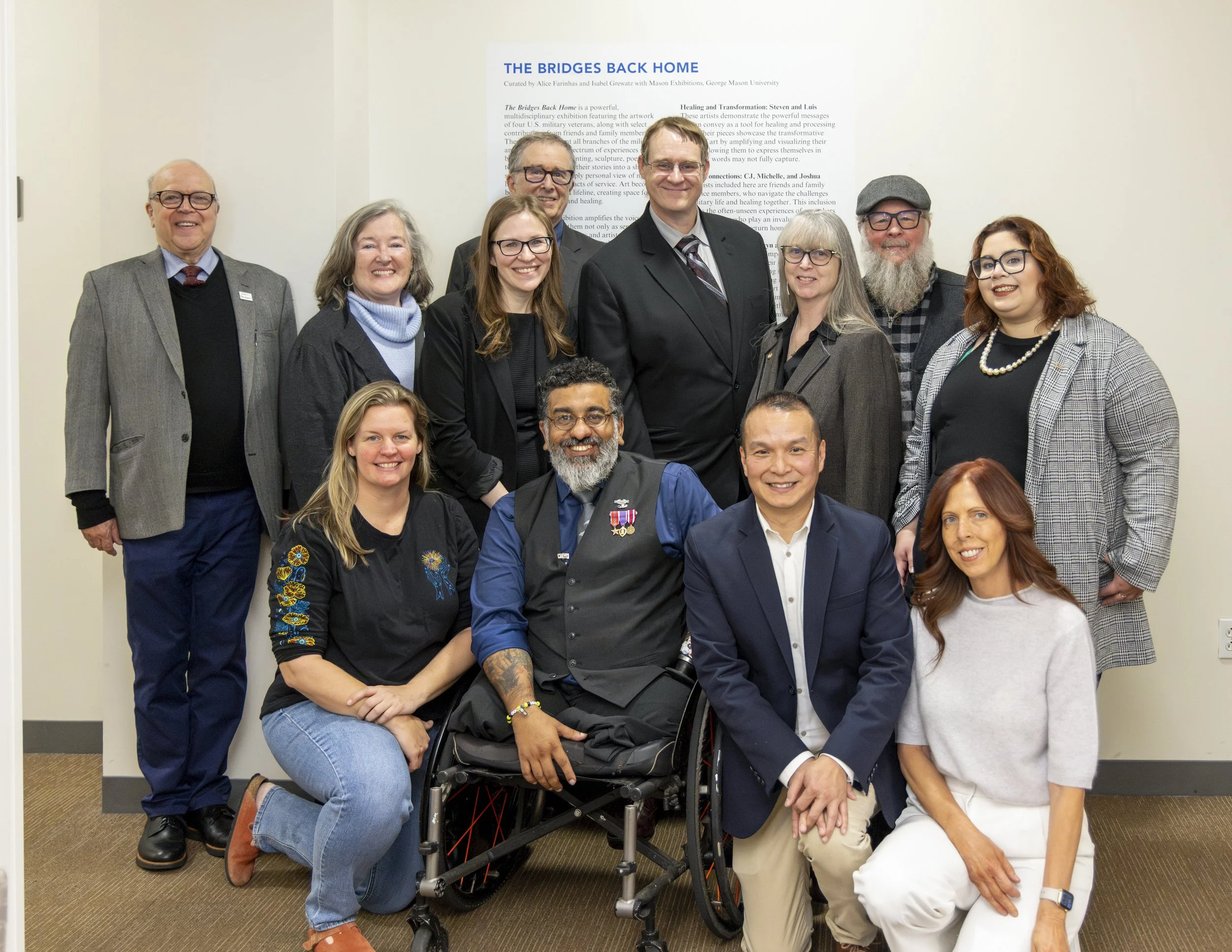
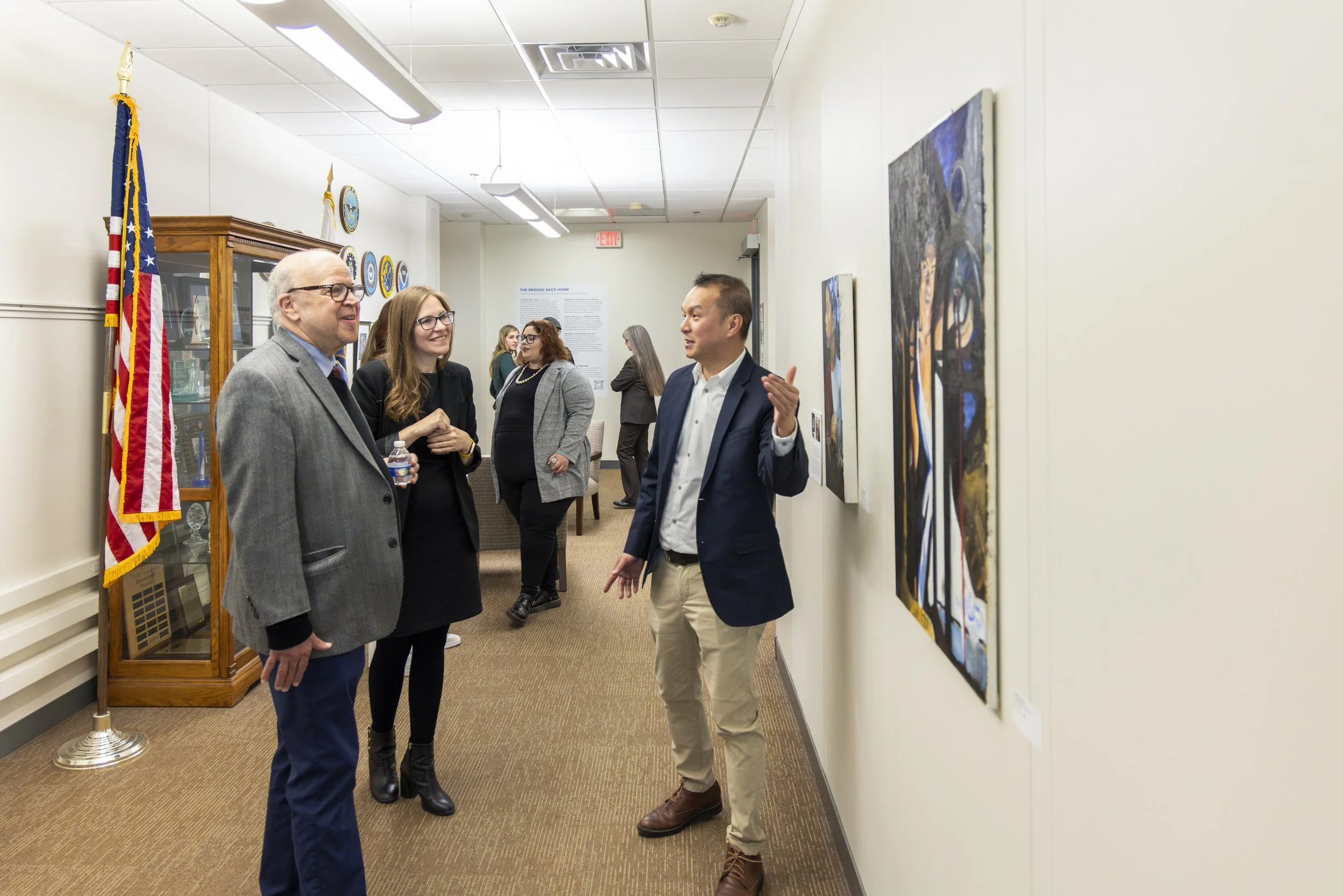
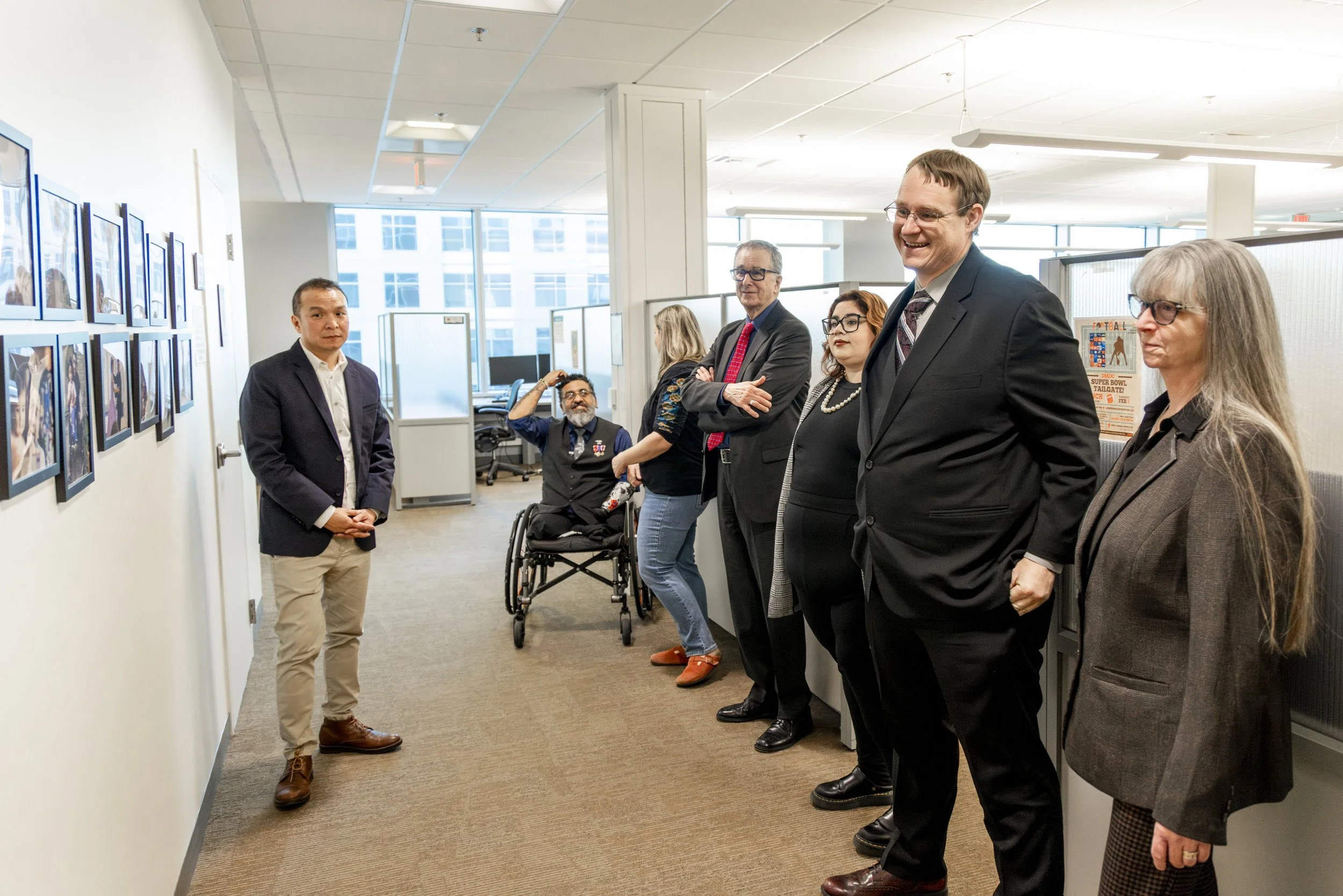
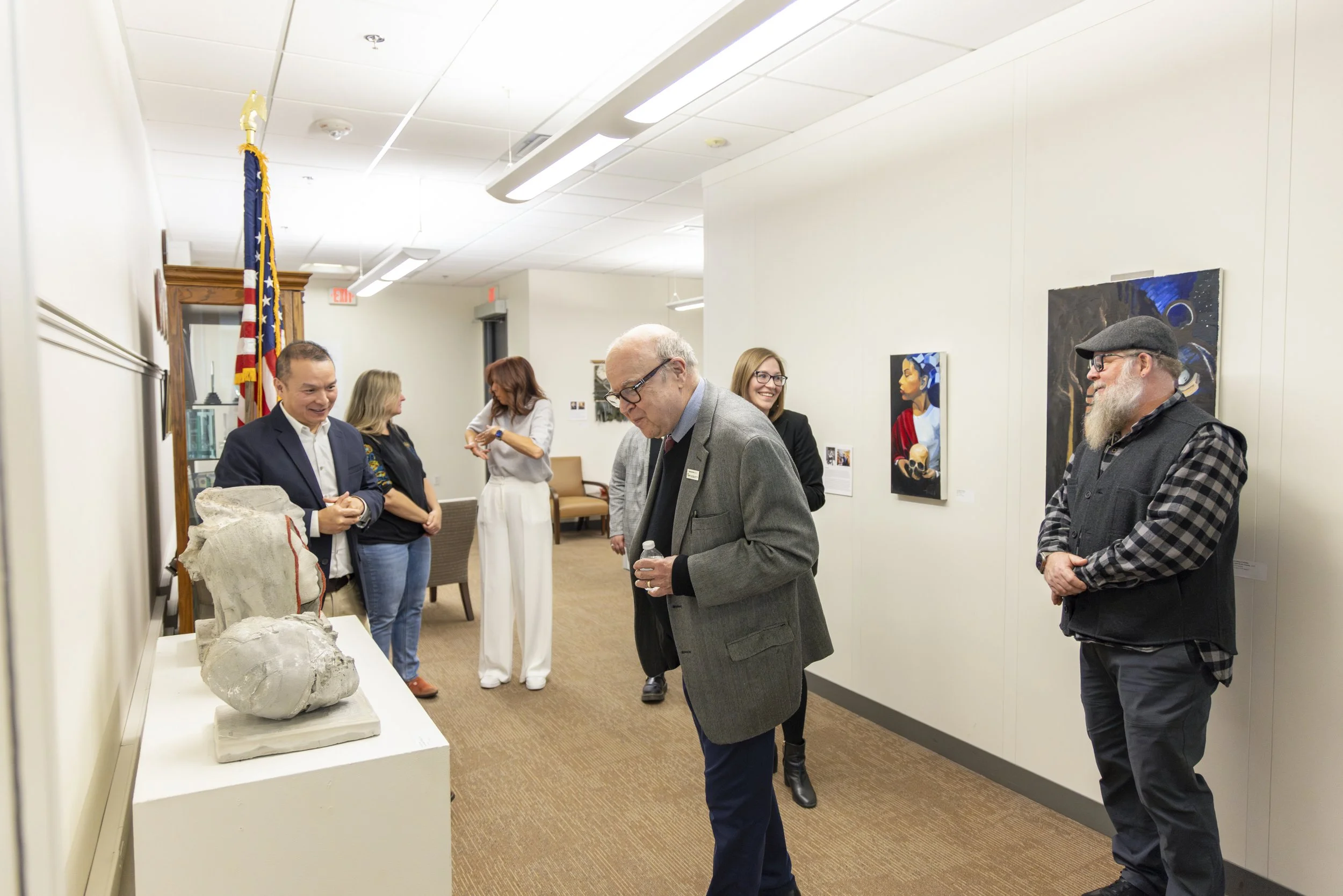
The Bridges Back Home is a powerful, multidisciplinary exhibition featuring the artwork of four U.S. military veterans, along with select contributions from friends and family members. These artists represent all branches of the military and reflect a diverse spectrum of experiences shaped by service. Through painting, sculpture, poetry, and textiles, their art brings their stories into a shared space, offering us a deeply personal view of military life and the lasting impacts of service. Art becomes both a language and a lifeline, creating space for reflection, empathy, and healing.
At its core, this exhibition amplifies the voices of veterans, portraying them not only as service members but as storytellers and artists. Each artist's journey centers around three key themes: healing, connection, and materiality. The inclusion of friends and dependents expands and deepens this dialogue, recognizing how the effects of military service ripple through families and across generations. Their contributions capture the quiet strength and resilience that exist beyond the battlefield within the home, the heart, and the healing process.
Together, these artists remind us that while the paths home may be many, the bridges are built through compassion and connection.
Healing and Transformation: Steven and Luis
These artists demonstrate the powerful messages art can convey as a tool for healing and processing grief. Their pieces showcase the transformative power of art by amplifying and visualizing their voices, allowing them to express themselves in ways that words may not fully capture.
Family Connections: CJ, Michelle, and Joshua
The artists included here are the friends and family of service members, who navigate the challenges of military life and healing together. This inclusion elevates the often-unseen experiences of caretakers and companions who play an invaluable role in supporting those who return home after war.
Materiality in Action: Kathryn and Nate
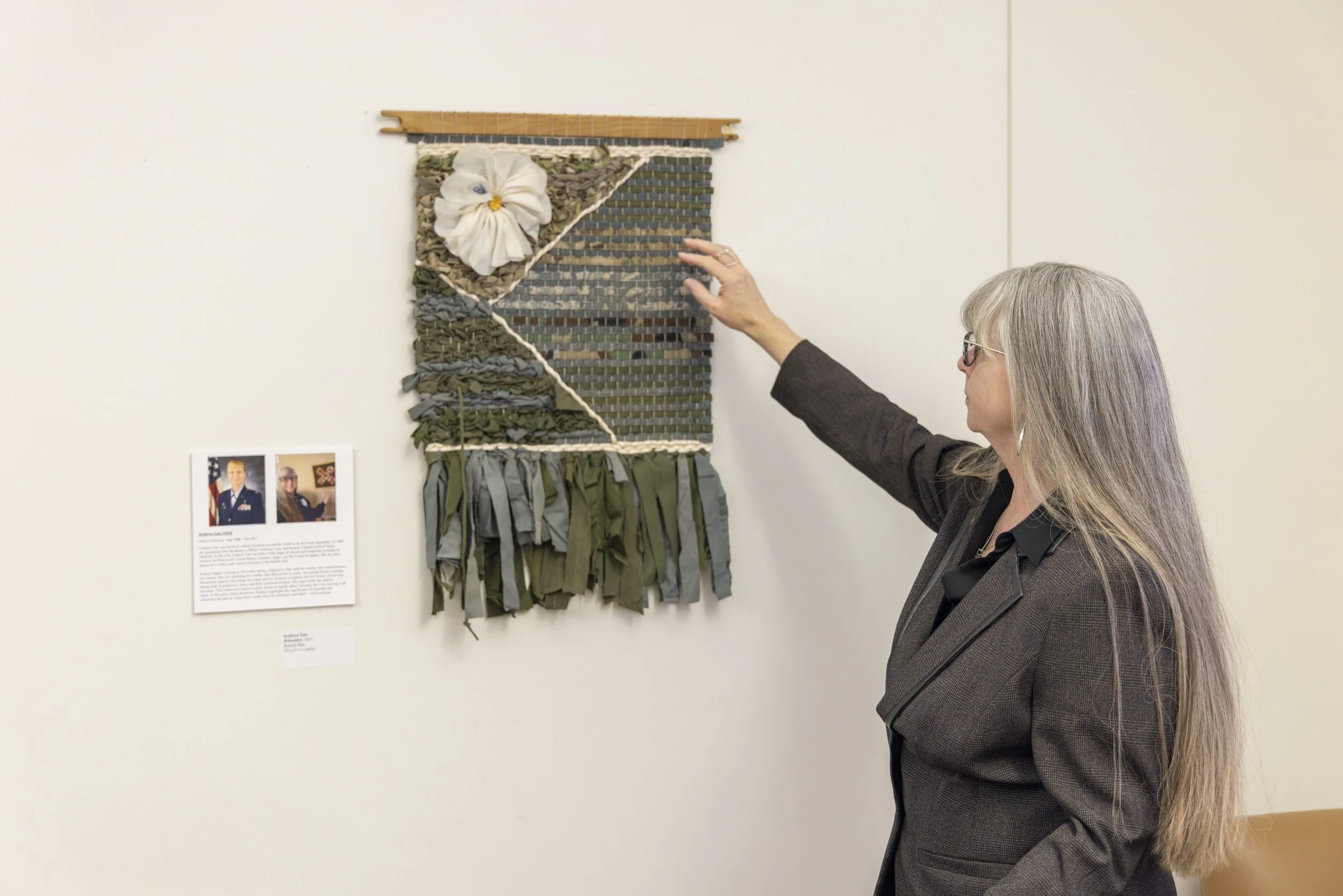
These artists emphasize the importance of materiality and process in their journey of self-exploration and healing. Using materials like repurposed textiles or engaging in acts of “suturing and sewing,” their art becomes tangible expressions of coping with trauma and pain. Through art, they reconnect with civilian life by reclaiming their stories and forming new identities through creativity.
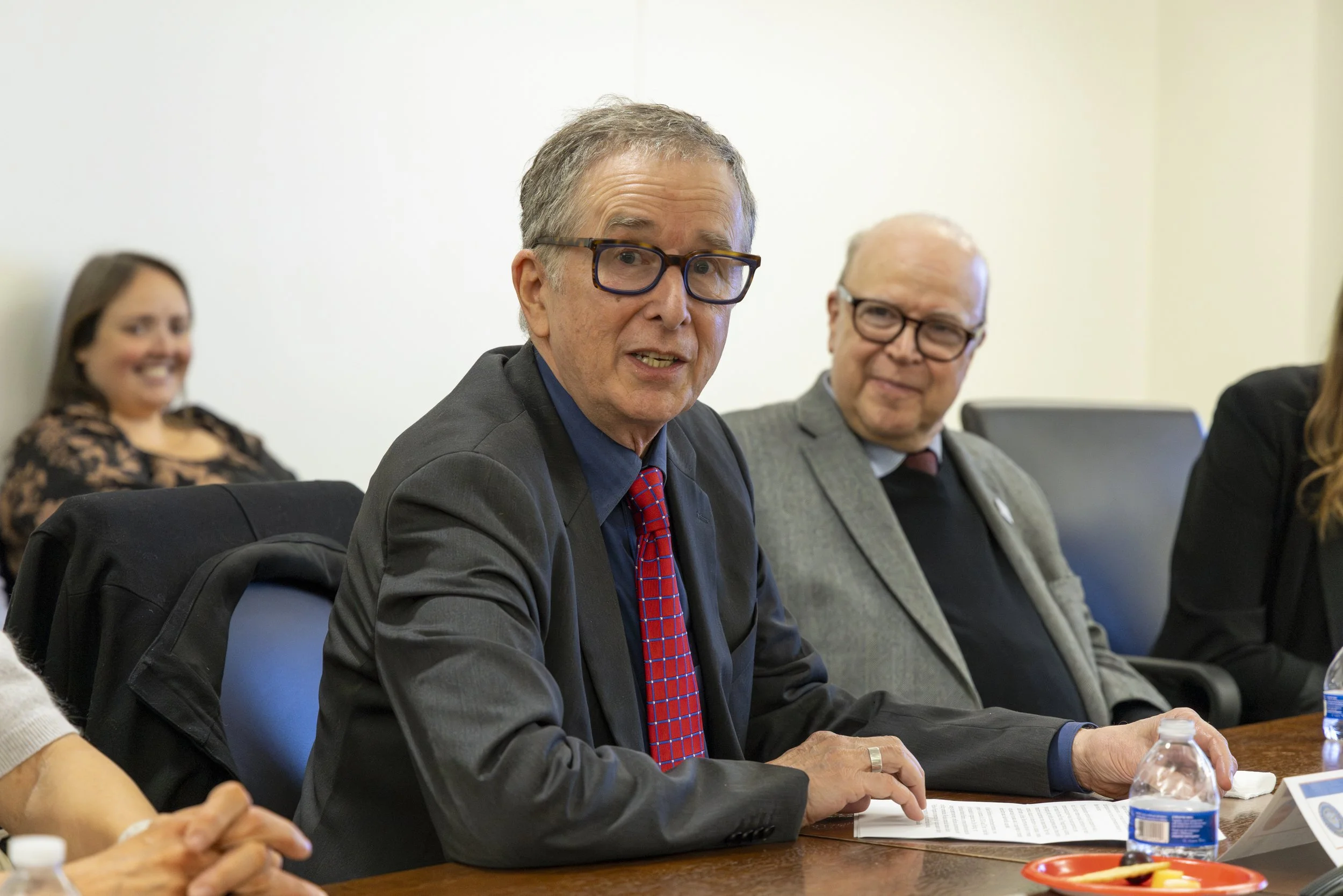
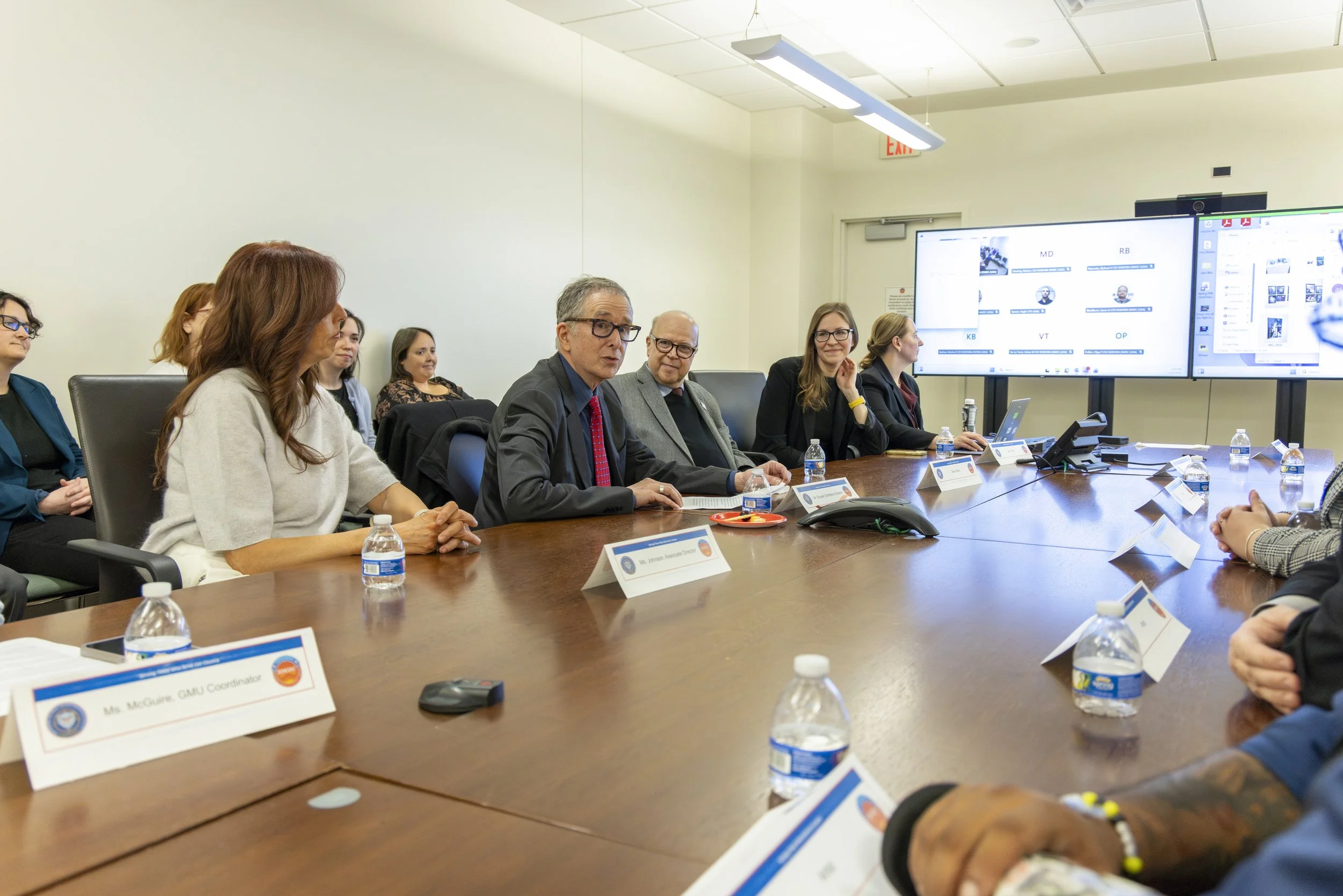
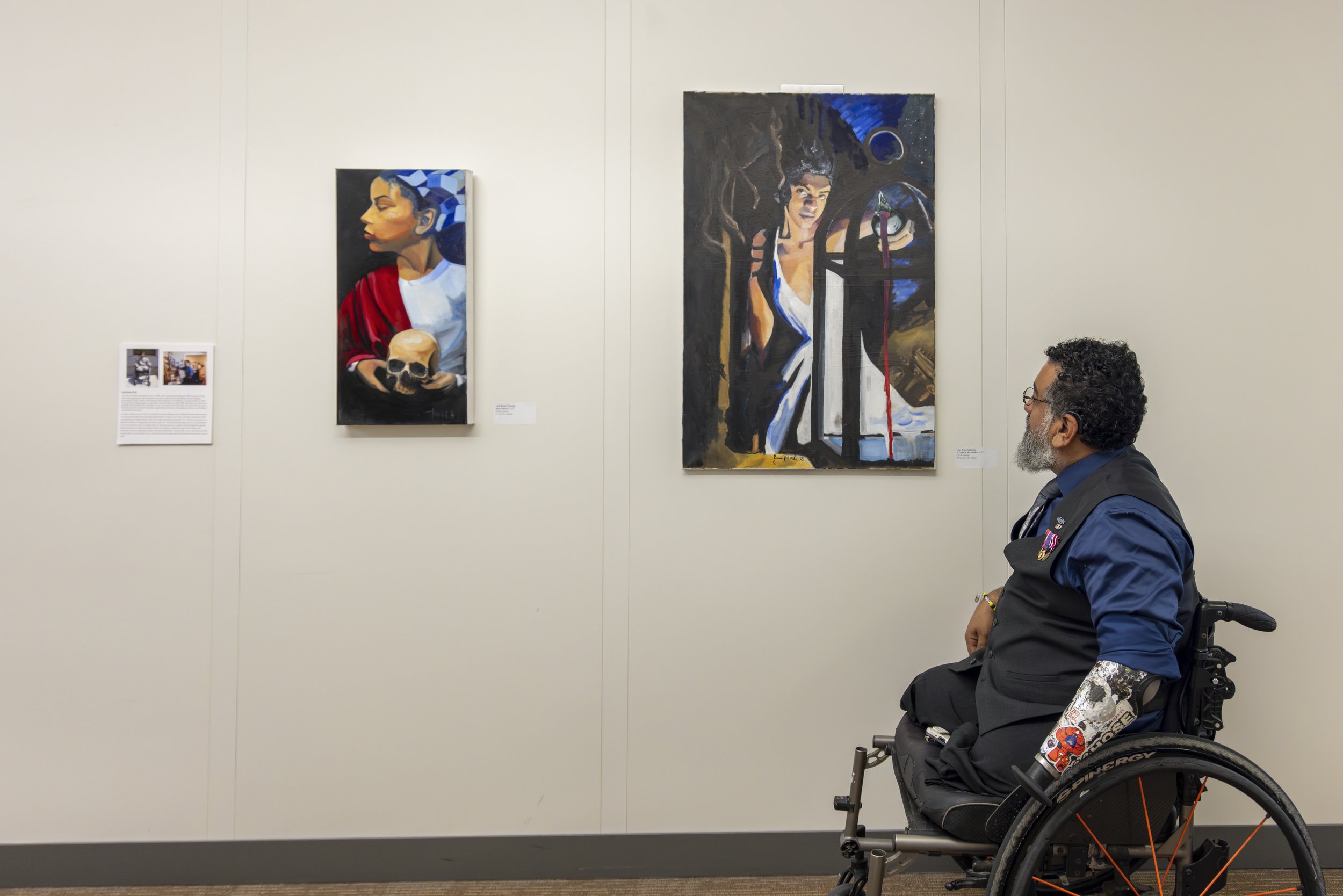
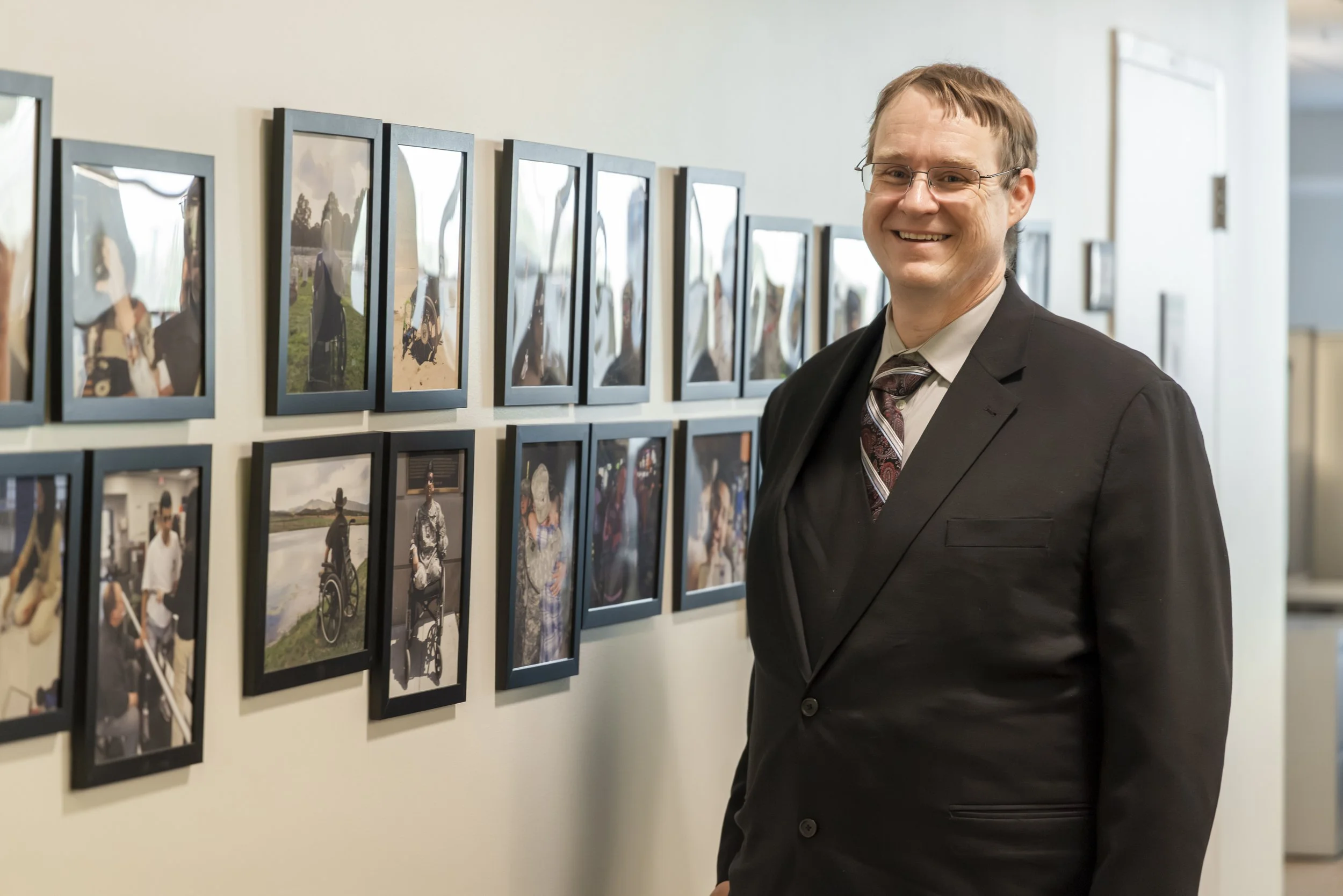
Install Shots
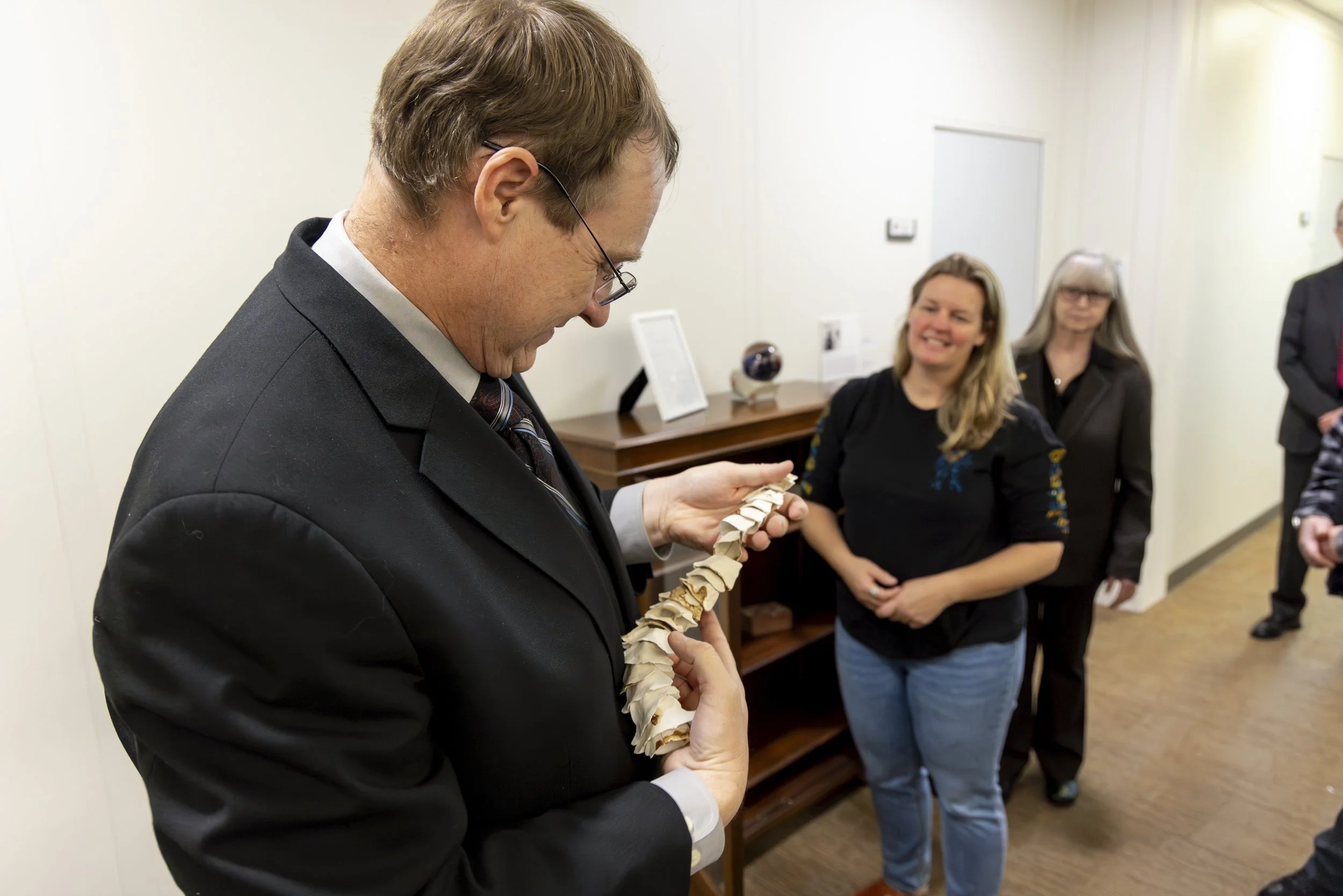
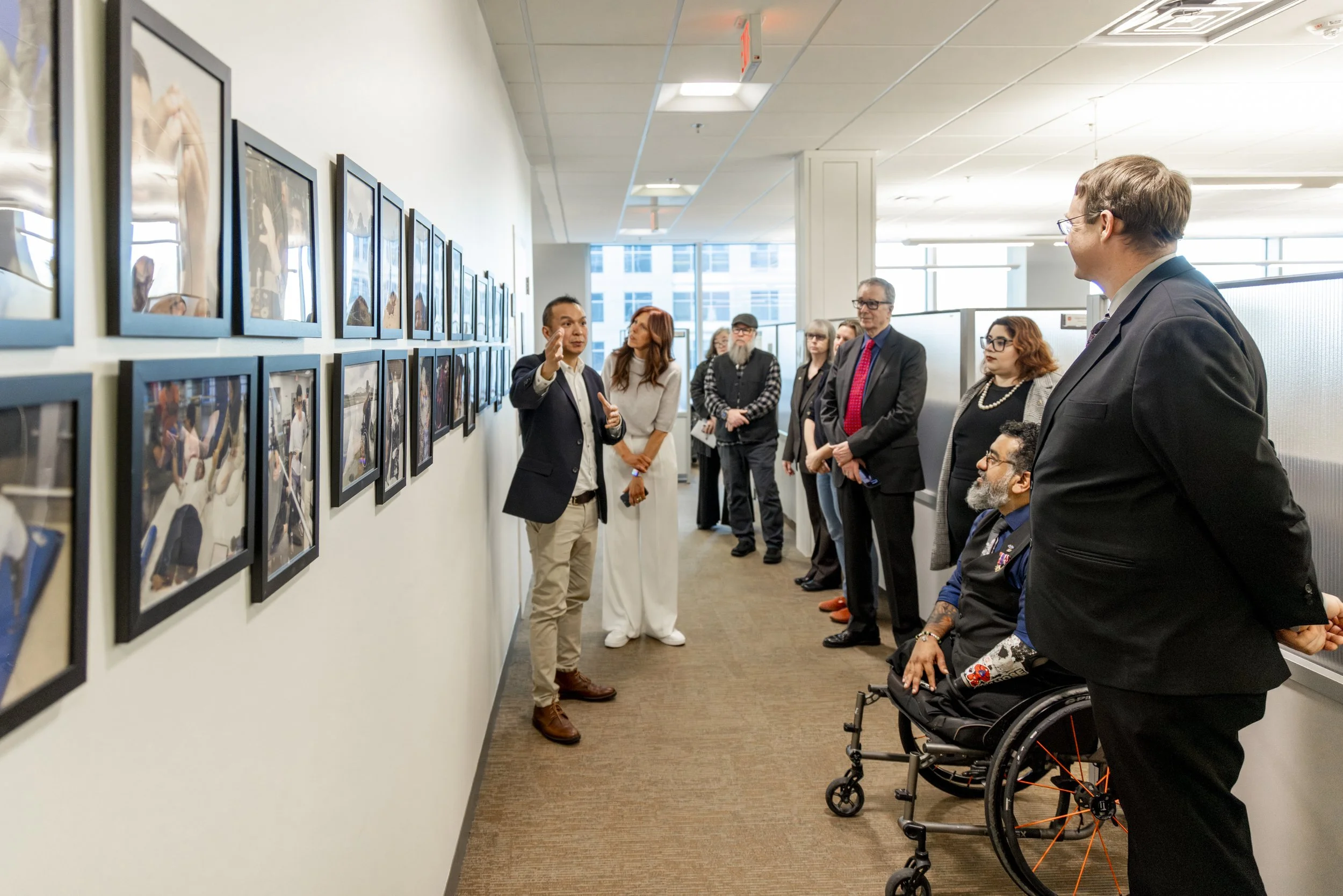
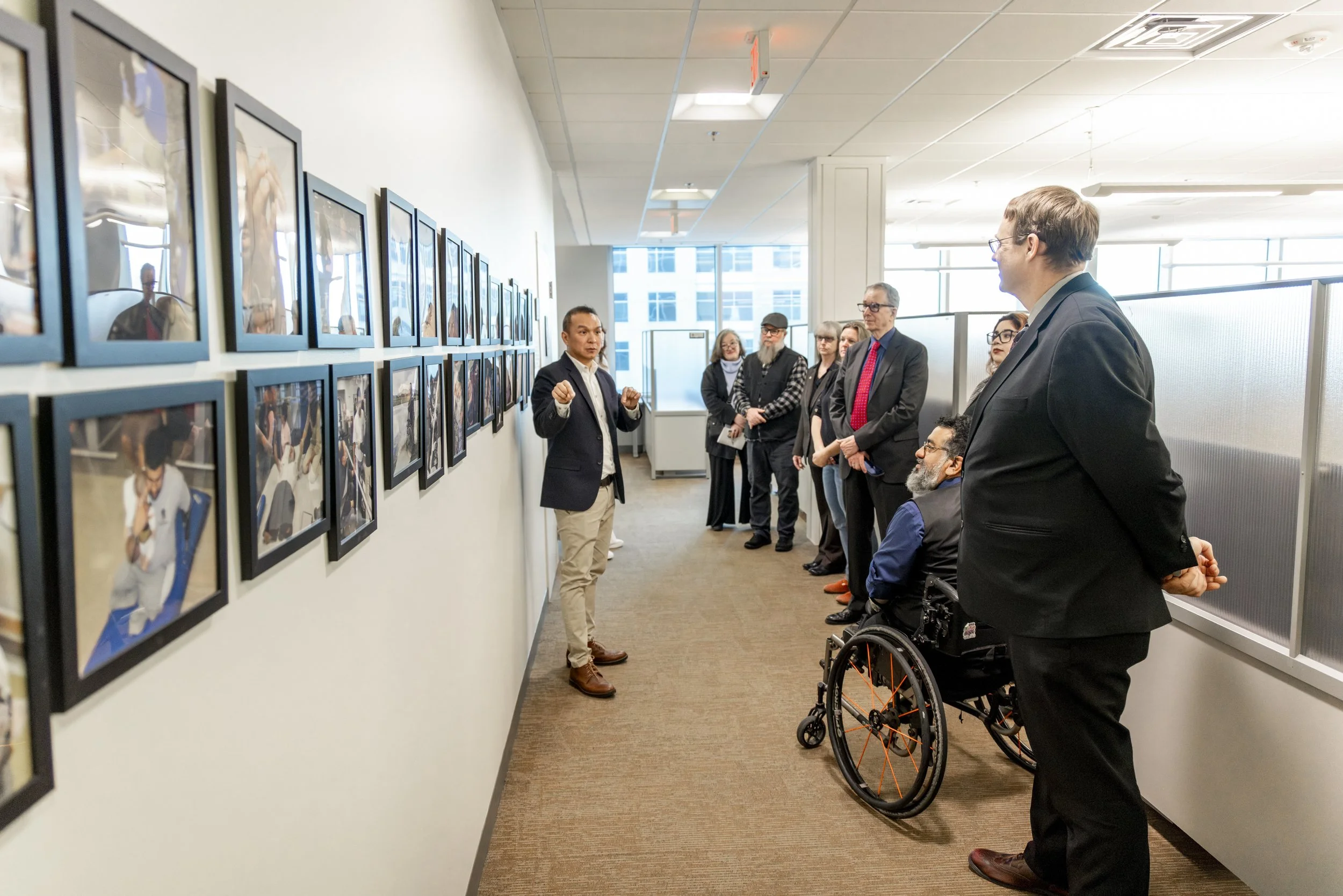
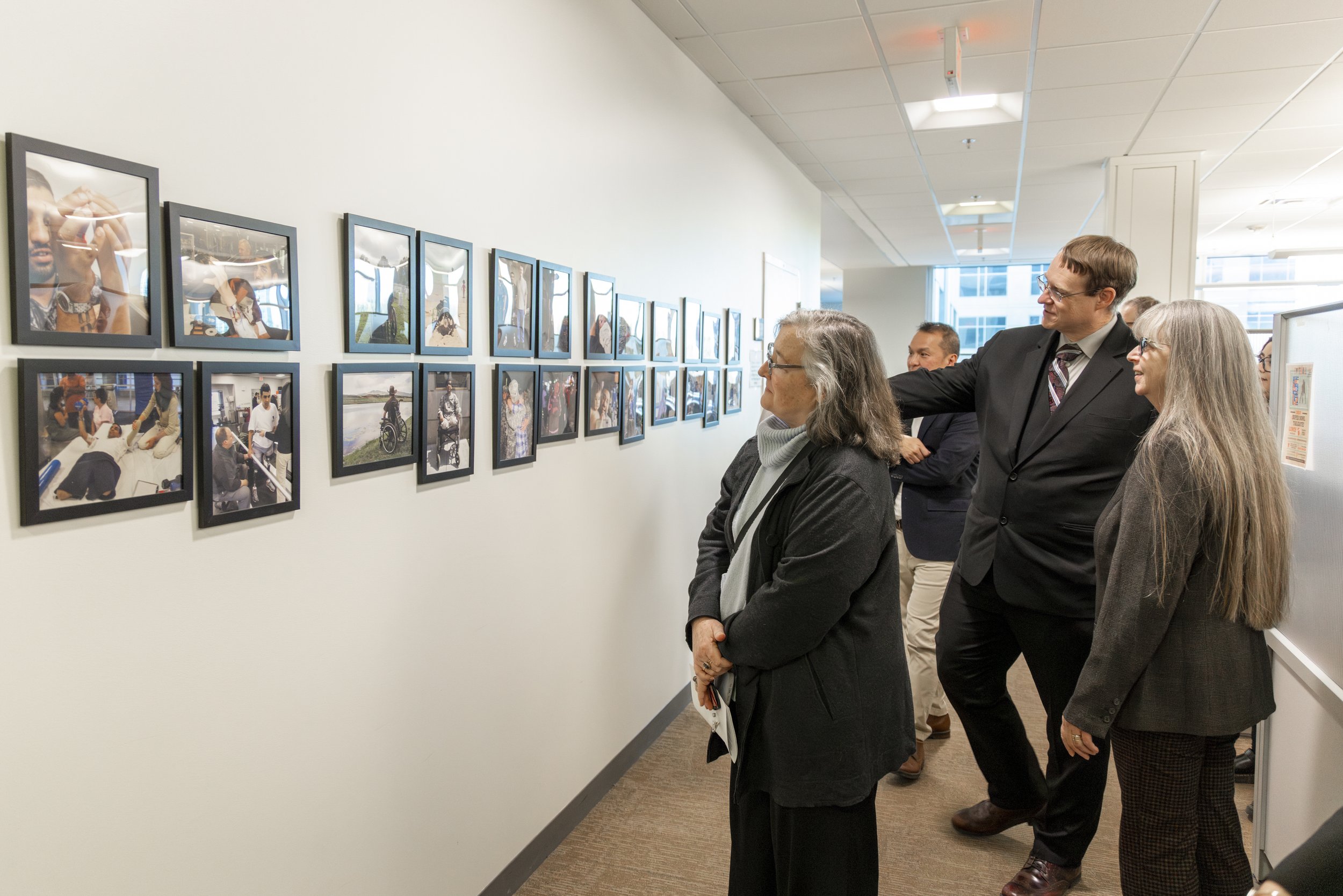
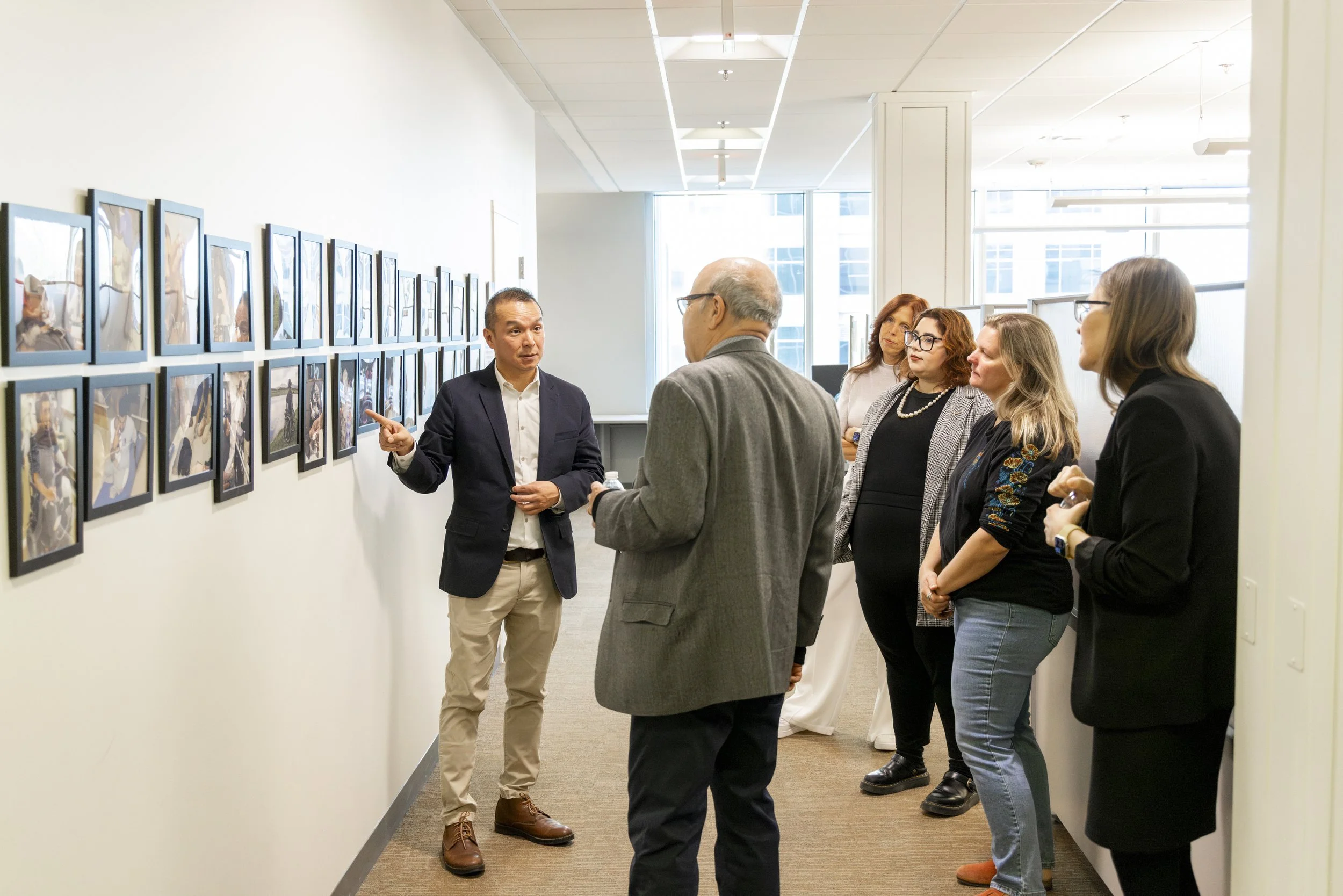
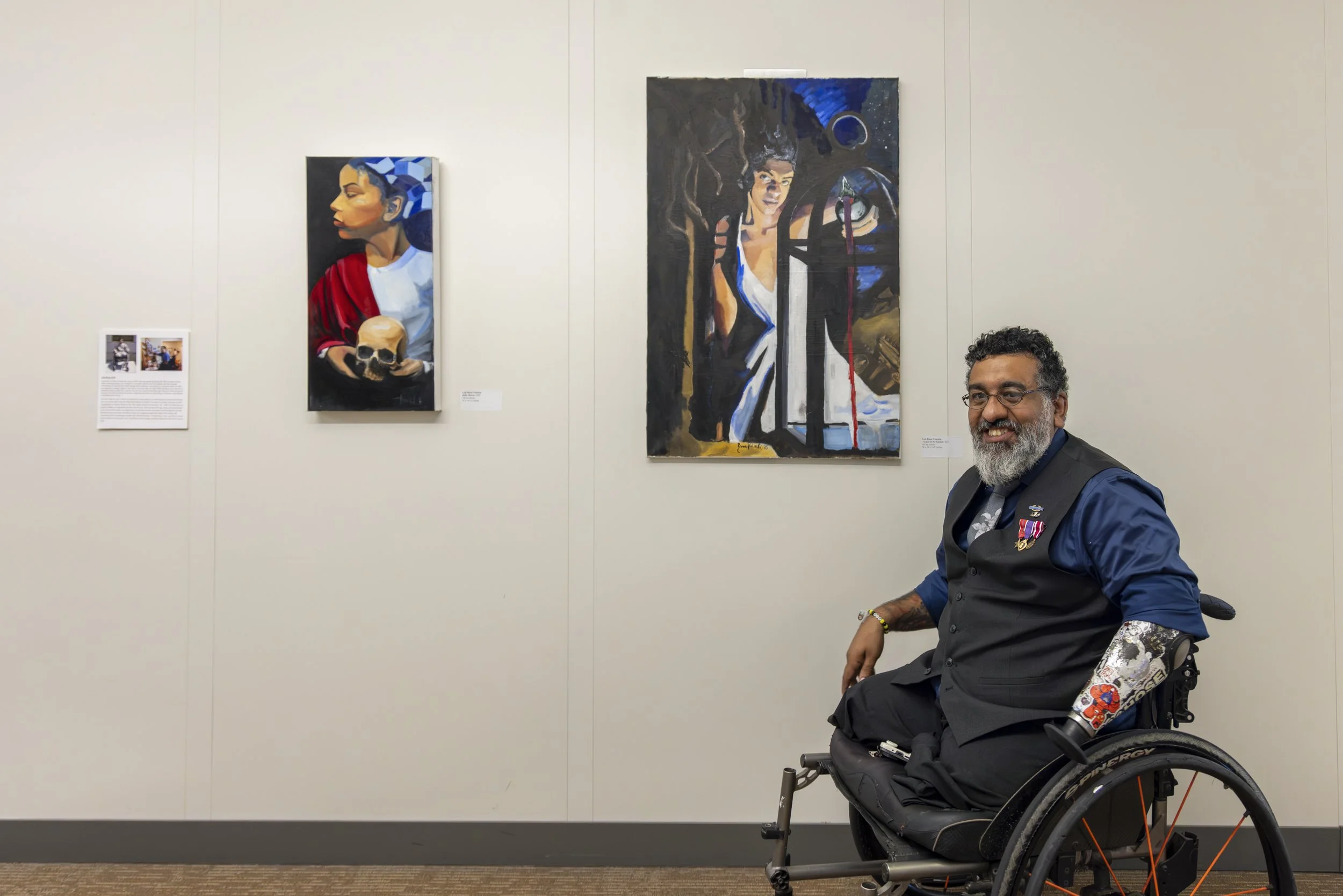
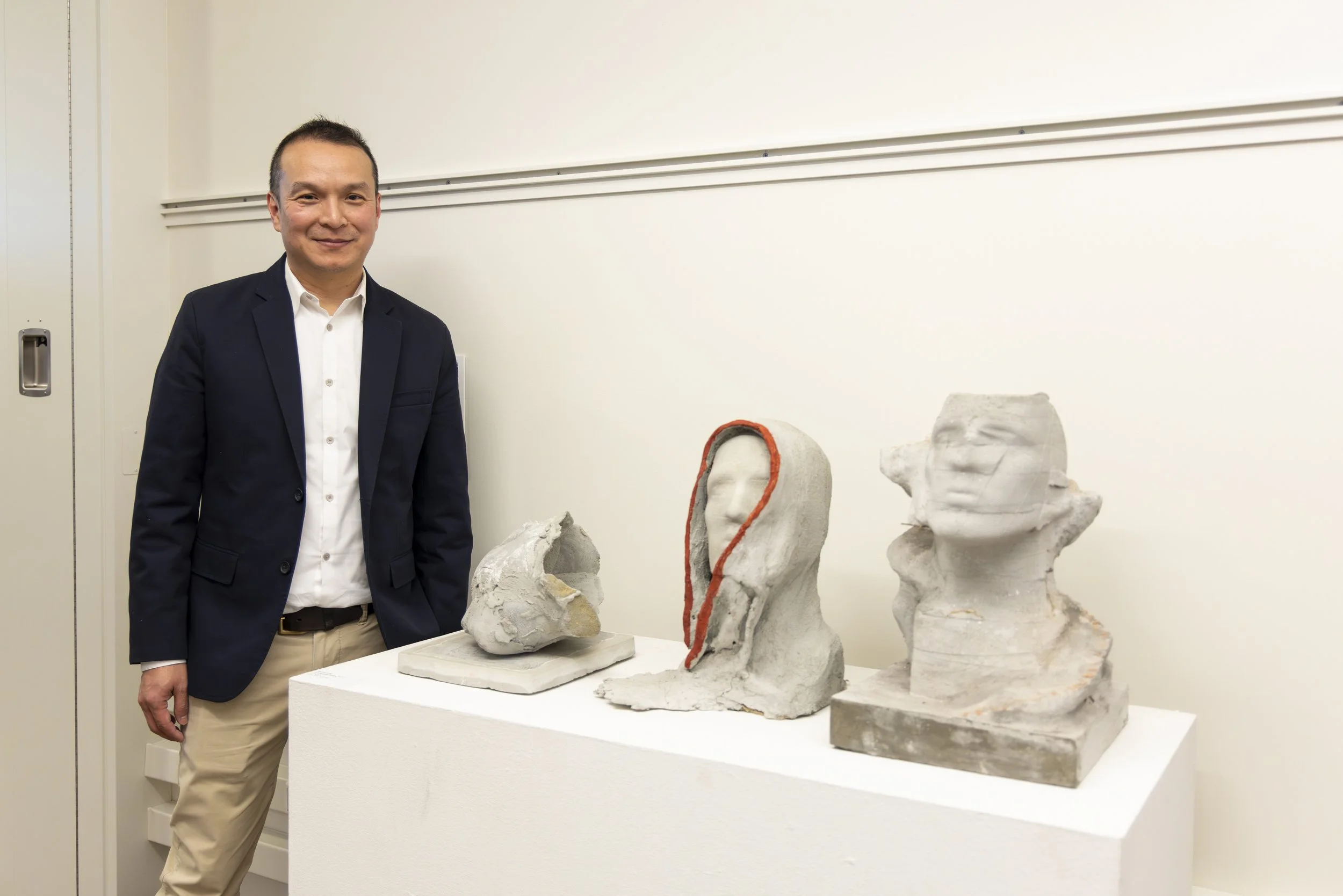
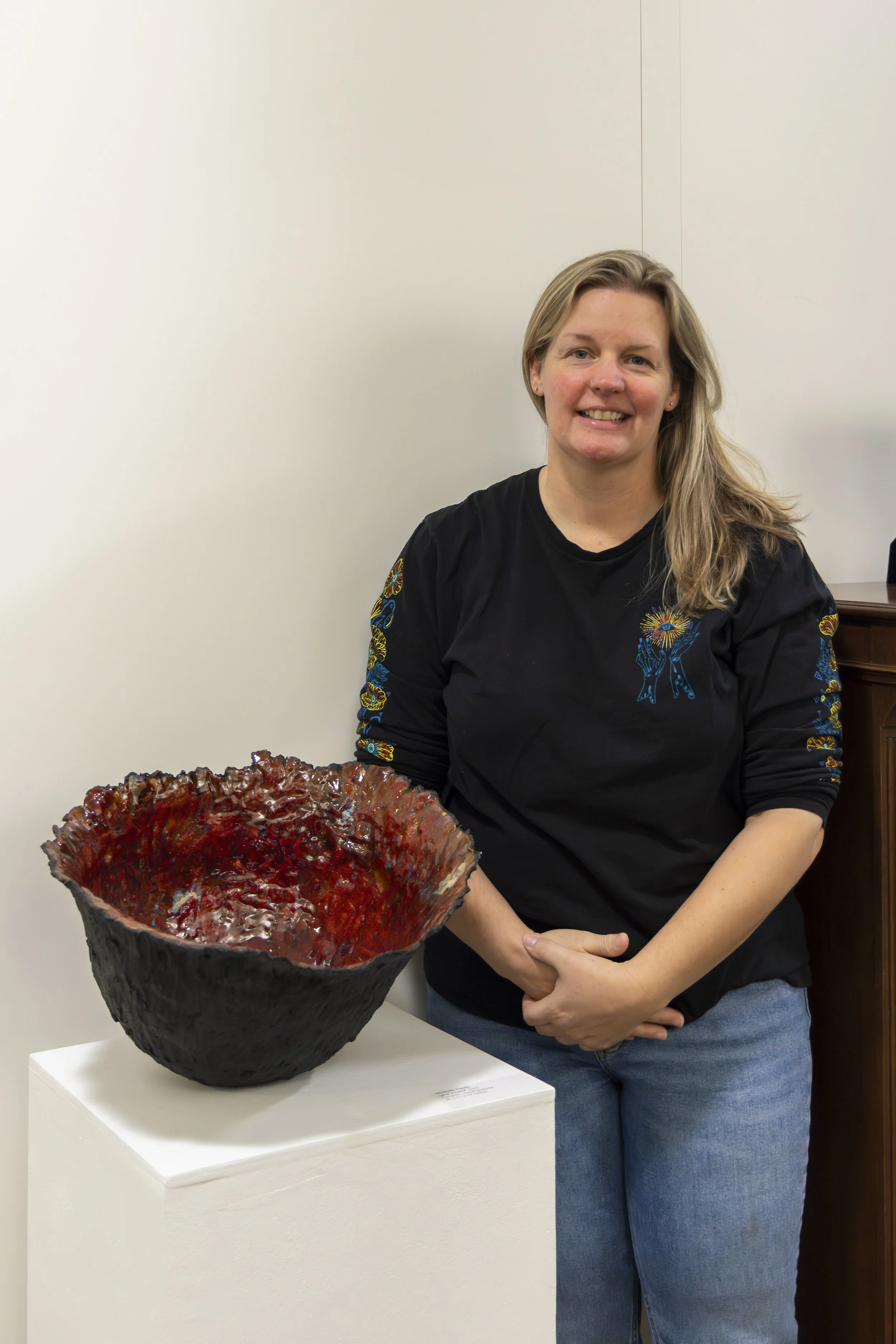
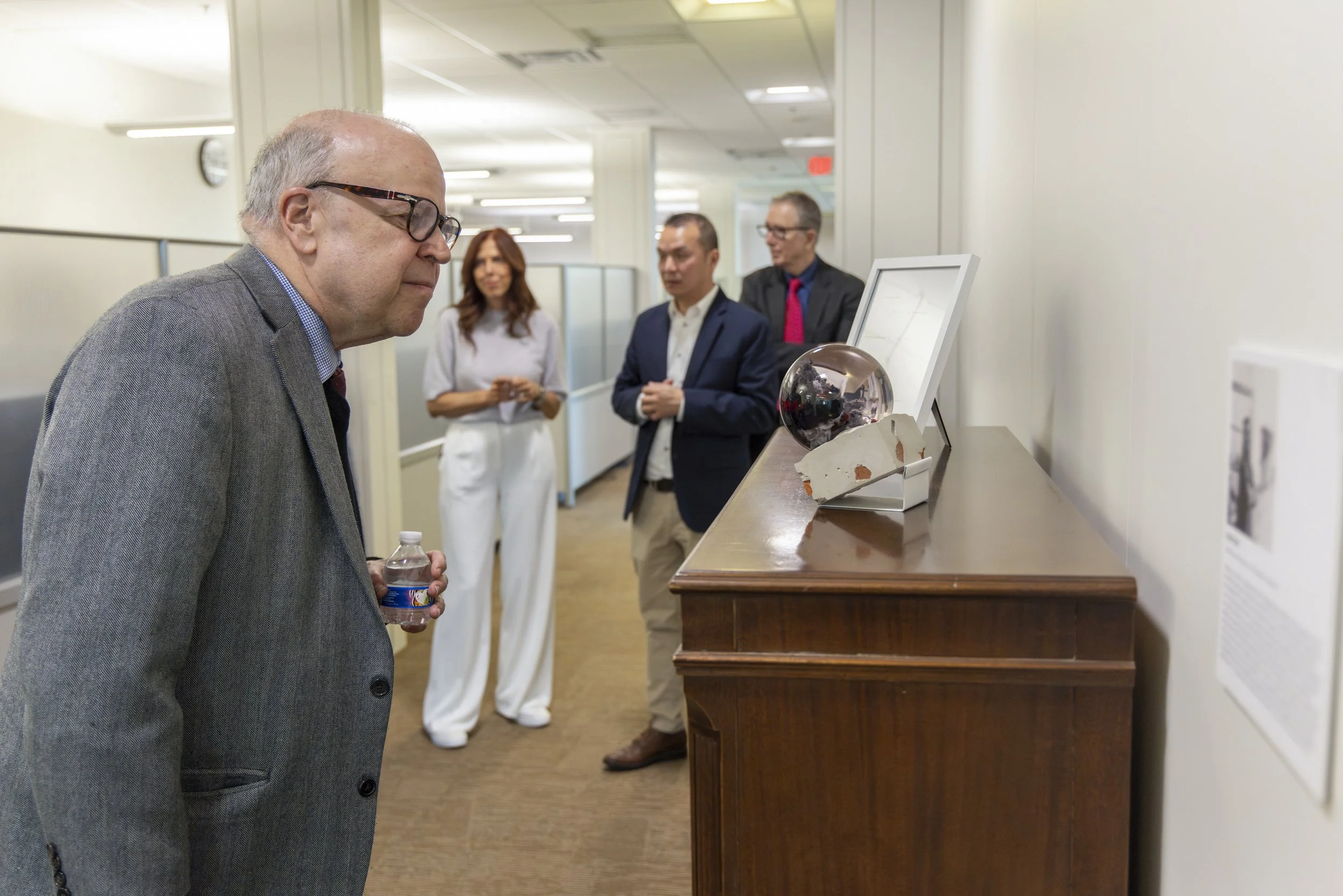
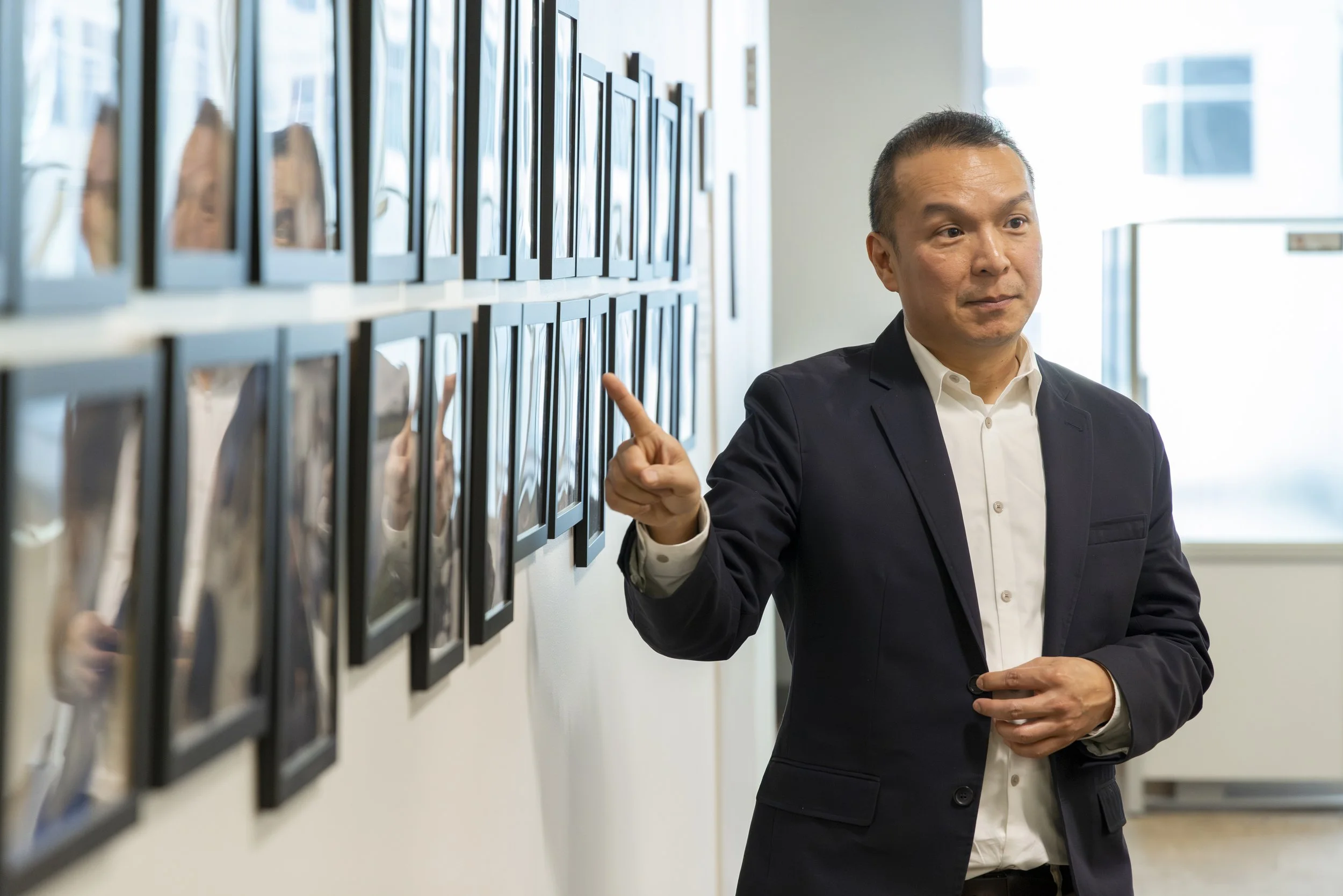
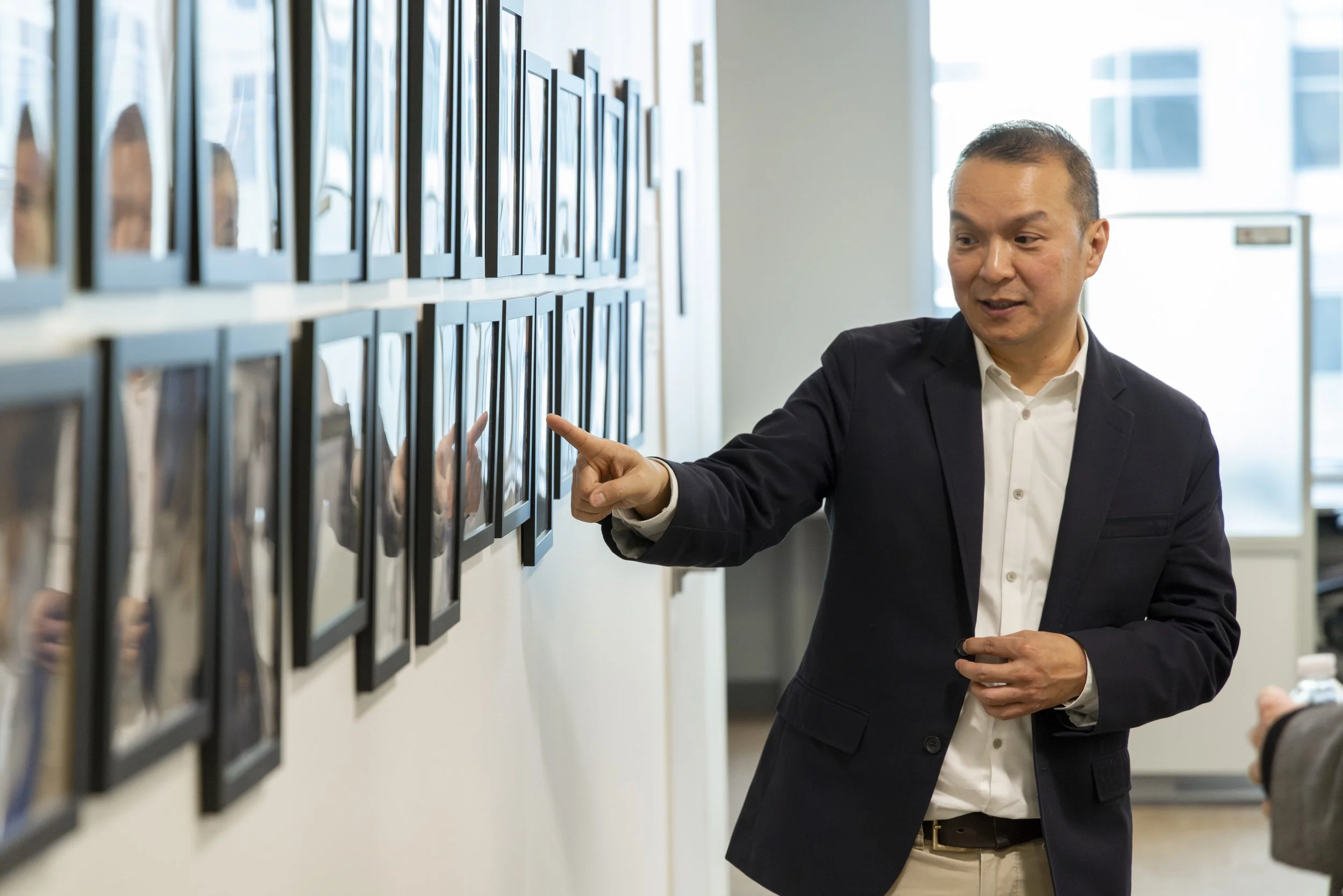
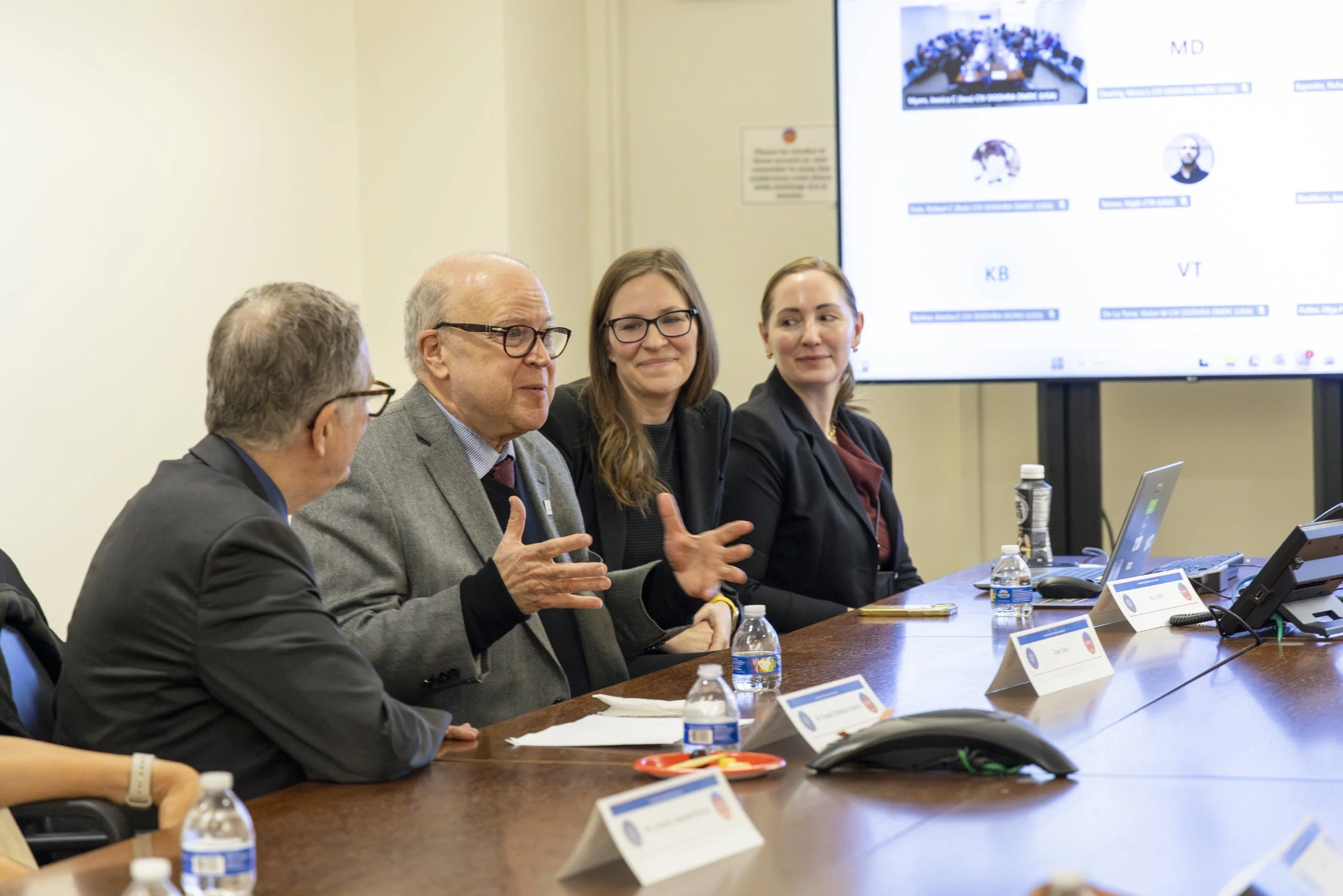
About The Artists
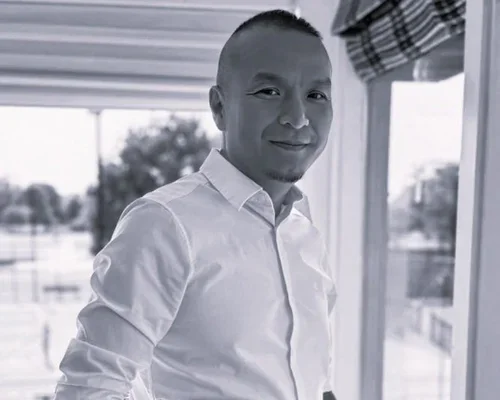
Steven Luu, USAF
The wounds of combat have had a profound impact on Steven Luu. Born in Saigon, Vietnam, he is a survivor of Communist oppression. In 1991, Steven and his family arrived in the United States as refugees. After finishing high school in 1995, he enlisted in the U.S. Air Force and served as a Medic for 20 years. During his many deployments to combat zones in the Middle East, he witnessed many violent deaths, and those experiences have had a significant psychological impact on him.
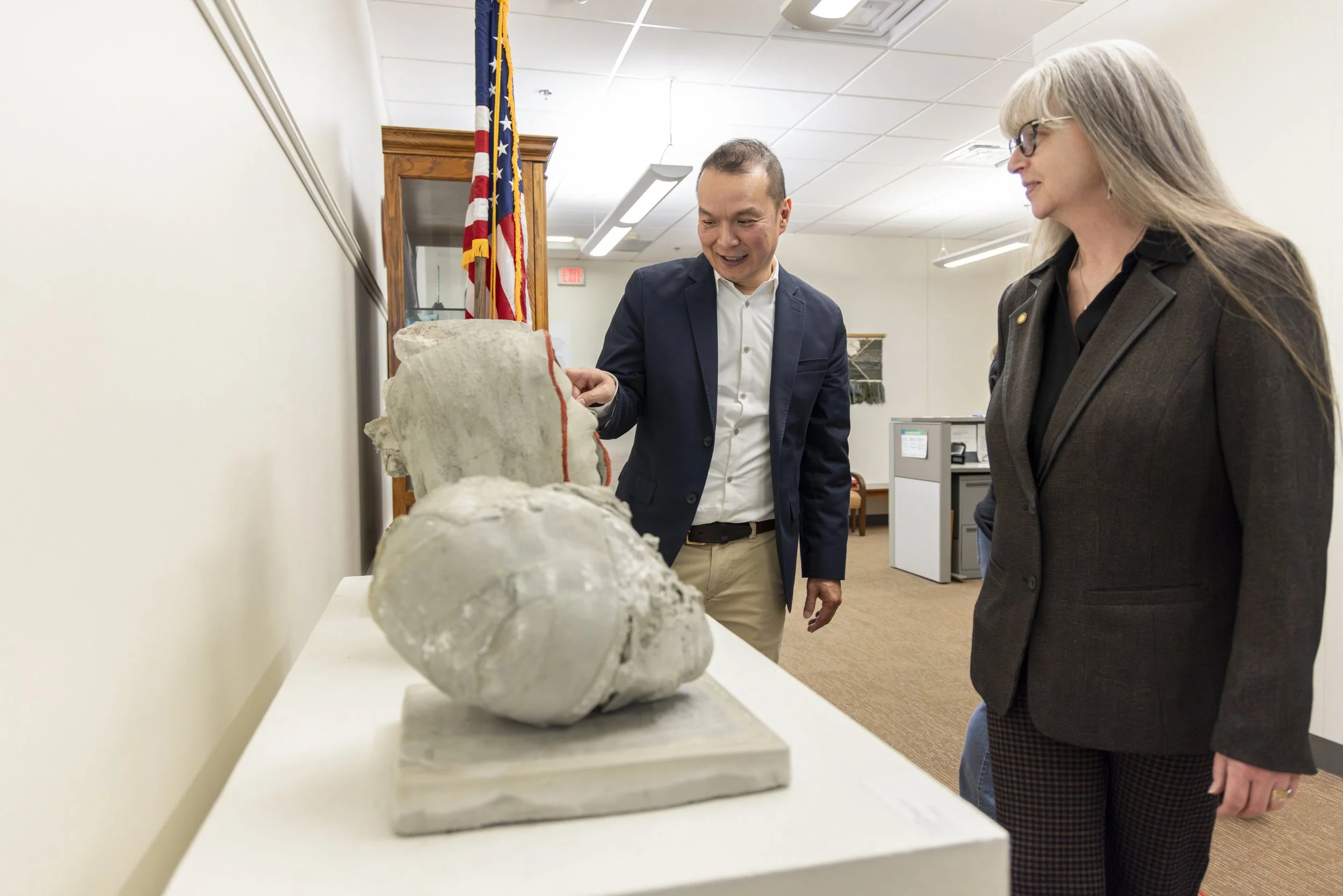
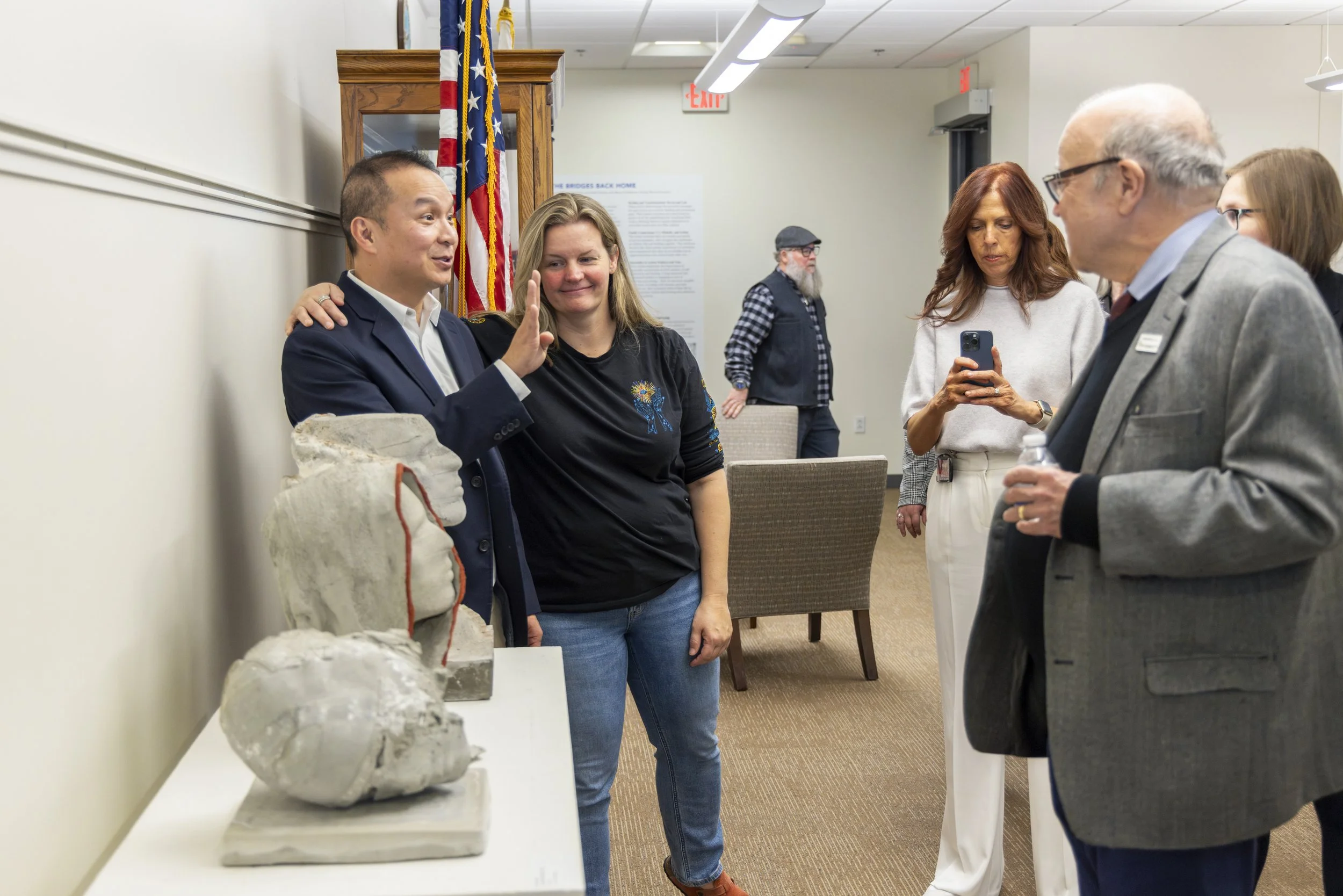
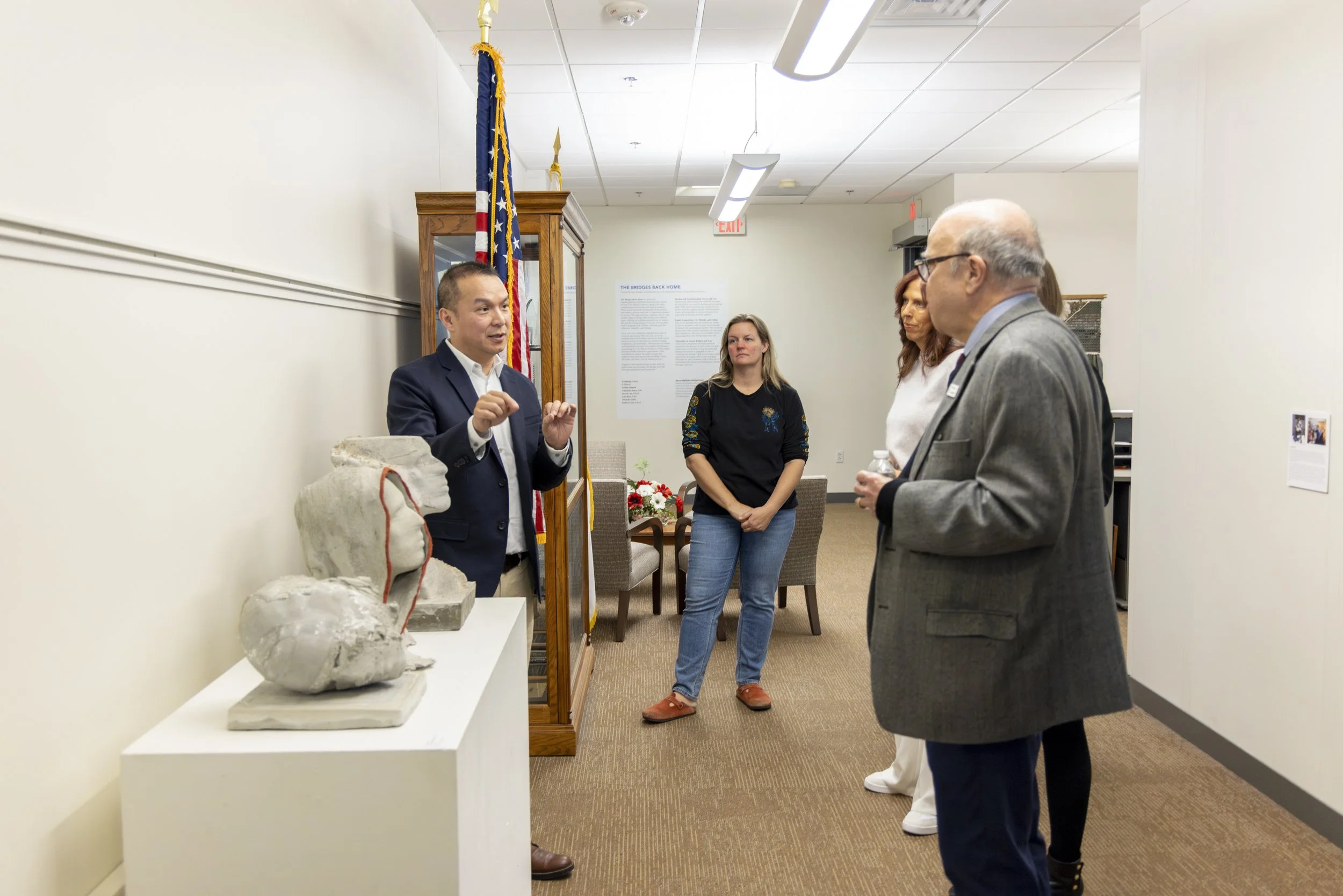
He was first introduced to art through an intensive treatment program at Walter Reed National Military Medical Center. Steven recognizes that art allows him to present his feelings comfortably and express traumatic experiences in a creative, non-verbal way. As someone with a background in the medical field and a wounded veteran himself, he relates deeply to service members who return home suffering from the aftereffects of deployment. Over the years, he has earned a BA in Theology and a BFA with a concentration in sculpture. He is currently pursuing a Master of Fine Arts at George Mason University to further develop his artistic practice. As an artist, he advocates for veterans, mentoring and encouraging fellow wounded veterans to find a new language to express their pain and emotions – the language of art. These concrete head sculptures explore his childhood trauma and his multiple Middle East deployments. By repurposing the harsh, cold material, concrete becomes a symbol of change, transforming the burden of the past into a story of healing and resilience.
Kathryn Tate, USAF
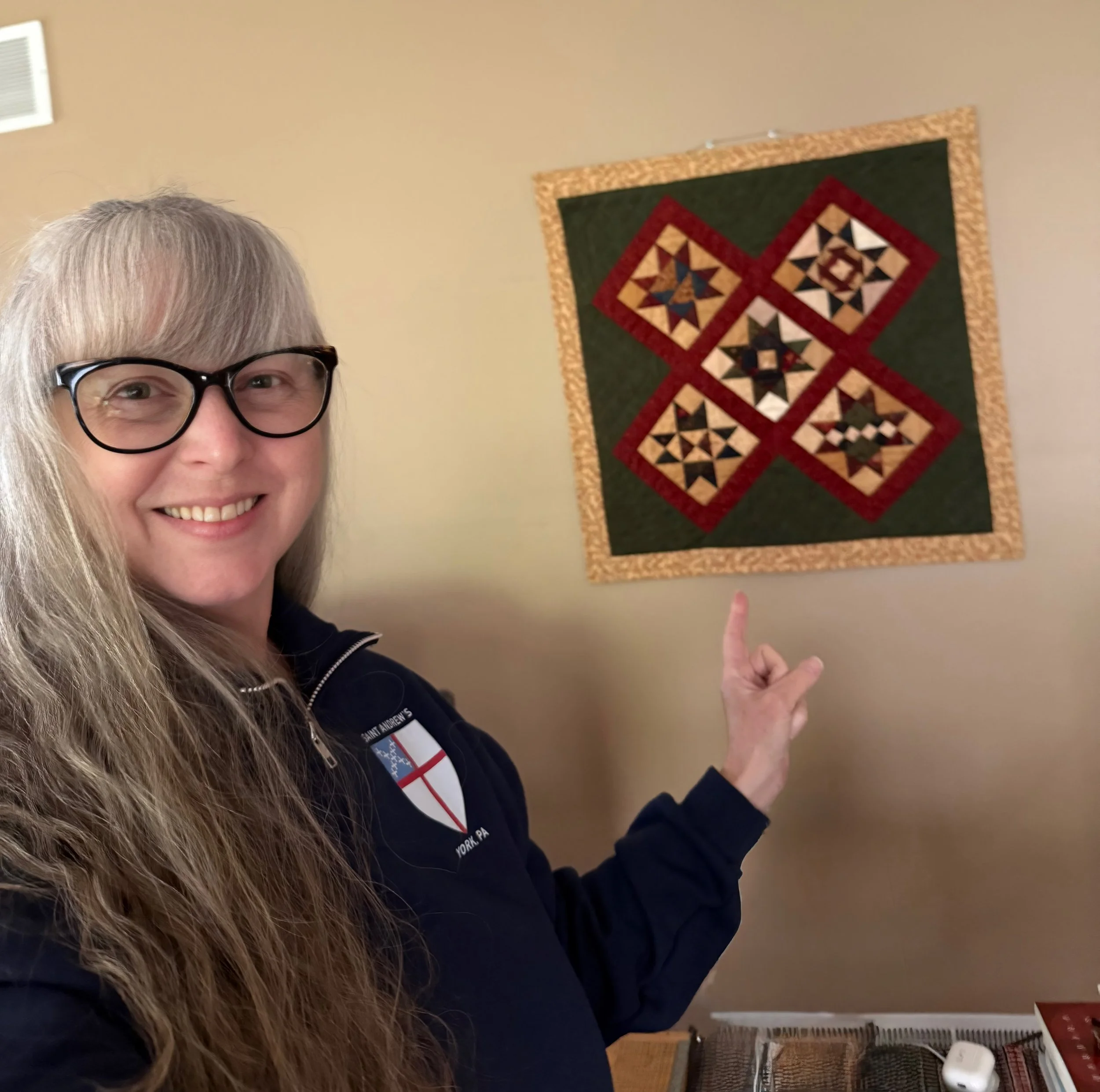
Dates of Service: Aug 1988 – Oct 2017
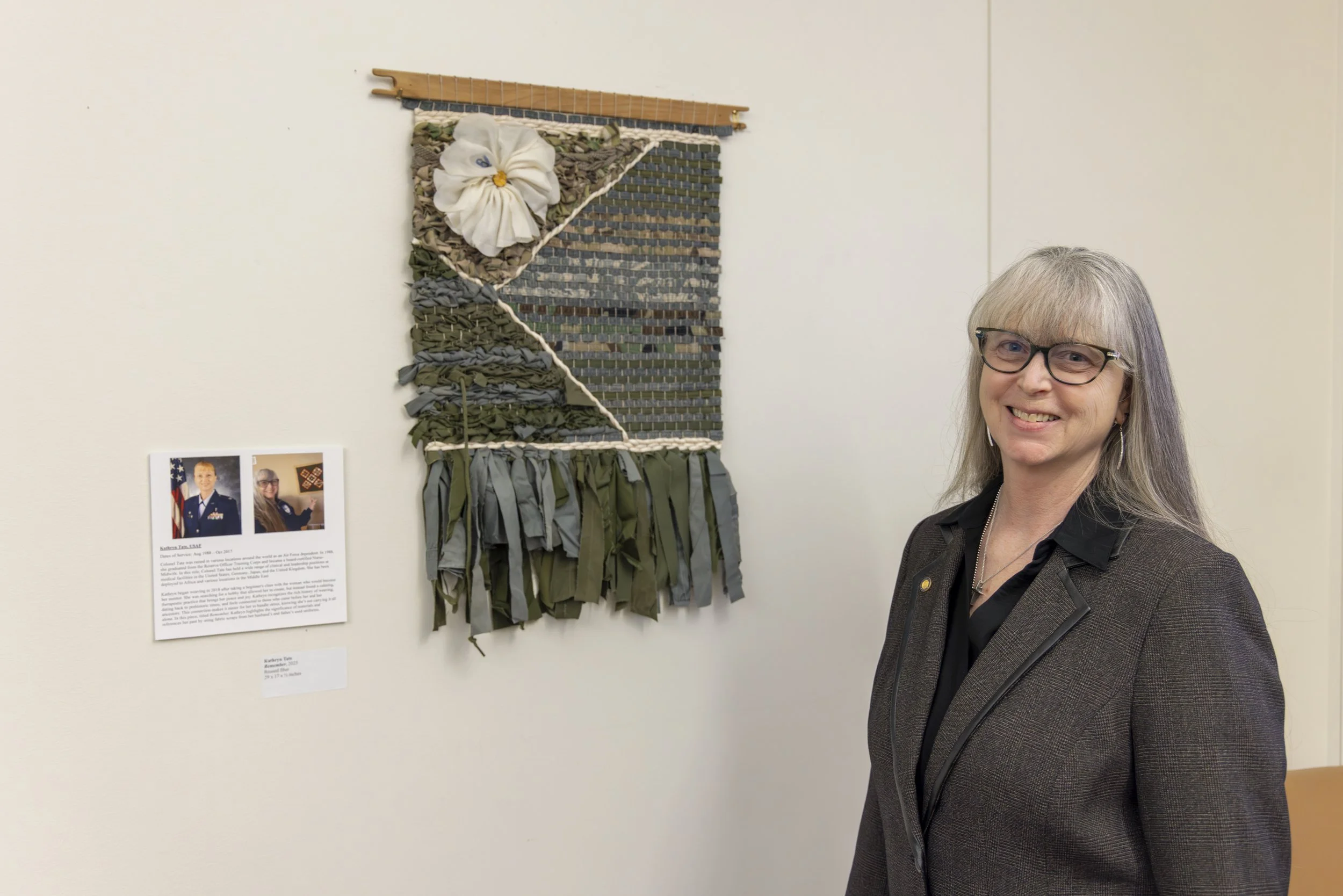
Colonel Tate was raised in various locations around the world as an Air Force dependent. In 1988, she graduated from the Reserve Officer Training Corps and became a board-certified Nurse-Midwife. In this role, Colonel Tate has held a wide range of clinical and leadership positions at medical facilities in the United States, Germany, Japan, and the United Kingdom. She has been deployed to Africa and various locations in the Middle East.
Kathryn began weaving in 2018 after taking a beginner's class with the woman who would become her mentor. She was searching for a hobby that allowed her to create, but instead found a calming, therapeutic practice that brings her peace and joy. Kathryn recognizes the rich history of weaving, dating back to prehistoric times, and feels connected to those who came before her and her ancestors. This connection makes it easier for her to handle stress, knowing she’s not carrying it all alone. In this piece, titled Remember, Kathryn highlights the significance of materials and references her past by using fabric scraps from her husband’s and father’s used uniforms.
Nate Juncer, MC
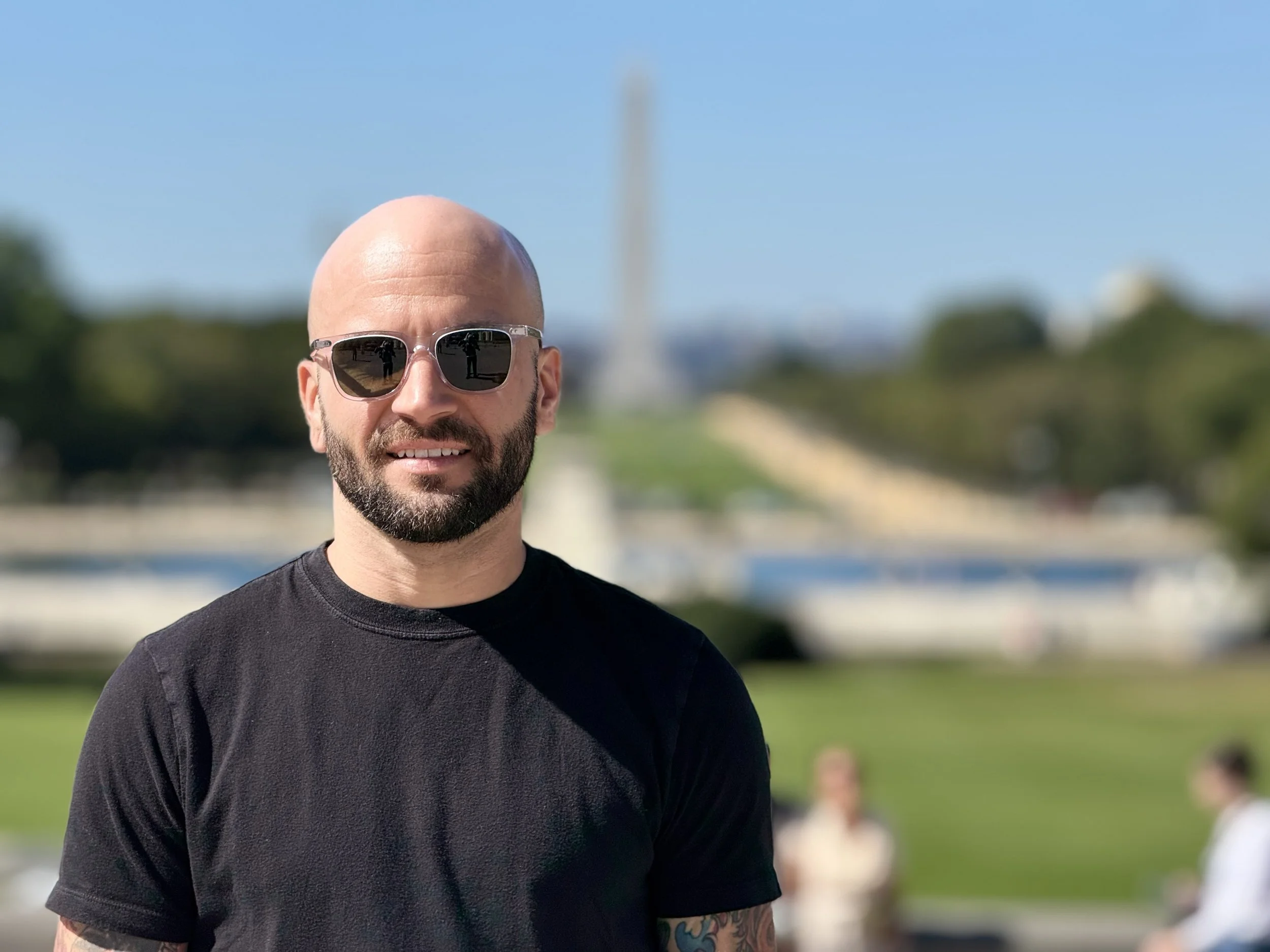
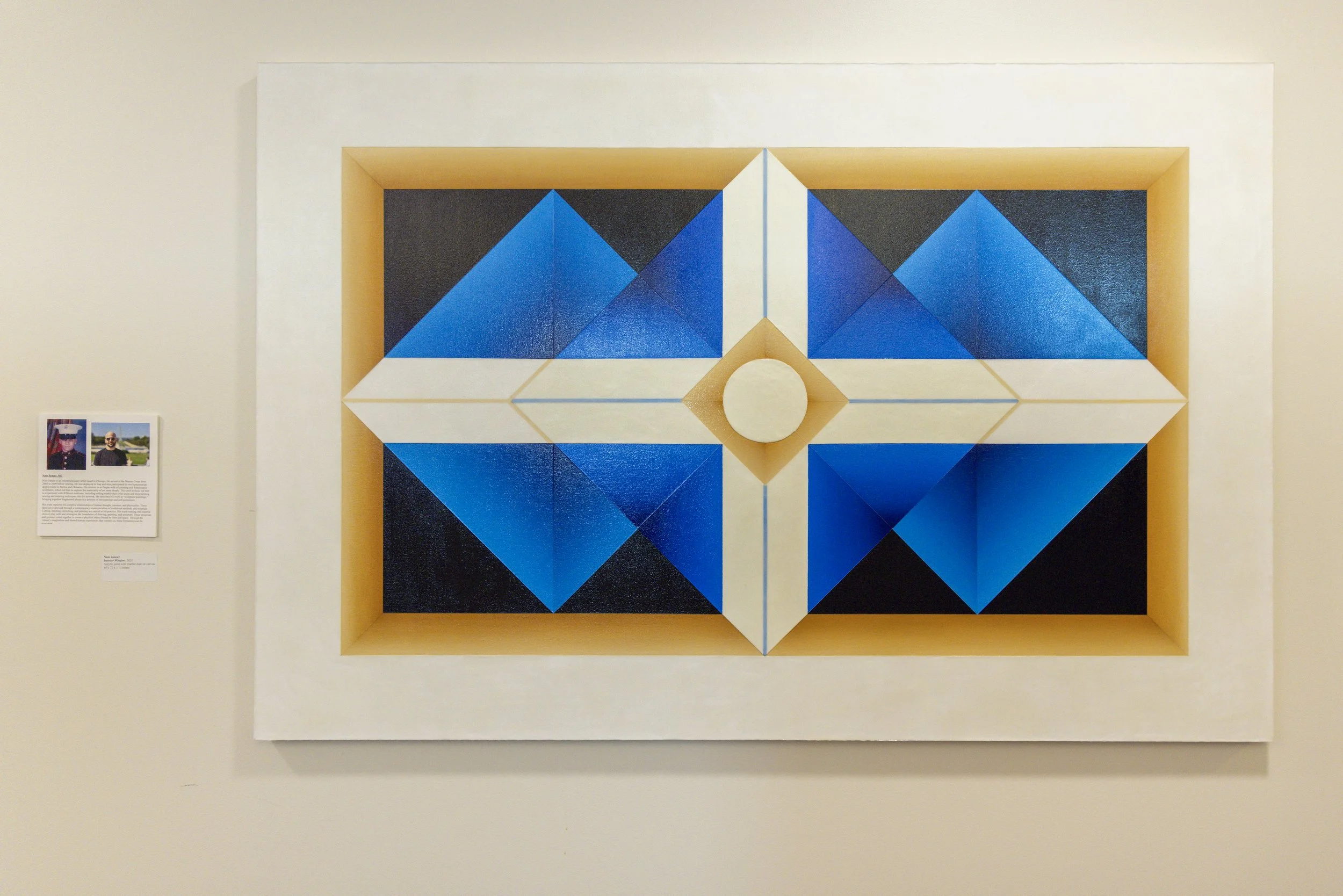
Nate Juncer is an interdisciplinary artist based in Chicago. He served in the Marine Corps from 2005 to 2009 before retiring. He was deployed in Iraq and also participated in two humanitarian deployments to Burma and Okinawa. His interest in art began with oil painting and Renaissance sculptures, which led him to explore the materiality of art more deeply. This shift in focus led him to experiment with different mediums, including adding marble dust to his paint and incorporating sewing and suturing techniques into his artwork. He describes his work as “sculptural paintings,” bringing together fragmented pieces in a process of introspection and self-portraiture.
His work explores the complex relationships of human thought, emotion, and physicality. These ideas are expressed through a contemporary reinterpretation of traditional methods and materials. Cutting, stitching, stretching, and painting are central to his practice. His mark-making and material choices play with and reimagine the boundaries of drawing, painting, and sculpture. These processes and gestures come together to create a physical object bound by time and space. Through the viewer's imagination and shared human experiences that connect us, these limitations can be overcome.
Luis Rosa, USA
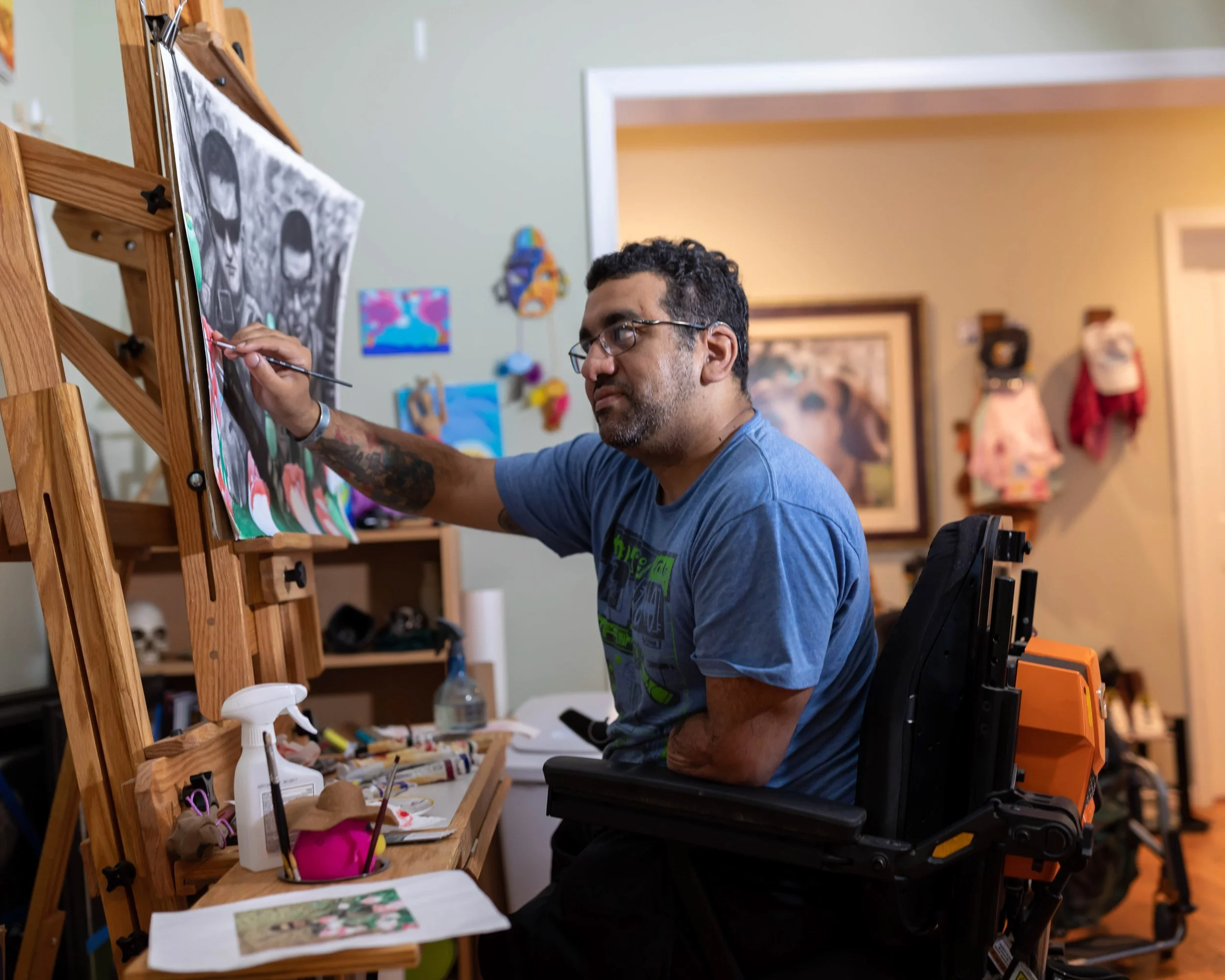
Luis Rosa-Valentin joined the Army in 2001 and was deployed during the 2003 invasion of Iraq. After returning home, Luis worked as a recruiter until he received a phone call that changed everything: his best friend, Staff Sergeant Steve Butcher, was killed by a suicide bomber. In 2007, he requested to deploy again to Iraq, and it was soon after, in April 2008, that Rosa was struck by a roadside bomb in Sadr City when he was 24. As a result of the blast, Sgt. Rosa lost both legs above the knee, his left arm below the elbow, sight from his left eye, all hearing in both ears, and suffered a moderate brain injury.
It wasn’t until he was 35 that Luis found his second calling in art and began his educational journey. He received his BFA from the Maryland Institute College of Art and is currently pursuing an MFA in painting. Luis firmly believes that “the subject dictates the material.” So, while Luis may have an eclectic toolbox of expression, he does not see it as “these are the drawings, those are the paintings.” Luis views all his work as a single body of work that chooses to express itself through the material that best conveys its idea. Sometimes those are sculptures made from spent rifle casings, and sometimes they are paintings created with soft brushstrokes. Art has many voices, just like everyone chooses their own personal voice. Luis believes the message should be allowed to choose its voice as well.
Joshua Hubbell
Joshua Hubbell is a photographer based in Pasadena, Maryland, whose work explores the emotional intersections of human nature, memory, hope, and fear. With a focus on candid imagery, theatrical subjects, and horror-inspired tones, his photography often captures unguarded moments that reveal deeper psychological landscapes. A self-taught artist with a formal background in accounting and supply chain management, Joshua approaches his craft with both thoughtful intent and instinctive responsiveness, often sketching ideas before diving in to avoid being hindered by overthinking.
A formative influence on his work is his close friend, Luis Rosa-Valentin, a U.S. Army veteran who was severely injured in 2008. For over a decade, Joshua served as Luis’s non-medical attendant, documenting moments of his recovery as both witness and collaborator. This experience profoundly shaped Joshua’s understanding of resilience, trauma, and the quiet strength found in healing – becoming a lasting inspiration for much of his current and future work. He is currently building a body of work centered on his reflections on Luis’s journey, as well as the broader emotional weight carried by those who serve. Through his lens, Joshua continues to explore the fragile line between joy and fear, optimism and loss, seeking the moments that make us most human.
Michelle Smith
Gold Star Surviving Spouse, AD2 Nicholas E. Smith USN
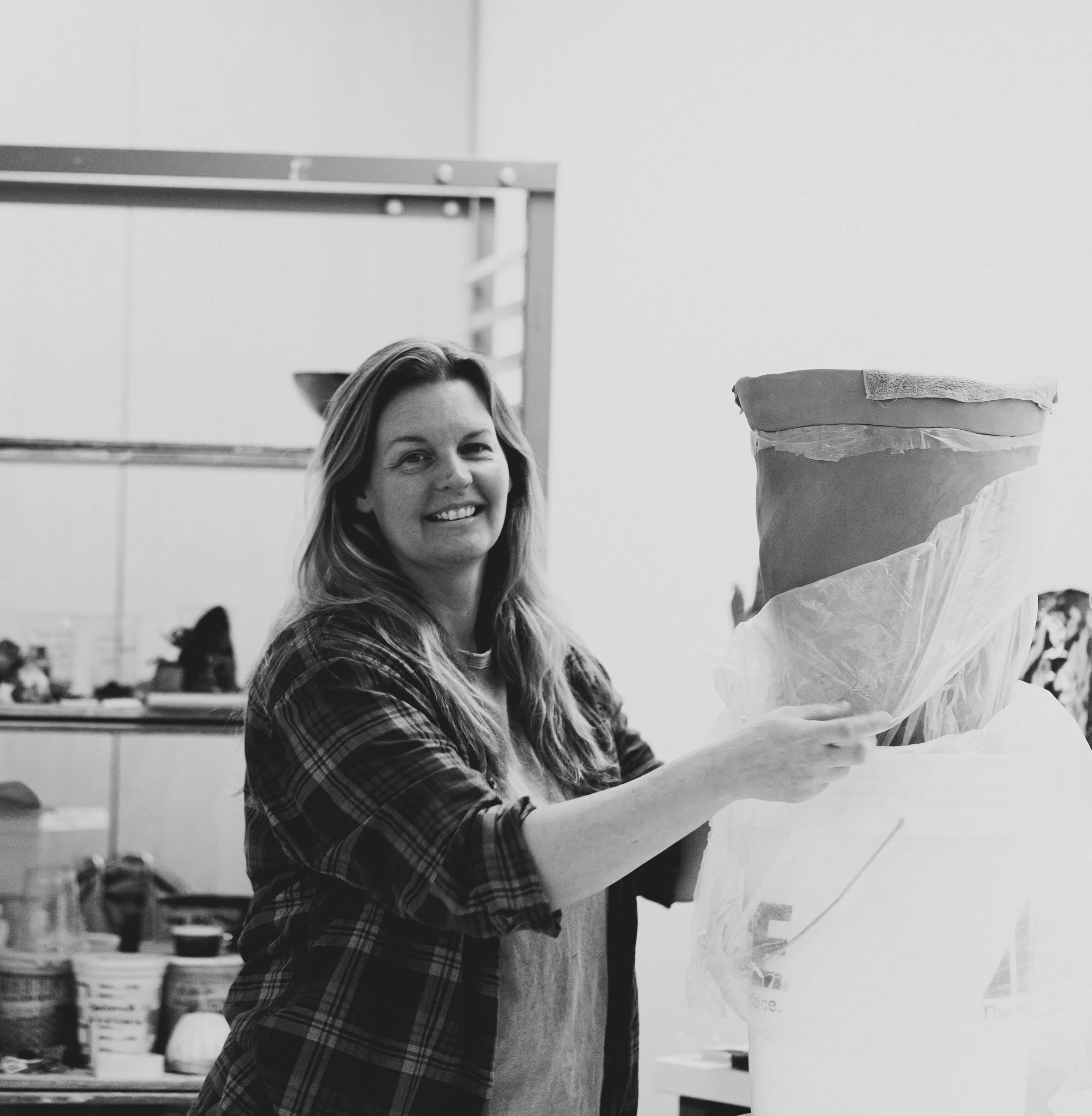
Michelle A. Smith is a sculptor from the DC Metropolitan area and the surviving spouse of Naval Petty Officer 2nd Class Nicholas Eric Smith (AD2 VFA-211 Fighting Checkmates, Oceana NAS). She earned her MFA degree from James Madison University. Her work carefully positions the viewer within personal narratives, focusing on confronting and expanding the emotions of grief and loss. Smith translates these complex feelings into physical objects and installations. She invites her audience to experience the edges of her emotions using various mediums with a foundation in ceramics and metals. Michelle wholeheartedly asserts that creating art helps bridge the gap between what is said and unsaid. Through her artwork, she hopes to reconnect with humanity, which she has felt distant from due to her losses. Michelle’s work is especially meaningful as this was the office that notified her about her husband's passing and offered subsequent support and hope through her difficult times. The opportunity to display her artwork here is a true full-circle moment for her.
CJ Davis
Dependent of Sgt 1st Class Tony E. Davis
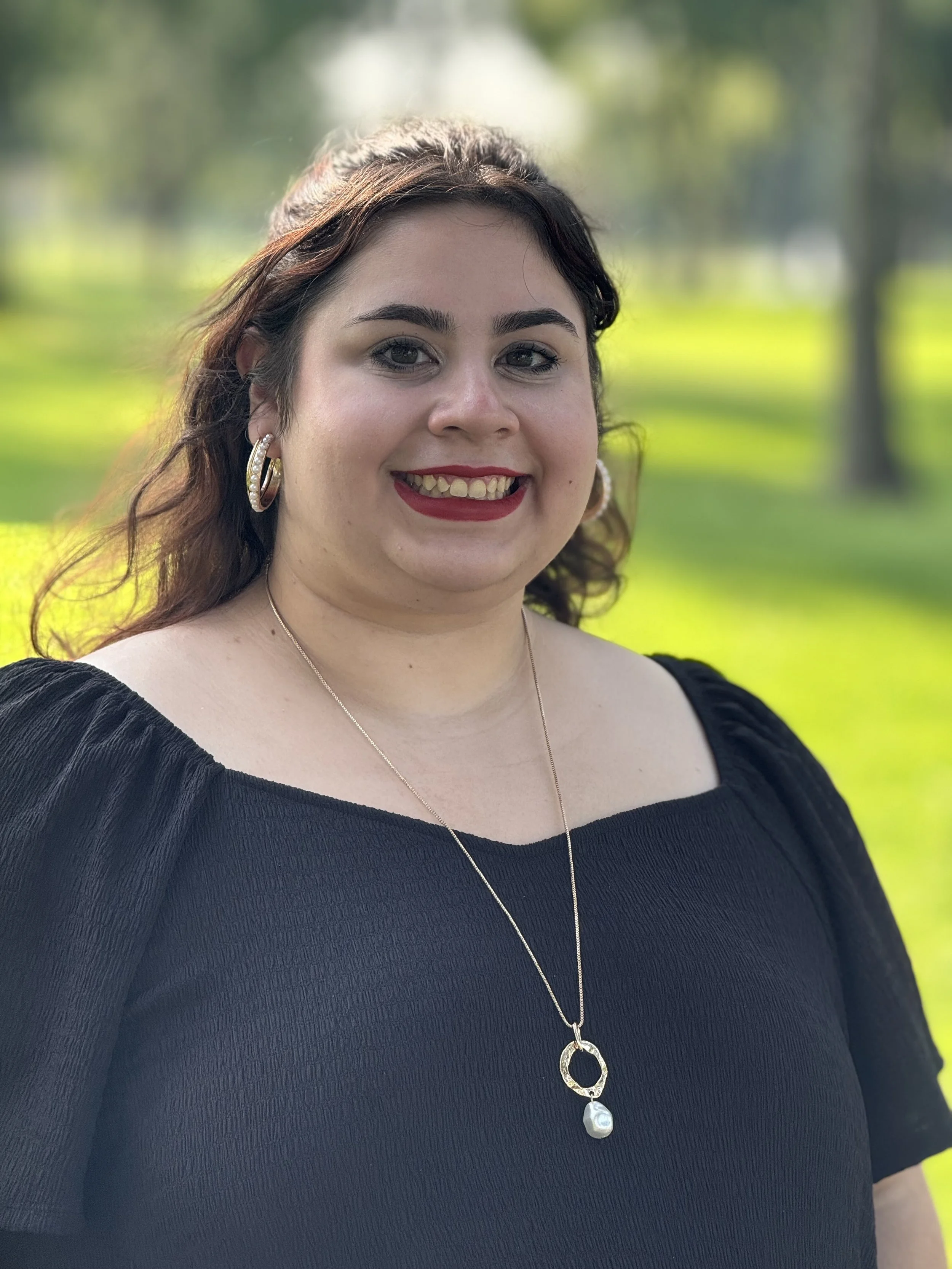
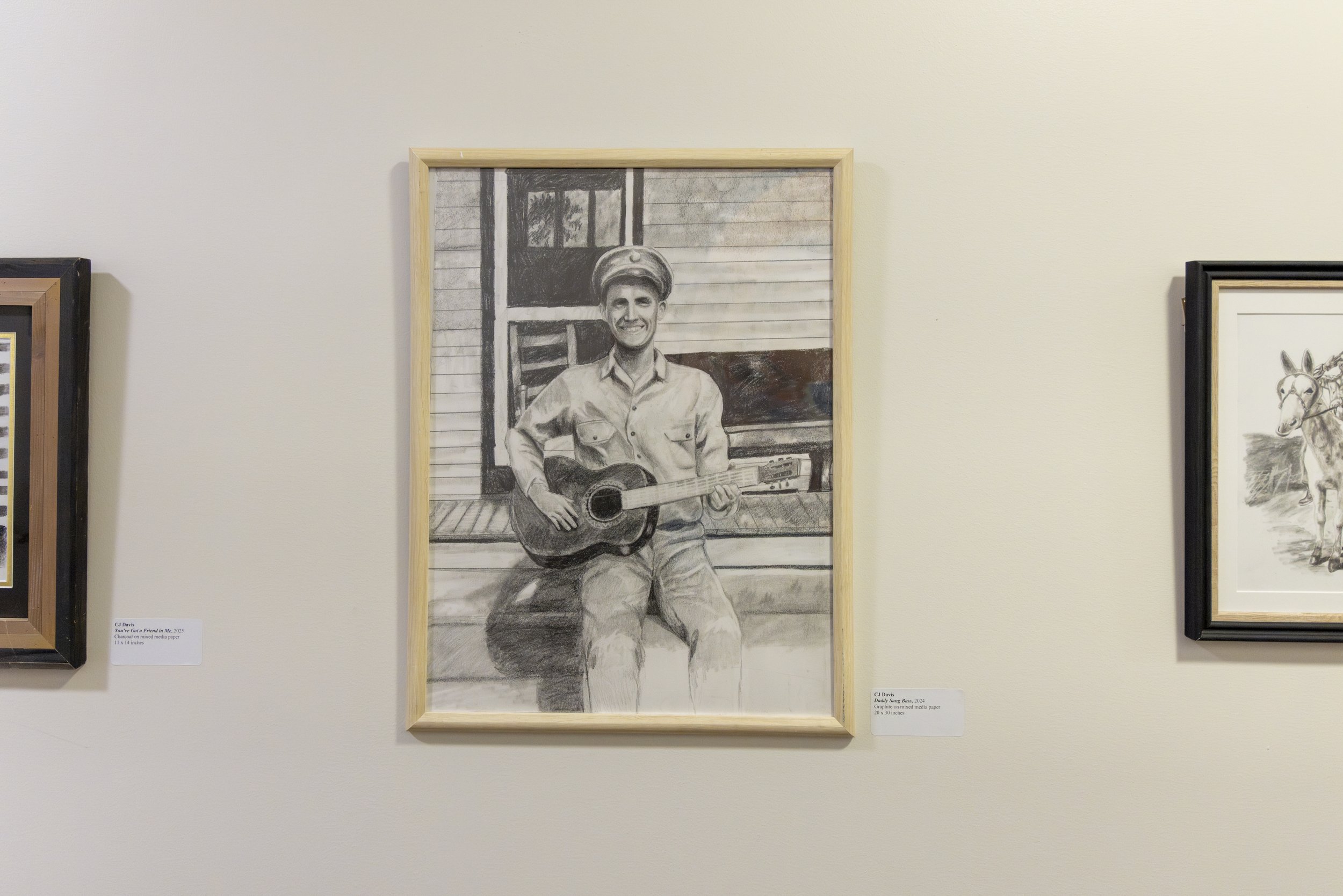
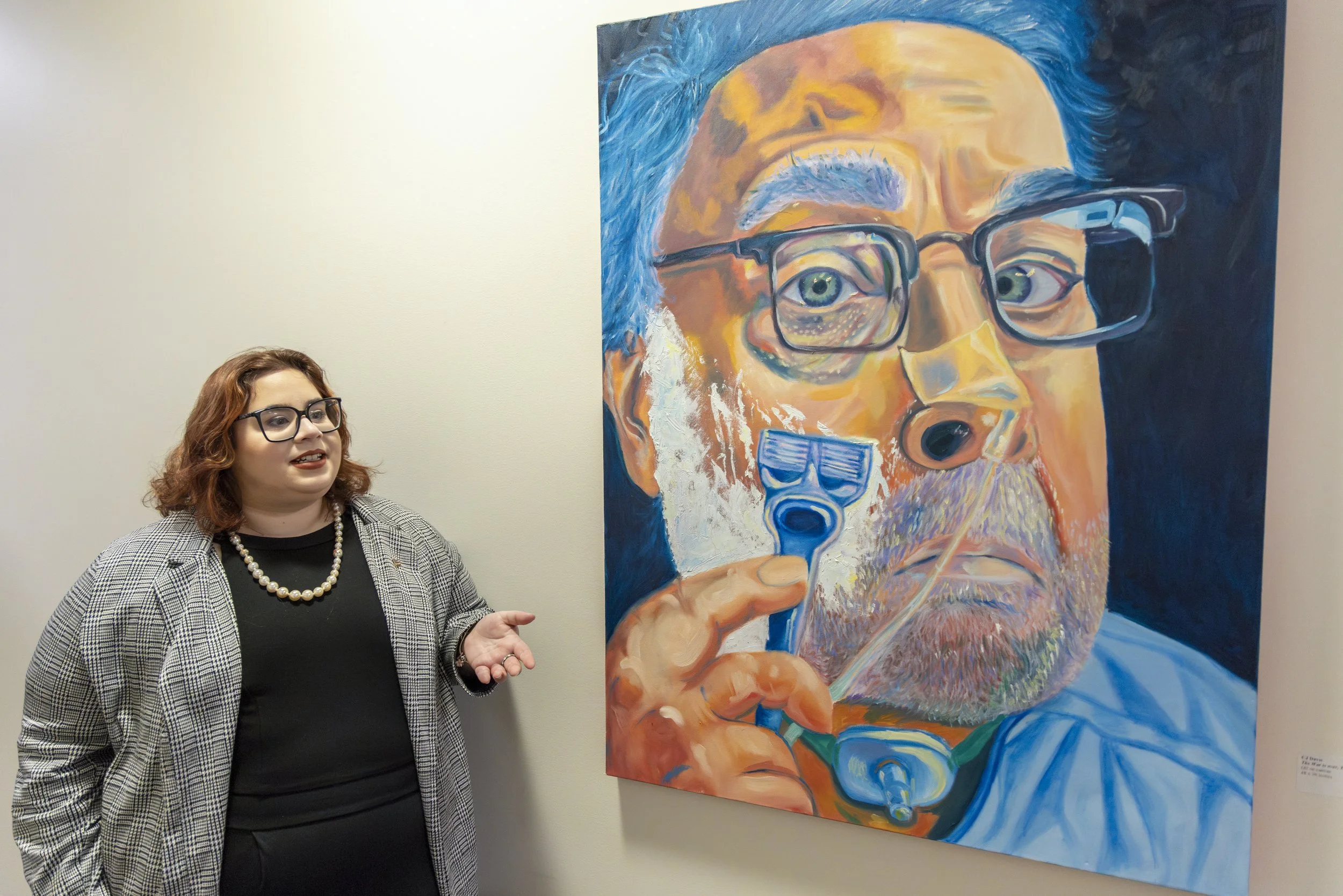
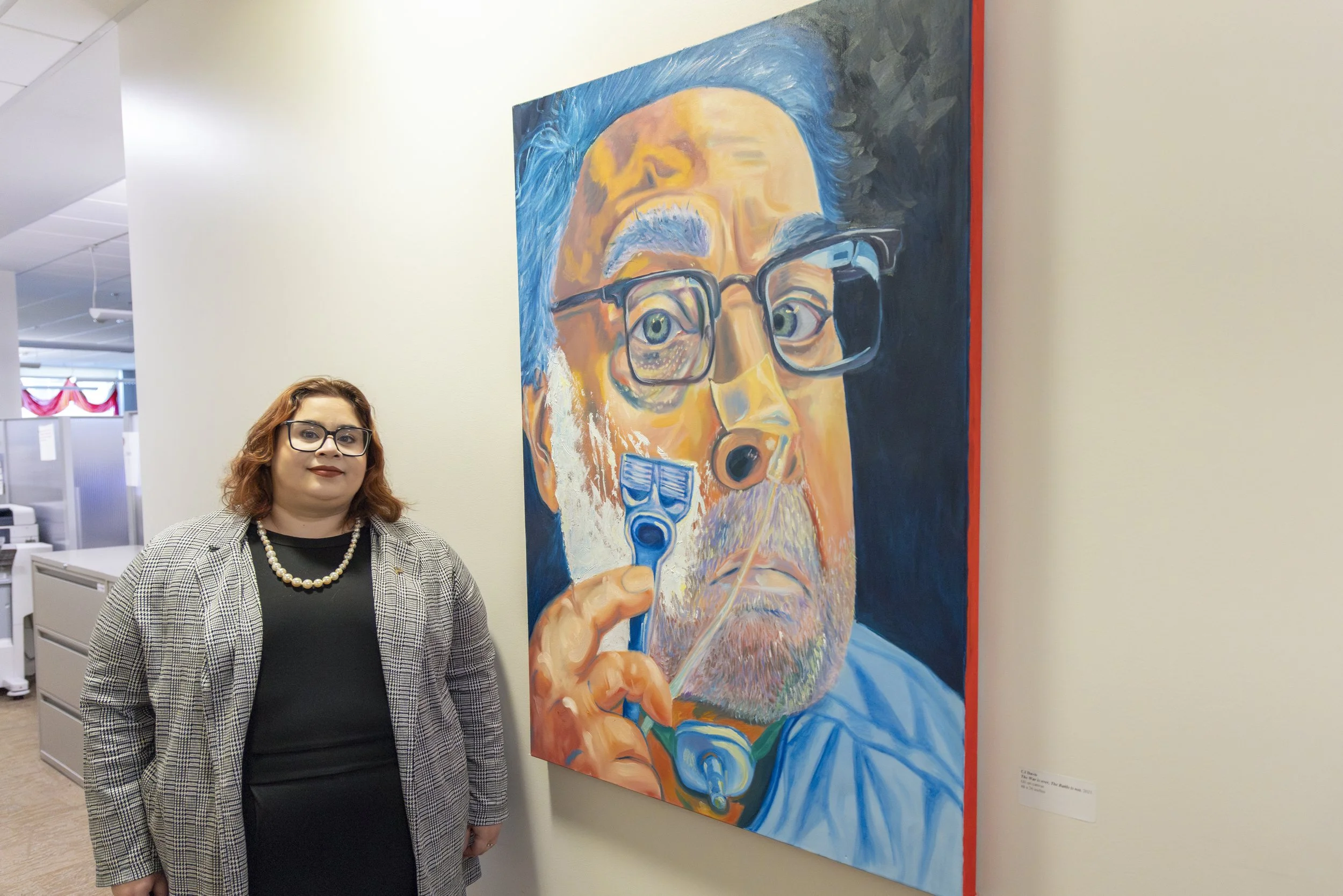
CJ Davis is a dedicated artist, author, and advocate whose personal journey has shaped her commitment to social change and healing through creative expression. Born to parents who served as U.S. Army medics – her father, Sergeant First Class (E7), and her mother, a Captain – CJ experienced firsthand the sacrifices and resilience demanded by military life. Her world changed when her father suffered a massive heart attack. For three years, he depended on a tracheostomy, and CJ became his caregiver alongside her mother. She balanced the demands of work, school, and a three-hour daily commute to Walter Reed Hospital for two and a half months, embodying an extraordinary commitment to her family.
During this intense period, art became her lifeline, offering solace, strength, and a way to process the trauma. Through her art, CJ found a powerful outlet for healing, a theme that runs deeply in her work today. A George Mason University alumna, CJ is currently pursuing a degree in Public Health Policy at the Eastern Virginia Medical School Joint School of Public Health. Her book, Resurrection: Returning to Roots from Trauma, reflects her journey through personal challenges, including overcoming interpersonal violence and the healing power of art.